Tips for successful freshwater prawn culture


Share
Suggested Citation
Ramesh, G. (2001). Tips for successful freshwater prawn culture. SEAFDEC Asian Aquaculture , 23(1-2), 13-14. http://hdl.handle.net/10862/2713
Type
magazineArticleISSN
0115-4974Collections
Related items
Showing items related by title, author, creator and subject.
-
Series: Philippines Recommends Series; No. 98/2018
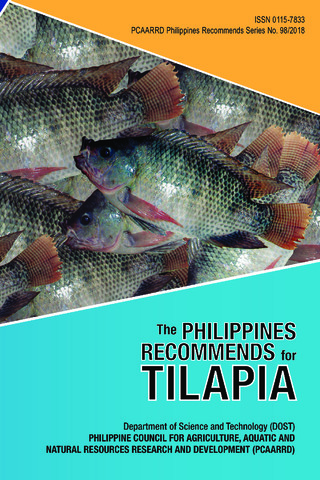
The Philippines recommends for tilapia
(DOST-PCAARRD, 2018)Tilapia is one of the most commercially important commodities in fisheries and aquaculture. Although tilapia is relatively easy to propagate and culture, the Philippine tilapia industry needs the necessary boost in the ... -
Quantitative and qualitative analyses of the bacterial microbiota of tilapia (Oreochromis niloticus) cultured in earthen ponds in the Philippines
Pakingking, Rolando V., Jr. ; Palma, Peter ; (Springer Verlag, 2015)
The quantity and composition of the bacterial microbiota in the rearing water, sediment, gills and intestines of tilapia Oreochromis niloticus collected every 2 weeks from Day 30 to Day 120 after stocking for grow-out culture in 6 earthen brackish water ponds in the Philippines were examined. The total heterotrophic aerobic bacterial counts obtained in the water, sediment, gills and intestines of tilapia ranged from 103 to 104 c.f.u. ml−1, 103–105, 105–107 and 104–107 c.f.u. g−1, respectively. In terms of composition, a total of 20 bacterial genera and 31 species were identified with the preponderance of gram-negative bacteria constituting 84% of all bacterial isolates examined. Aeromonas hydrophila, Bacillus spp., Plesiomonas shigelloides, Shewanella putrefaciens, Pseudomonas fluorescens, Staphylococcus spp. and Vibrio cholerae were the dominant bacteria identified in the gills and intestine of tilapia. These bacteria also dominated in the pond sediment and rearing water, except for the nil isolation of S. putrefaciens and V. cholerae in the water samples examined, indicating that resident bacteria in the pond water and sediment congruently typify the composition of bacterial microbiota in the gills and intestine of tilapia which under stressful conditions may propel the ascendance of disease epizootics.
; Palma, Peter ; (Springer Verlag, 2015)
The quantity and composition of the bacterial microbiota in the rearing water, sediment, gills and intestines of tilapia Oreochromis niloticus collected every 2 weeks from Day 30 to Day 120 after stocking for grow-out culture in 6 earthen brackish water ponds in the Philippines were examined. The total heterotrophic aerobic bacterial counts obtained in the water, sediment, gills and intestines of tilapia ranged from 103 to 104 c.f.u. ml−1, 103–105, 105–107 and 104–107 c.f.u. g−1, respectively. In terms of composition, a total of 20 bacterial genera and 31 species were identified with the preponderance of gram-negative bacteria constituting 84% of all bacterial isolates examined. Aeromonas hydrophila, Bacillus spp., Plesiomonas shigelloides, Shewanella putrefaciens, Pseudomonas fluorescens, Staphylococcus spp. and Vibrio cholerae were the dominant bacteria identified in the gills and intestine of tilapia. These bacteria also dominated in the pond sediment and rearing water, except for the nil isolation of S. putrefaciens and V. cholerae in the water samples examined, indicating that resident bacteria in the pond water and sediment congruently typify the composition of bacterial microbiota in the gills and intestine of tilapia which under stressful conditions may propel the ascendance of disease epizootics. -
Development of aquasilviculture at BFAR-NBFTC, Pagbilao, Quezon
(Aquaculture Department, Southeast Asian Fisheries Development Center, 2017)Aquasilviculture technology verification project was conducted at the National Brackishwater Fisheries Technology Center (NBFTC) of the Bureau of Fisheries and Aquatic Resources (BFAR) in 1996-2000. Results indicated that given the proper technology, management and favourable market, and polyculture of high-value species (grouper (Epinephelus) and mud crab (Scylla)) will provide better return on investment. Dissemination of the technology through training started in 2001. In 2002, a 4-hectare undeveloped fishpond of NBFTC was converted into an aquasilviculture project to showcase the technical and economic feasibility of the technology with emphasis on the polyculture of mud crab, grouper and saline tilapia (Oreochromis) that would serve as a model livelihood project for coastal fisherfolk. In 2011, the BFAR launched the Philippine National Aquasilviculture Program to help restore mangroves that serve as breeding and nursery grounds of fish, and to provide livelihood projects through aquasilviculture to coastal fisherfolk. With increasing cost of development and management for aquasilviculture, integration of mangrove crab fattening and/or soft-shelled crab production have shown to improve profit under the present economic condition.