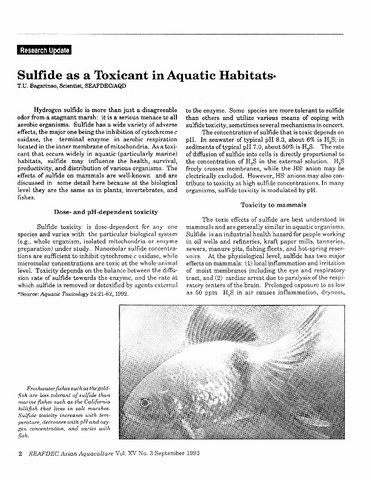
Sulfide as a toxicant in aquatic habitats


Share
Abstract
The toxic effects of sulphide are best understood in mammals and are generally similar in aquatic organisms. At the physiological level sulphide has 2 major effects on mammals: 1) local inflammation and irritation of moist membranes including the eye and respiratory tract; and, 2) cardiac arrest due to paralysis of the respiratory centres of the brain. The toxicity of sulphide to plants, macroinvertebrates, freshwater fish and marine fish is discussed in detail. It is concluded that the role of sulphide in mass kills of fish, shrimp and other animals in brackishwater earthen ponds, lakes and sea cages should be determined.
Description
Suggested Citation
Bagarinao, T. (1993). Sulfide as a toxicant in aquatic habitats. SEAFDEC Asian Aquaculture , 15(3), 2-4. http://hdl.handle.net/10862/1791
Type
magazineArticleISSN
0115-4974Koleksi
Related items
Showing items related by title, author, creator and subject.
-
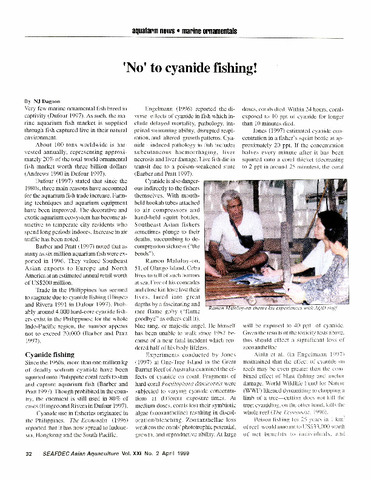
'No' to cyanide fishing!
(Aquaculture Department, Southeast Asian Fisheries Development Center, 1999) -
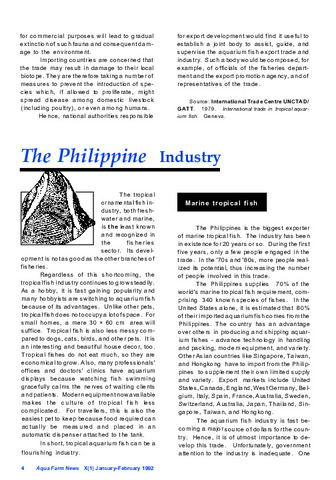
The Philippine industry: Marine tropical fish
(Aquaculture Department, Southeast Asian Fisheries Development Center, 1992) -
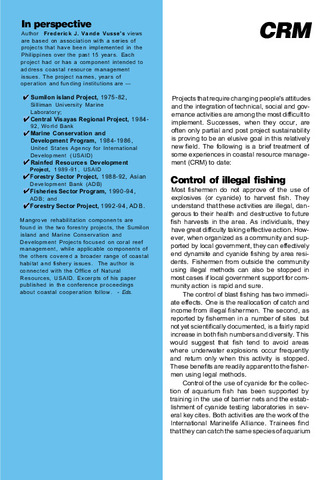
CRM in the Philippines: Lessons learned
(Aquaculture Department, Southeast Asian Fisheries Development Center, 1996)Philippine coastal communities can become capable fishery resource managers and that their management practices can become largely self-sustaining if the project approach focuses on assisting fishermen to learn how to help ...