The squid fishery in Carigara Bay, Samar: catch of Photololigo duvaucelii by squid jigs and Sepioteuthis lessoniana by hanging squid pot


Share
Abstract
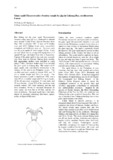
The squid fishery in Carigara Bay used the following gears: hanging squid pots, squid jigs, drive-in net, and spear by slingshot. Hanging squid pot operations were concentrated in the municipal waters of Capoocan and Carigara and targeted Sepioteuthis lessoniana. During the one-week survey in Carigara Bay, 705 hanging squid pots with markers were found offshore of barangays Culasian, Pinamopoan, Cabul-an and Talarian, all in Capoocan town. Other operators in Carigara, Babatngon, Barugo, and San Miguel towns hung their squid pots from fish shelters (arong) offshore of Carigara and Capoocan towns. Test fishing operations were conducted in Carigara Bay from January to December 1992 using the hanging squid pot, squid jigs, and a squid cast net. A 16 hp motorized boat F/B Ellah Meh was used during the fishing operations. A total of 162 days test fishing with 15 hanging squid pots yielded 125.7 kg of the longfin squid Sepioteuthis 1essoniana. Sixty nights of fishing with the ordinary squid jig yielded 97 kg of Indian squid Photololigo duvaucelii. Two test fishing operations with the squid cast net yielded no squid at all. The S. lessoniana (75-500 g body weight) caught by pots were larger than the P. duvaucelii (7-270 g) caught by jigs.
Suggested Citation
Dickson, J. O., & Ricafrente, B. R. (2007). The squid fishery in Carigara Bay, Samar: catch of Photololigo duvaucelii by squid jigs and Sepioteuthis lessoniana by hanging squid pot. In T. U. Bagarinao (Ed.), Research Output of the Fisheries Sector Program (Vol. 2. Reports on Fisheries and Aquaculture, pp. 178-181). Quezon City, Philippines: Bureau of Agricultural Research, Department of Agriculture.
Type
Book chapterISBN
9718511776Related items
Showing items related by title, author, creator and subject.
-
Giant squid Thysanoteuthis rhombus caught by jigs in Calauag Bay, southeastern Luzon
(Bureau of Agricultural Research, Department of Agriculture, 2007)Test fishing for the giant squid Thysanoteuthis rhombus using large jigs was conducted in selected areas around Alabat Island, Quezon Province from May 1991 to October 1992. A total of 92 fishing days and 425.3 fishing hours were successfully completed and 1,650 jigs were set. The total catch was 82 giant squids of total weight 412 kg. Catch per unit effort was on average 0.02 kg/jig-hour or 5 squids/100 jigs, but higher from July to September. Capture of the giant squid by jigs was very seasonal, only from June to October. During these months, fish aggregating shelters were installed to catch pelagic fishes, and these shelters may have attracted the giant squid to Calauag Bay. The sample of 82 giant squids adds considerable information to the biology of this species in Philippine waters. The smallest specimen, caught in August 1991, was 23 cm in mantle length and 750 g in weight. The largest specimen, caught in September 1992, was a male 69 cm in mantle length and 10.3 kg in weight. Of the 66 specimens examined, 31 were males and 35 were females. About 52% of the specimens were sexually mature, 30% were maturing, and the rest were immature. Of the 61 stomachs dissected, 20 were empty, six were full or 3/4 full, and the rest were in between. The giant squid was a fish eater, almost all stomachs containing fish bones, spines, scales, or digested fish meat. -
Fish catch and fisher incomes before and after installation of artificial reefs in Panguil Bay, northern Mindanao
(Bureau of Agricultural Research, Department of Agriculture, 2007)Two artificial reef complexes (10 modules) were deployed in Panguil Bay in 1990. The effect of the ARs on the fish catch and fisher incomes was studied from March 1993 to April 1994 in Purok 3, 4, 6, and 7 in San Antonio, Ozamis City and in Poblacion 1 and 4 in Clarin, Misamis Occidental. Clarin‘s 40 full-time fisher respondents had 50 outrigger boats, all without engines, and used 181 fishing gears, 93% of them simple or multiple hand lines. San Antonio‘s 80 full-time fisher respondents had 87 non-motor boats and 44 motor boats and used 489 fishing gears, 86% of them bottom-set gill nets. The fishers worked an average of 19 days a month and four hours a day. The fishing grounds were mostly between 3 and 3.5 km from shore, and the gears were operated in waters about 50 m deep. Of about 17,000 kg of fish harvested in Clarin and San Antonio over one year, 33% came from bottom-set gill nets, 32% from bottom-set long lines, and 28% from multiple hand lines. The catch included a great variety of fishes, plus shrimps and cuttlefish; threadfins made up 13% of the total volume by weight, slipmouths 10%, and sardines 7%. The catch ranged from 2,382 kg valued at P75,862 in Purok 3 to 3,212 kg worth P97,303 in Poblacion 1, but in Purok 7, the catch was 2,965 kg worth P123,195. The average annual revenues of fishers was P24,191 in San Antonio and P11,472 in Clarin, corresponding to monthly earnings of P2,016 and P956, respectively. The revenues and net incomes were low, but the returns on investment were high (78–300%). The fishing boat, with or without engine and gas, was the major expense incurred by the fishers. Between 1989 and 1993–94, the volume of fish catch increased two-fold in San Antonio and four-fold in Clarin. The average annual income of fishers in the six villages increased by 10–60% after the ARs, and the average annual expenses also increased by 5–30%. In 1993-94, the computed return on investment was 105% in San Antonio and 274% in Clarin, higher than in 1989. -
Earthworm, marine annelids and squid as feed ingredients in formulated diets for juvenile Penaeus monodon
(Aquaculture Department, Southeast Asian Fisheries Development Center, 1985)Earthworm and annelids were incorporated in diets for Penaeus monodon juveniles (mean weight 0.54 g) either in wet or dry form. These protein sources were added in amounts needed to replace 10% of the animal source of protein. Other sources of protein in the diet were shrimp head meal, fish meal, and defatted soybean meal. Diets were computed such that two-thirds of total protein came from animal sources and one-third from vegetable sources. Other components of the diet were rice bran, sago palm starch, cod liver oil and a vitamin-mineral mixture. Another diet, used as maintenance diet, served as control. Postlarvae were randomly stocked at 6 individuals/tank in a flowthrough system with 5 replicates/treatment. Each of the oval fiberglass tanks had three 10-cm diameter PVC pipes for shelter. The prawns were fed 10% of biomass twice daily. Although treatment means for percent weight gain were not significantly different, the diet that contained dried earthworm or annelid meal gave higher weight gain than diets containing the wet form. The earthworm diet gave higher weight gain than diets containing annelids. Survival rate also followed a similar pattern as that of weight gain. Shrimp fed earthworm (wet or dried) gave survival rates numerically higher than those fed marine annelids. Shrimp fed the control diet had survival rates lower than those fed earthworm-containing diets but higher than those fed the wet annelid diet. In another experiment, earthworm or squid was incorporated in the diet. Survival rates of shrimp with earthworm or squid in the diet were significantly higher than those fed the control. Weight gains were not significantly different from each other. Food conversion was generally low. The drawback in the use of earthworm, annelids and squid is that they are relatively expensive compared to fish meal and shrimp head meal.