Promotion of sustainable aquaculture in Malaysia


Share
Abstract
Aquaculture has been identified as a priority sector in the development of Malaysia’s economy. It receives a wide participation as a result of the progressive development in most parts of the country. From producing only about 7% of the national fish production in 1992, aquaculture has produced almost 13% to that of capture production in 2003, and expected to produce equal volume to the latter in the future. The aquaculture production leaped from less than 80,000 metric tonnes in 1992 to more than 427,000 metric tons in 2017 valued at MYR3 billion. Demand is expected to continue to grow with anticipated population growth. Aquaculture provides employment, business and investment opportunities in this country. As of 2017, there are over 18,000 aquafarmers in Malaysia, with a total farm size of more than 34,000 ha. Two key factors i.e. the physical and financial factors, have boosted the competitiveness of Malaysia’s aquaculture industry. The National Key Economics Area (NKEA) has become a mechanism to allow big players to lead private sectors participate in this industry. This paper intends to explicate Malaysia’s aquaculture potentials with a view to provide insight prospects for aquaculture growth.
Suggested Citation
Jumatli, A., & Ismail, M. S. (2021). Promotion of sustainable aquaculture in Malaysia. In F. A. Aya, L. D. de la Peña, N. D. Salayo, & E. A. Tendencia (Eds.), Proceedings of the International Workshop on the Promotion of Sustainable Aquaculture, Aquatic Animal Health, and Resource Enhancement in Southeast Asia (pp. 31–40). Tigbauan, Iloilo, Philippines: Aquaculture Department, Southeast Asian Fisheries Development Center.
Type
Conference paperISBN
9789719931102 (Print); 9789719931119 (PDF)The following license files are associated with this item:

Except where otherwise noted, this item's license is described as Attribution-NonCommercial-ShareAlike 3.0 IGO
Related items
Showing items related by title, author, creator and subject.
-
Sustainable aquaculture development in Indonesia
(Aquaculture Department, Southeast Asian Fisheries Development Center, 2021-12)Despite the abundance of potential marine resources, including fisheries, Indonesia is still struggling with several issues, particularly in the aquaculture sector. Environmental issues, aquaculture feeds, fish diseases, and exceeding carrying capacity are some of the many challenges that Indonesia must face these days. The Indonesian government through the Directorate General of Aquaculture (DGA), Ministry of Marine Affairs and Fisheries (MMAF), however, has undertaken efforts to overcome the challenges and at the same time ensuring the sustainability of the sector. Sovereign, competitive, and sustainable aquaculture development policies have been implemented through three main aspects of development: 1) production technology, 2) socioeconomics, and 3) natural resources. Harmonizing and simplifying regulations to encourage investments, interconnecting business chain from downstream to upstream in the industry and strengthening product competitiveness through IndoGAP (Good Aquaculture Practices) implementation are among the steps taken by the government. However, among the efforts to overcome the existing challenges and gaps, Indonesia continues to strive to develop its potential to make Indonesian fish farmers more prosperous and independent in the best possible way. -
Development of a sustainable mangrove crab industry through science-based research
(Secretariat, Southeast Asian Fisheries Development Center, 2017)Farming of mangrove crab (or mud crab) species, e.g. Scylla serrata, S. tranquebarica and S. olivacea has long been established in the Philippines although the preferred species for growing is S. serrata. The Philippines’ total production of mangrove crab from aquaculture in 2013 was estimated at 16,160 metric tons valued at PhP 5.2 billion, making the country the second top producer of mangrove crab in the world (FAO, 2015). The sources of crab seeds for farming are from the wild and in recent years, a small percentage from hatcheries. Degradation of the natural habitat and uncontrolled collection of all sizes of crabs have resulted in the depletion of the natural population of mangrove crab. As a stopgap measure, the Bureau of Fisheries and Aquatic Resources (BFAR) together with the provincial and municipal government issued ordinances that prohibit the gathering and selling of crablets (≤3 cm) outside the municipality of origin to reduce not only the volume of harvest from the natural habitat but also the collection and trading of ovigerous (berried) females. This has resulted to increased acceptability of hatchery-reared crab juveniles by crab growers. Through the R&D efforts of the Philippine-based SEAFDEC Aquaculture Department, dissemination of sustainable management of mangrove crab culture to the region has been intensified for a sustainable mangrove crab industry in Southeast Asia. -
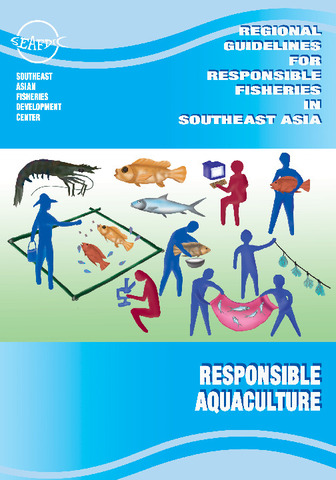
Regional guidelines for responsible fisheries in Southeast Asia: Responsible aquaculture
Bagarinao, TeodoraThis 43-page guidebook presents the code of conduct that has been re-written, expanded, clarified and annotated with definitions and examples to consider the fish farming industries in Southeast Asia. The source of the ... (Aquaculture Department, Southeast Asian Fisheries Development Center, 2005)