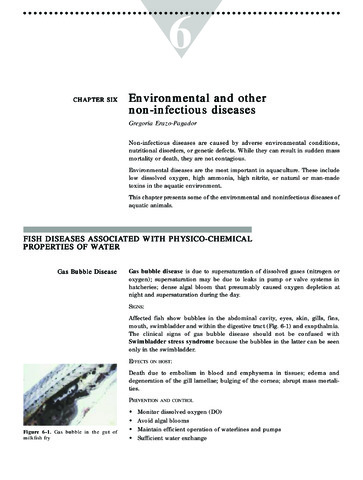
Environmental and other non-infectious diseases


Share
Abstract
The chapter presents some of the environmental non-infectious diseases of aquatic animals. Non-infectious diseases are caused by adverse environmental conditions, nutritional disorders, or genetic defects. While they can result a sudden mass mortality or death, they are not contagious. Environmental diseases are the most important in aquaculture. This includes low dissolved oxygen, high ammonia, high nitrite, or natural or man-made toxins in the aquatic environment.
Suggested Citation
Erazo-Pagador, G. E. (2001). In G. D. Lio-Po, C. R. Lavilla, & E. R. Cruz-Lacierda (Eds.), Health management in aquaculture (pp. 75-81). Tigbauan, Iloilo, Philippines: Aquaculture Department, Southeast Asian Fisheries Development Center.
Type
Book chapterISBN
9718511458Collections
Related items
Showing items related by title, author, creator and subject.
-
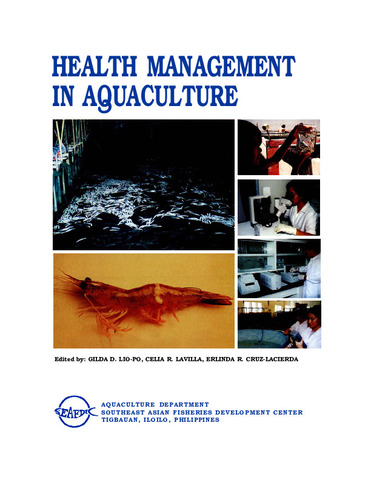
Health management in aquaculture
(Aquaculture Department, Southeast Asian Fisheries Development Center, 2001)A textbook on diseases of cultured warmwater fish and shrimps in the Philippines. Eleven chapters cover essential information on the basic principles of disease causation, major diseases of cultured fish and crustaceans, particularly shrimps, and methods of prevention and control. Emphasis is made on major diseases that occur in the Philippines and other countries in the Asian region. Included also are topics on harmful algae, immunology and molecular biological diagnostic techniques. -
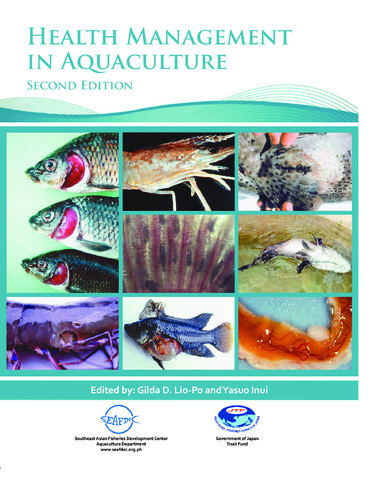
Health management in aquaculture
(Aquaculture Department, Southeast Asian Fisheries Development Center, 2010-07)A textbook on diseases of cultured warmwater fish and shrimps in the Philippines. Eleven chapters cover essential information on the basic principles of disease causation, major diseases of cultured fish and crustaceans, particularly shrimps, and methods of prevention and control. Emphasis is made on major diseases that occur in the Philippines and other countries in the Asian region. Included also are topics on harmful algae, immunology and molecular biological diagnostic techniques. -
Recent trends in fish diseases in Japan
(Aquaculture Department, Southeast Asian Fisheries Development Center, 1995)Losses of cultured marine and freshwater fishes due to diseases averaged about 20,000 tons each year or 6% of the aquaculture production in Japan in 1980-1991. During this last decade, bacterial diseases have been responsible for most of the losses. Three trends are evident from epidemiological data. First, diseases caused by bacteria with multiple drug resistance are prevalent, and these are difficult to overcome by chemotherapy. Second, parasitic diseases and viral diseases that are practically impossible to cure are increasing. Third, some diseases seem to originate in juveniles (seed) imported from other countries. Further research should focus on: (1) improving dietary and environmental conditions, (2) giving the host animals resistance against disease through methods such as vaccination, and (3) developing diagnostic and disinfection procedures for epidemics. Active exchange of information is necessary to prevent, or alleviate the effects of, the spread of diseases through international export and import of juveniles.