Environmental diseases


Share
Abstract
This chapter focuses on swimbladder stress syndrome and gas bubble disease, the two most common disorders due to adverse environmental conditions.
Suggested Citation
Erazo-Pagador, G. E., & Cruz-Lacierda, E. R. (2004). Environmental diseases. In K. Nagasawa & E. R. Cruz-Lacierda (Eds.), Diseases of cultured groupers (pp. 67–71). Tigbauan, Iloilo, Philippines: Aquaculture Department, Southeast Asian Fisheries Development Center.
Type
Book chapterISBN
9718511709Collections
Related items
Showing items related by title, author, creator and subject.
-
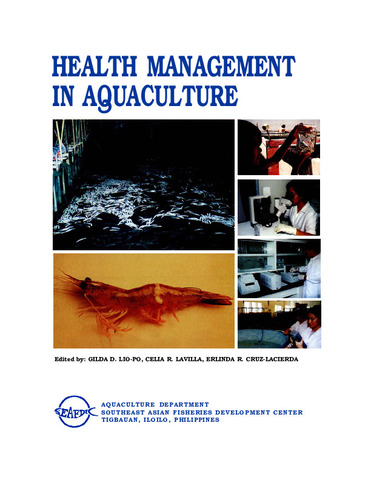
Health management in aquaculture
(Aquaculture Department, Southeast Asian Fisheries Development Center, 2001)A textbook on diseases of cultured warmwater fish and shrimps in the Philippines. Eleven chapters cover essential information on the basic principles of disease causation, major diseases of cultured fish and crustaceans, ... -
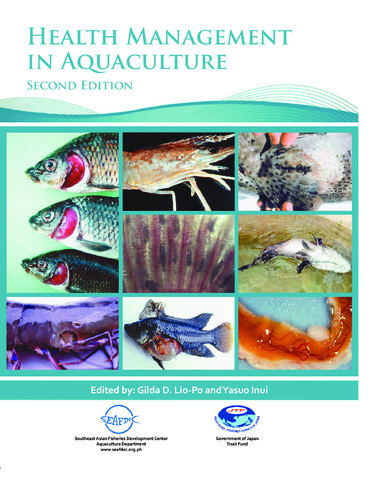
Health management in aquaculture
(Aquaculture Department, Southeast Asian Fisheries Development Center, 2010-07)A textbook on diseases of cultured warmwater fish and shrimps in the Philippines. Eleven chapters cover essential information on the basic principles of disease causation, major diseases of cultured fish and crustaceans, ... -
Recent trends in fish diseases in Japan
(Aquaculture Department, Southeast Asian Fisheries Development Center, 1995)Losses of cultured marine and freshwater fishes due to diseases averaged about 20,000 tons each year or 6% of the aquaculture production in Japan in 1980-1991. During this last decade, bacterial diseases have been responsible ...