Browsing Fish for the People by Title
Now showing items 1-20 of 41
-
Achieving high production of micropropagated seaweed through optimization of the culture protocol
; Faisan, Joseph P., Jr. ; (Secretariat, Southeast Asian Fisheries Development Center, 2023-07)
Kappaphycus and Eucheuma are the two carrageenanproducing red algae extensively cultured and farmed in tropical and subtropical waters. Seaweed production accounted for 5.4 percent of the world’s aquaculture production in 2019, which was over USD 15 billion in value. With this value share, the production of seaweed farming was higher than other aquatic commodities, such as tilapia, carp, shrimps, and others (Cai et al., 2021). The red algae production of the Philippines started in the 1960s (Ronquillo & Gabral-Llana, 1989), and by the early 2000s, the country had become the world’s top supplier of seaweed, particularly Kappaphycus sp., until 2007, when Indonesia outperformed it. Problems and challenges in seaweed farming, including climate change, pests and diseases, and biosecurity issues, caused the continuous decline of the seaweed production yield (Faisan, Sollesta-Pitogo, & de la Peña, 2022). Furthermore, the deterioration of seaweed quality caused by the repetitive use of vegetative cutting methods has also become one of the most pressing concerns in seaweed farming. Unfortunately, this procedure of growing plantlets for farming is one of the most common methods many seaweed farms used in the Philippines and other countries. Research in SEAFDEC Aquaculture Department (AQD) looks into breaking from the conventional method of farming seaweed plantlets and optimizing laboratorybased production. With this, it hopes to create a more sustainable source of propagules, better growth and survival in grow-out, and a higher carrageenan quality in cultured Kappaphycus alvarezii.
; (Secretariat, Southeast Asian Fisheries Development Center, 2023-07)
Kappaphycus and Eucheuma are the two carrageenanproducing red algae extensively cultured and farmed in tropical and subtropical waters. Seaweed production accounted for 5.4 percent of the world’s aquaculture production in 2019, which was over USD 15 billion in value. With this value share, the production of seaweed farming was higher than other aquatic commodities, such as tilapia, carp, shrimps, and others (Cai et al., 2021). The red algae production of the Philippines started in the 1960s (Ronquillo & Gabral-Llana, 1989), and by the early 2000s, the country had become the world’s top supplier of seaweed, particularly Kappaphycus sp., until 2007, when Indonesia outperformed it. Problems and challenges in seaweed farming, including climate change, pests and diseases, and biosecurity issues, caused the continuous decline of the seaweed production yield (Faisan, Sollesta-Pitogo, & de la Peña, 2022). Furthermore, the deterioration of seaweed quality caused by the repetitive use of vegetative cutting methods has also become one of the most pressing concerns in seaweed farming. Unfortunately, this procedure of growing plantlets for farming is one of the most common methods many seaweed farms used in the Philippines and other countries. Research in SEAFDEC Aquaculture Department (AQD) looks into breaking from the conventional method of farming seaweed plantlets and optimizing laboratorybased production. With this, it hopes to create a more sustainable source of propagules, better growth and survival in grow-out, and a higher carrageenan quality in cultured Kappaphycus alvarezii. -
Achieving sustainable aquaculture in Southeast Asia: A case study on community-based giant freshwater prawn production in Laguna Lake, Philippines
; Aya, Frolan; ; Ito, Sayaka ; ; (Secretariat, Southeast Asian Fisheries Development Center, 2024-10)
The Aquaculture Department of the Southeast Asian Fisheries Development Center (SEAFDEC/AQD) implemented the project “Sustainable Aquaculture through Cost-effective Culture Systems, and Prompt and Effective Aquatic Animal Health Management” from 2020 to 2024 with support from the Japanese Trust Fund (JTF). The Project consists of three main activities: 1) cost-effective culture system, 2) prompt and effective aquatic animal health management, and 3) capacity enhancement for sustainable aquaculture. It complies with Resolution No. 16 Strengthen aquaculture governance and implement good aquaculture practices to sustain production for food safety and security, sustainable livelihoods, and rural development of the ASEAN-SEAFDEC Resolution and Plan of Action on Sustainable Fisheries for Food Security for the ASEAN Region Towards 2030 (RES&POA-2030). Recognizing the success and expertise of AQD in the development of aquaculture technologies, especially in broodstock management, spawning, larval rearing, nursery and grow-out culture of aquatic fish, crustaceans, mollusks, sandfish, and seaweeds, feed development, fish health management, development of vaccine treatment, protective measures against existing and emerging diseases, community-based resource management, and implementation of aquaculture related training courses, the Project was conducted to improve the stability and sustainability of aquatic food production and for technology dissemination in the Southeast Asian region. Under Activity 1 of this Project, this study aims to establish a community-based seedlings supply system. This article highlights the inherent challenges of hatchery production, particularly our growing vulnerability to climate variability, including temperature fluctuations and water quality issues. Effective data monitoring can guide adaptive management strategies through science-based strategies, such as investing in appropriate technologies, adjusting densities, and changing feeding practices to boost production yields. -
Addressing gaps in the culture of pathogen-free polychaetes as feed in shrimp hatcheries
Mandario, Mary Anne (Secretariat, Southeast Asian Fisheries Development Center, 2018)
One of the factors that contribute to the success of shrimp hatchery operations is the availability of good quality broodstock diets. Polychaetes have been regarded as the best maturation diet for shrimps as they contain essential nutrients requisite for the reproduction of shrimps. Consequently, the demand for polychaetes increased with the intensification of shrimp farming and as a result, the natural stocks are depleting gradually and thus, could no longer provide sustainable supply for shrimp hatcheries. In addition, the issue on biosecurity concerning wild polychaetes prompted the shrimp farmers to obtain polychaetes from reputable sources, thus, the culture of polychaetes under controlled condition has become a sustainable alternative. The SEAFDEC Aquaculture Department (SEAFDEC/AQD) therefore initiated the “Refinement of rearing and feeding techniques for sustainable mass production of the polychaete Marphysa sp.” to address the gaps in polychaetes culture and ensure the sustainability of polychaetes production to supply the shrimp hatcheries at SEAFDEC/AQD, and where the potential mass production of the polychaetes (Marphysa sp.) in indoor tanks is being undertaken to ensure that these are pathogen-free. -
Advocating preventive measures that inhibit early mortality syndrome in shrimps
Tendencia, Eleonor; (Secretariat, Southeast Asian Fisheries Development Center, 2017)
Early Mortality Syndrome (EMS) is a generic name used to describe the observed mortality occurring within the first 30 days of stocking shrimp (Penaeus sp.) post larvae (PL) in ponds. The aquaculture species reported to be affected by EMS are Penaeus monodon, P. vannamei and P. chinensis, of which P. monodon is the most susceptible. EMS has been reported in China (2009), Viet Nam (2010), Malaysia and Borneo (2011), and Thailand (2012). EMS could have been present in the Philippines as early as 2007 but this was not given attention then. Fish farmers in the Philippines observed that mortalities that occur as early as one week after stocking P. monodon PL in ponds or within two months of stocking were not due to the whitespot syndrome virus (WSSV). Hence, the farmers call it the two-month mortality syndrome (Tendencia et al., 2014). EMS is associated with WSSV, microsporidian infestation, Vibrio infection, and chemical contamination (Flegel, 2016; FAO, 2013). Affected shrimps have pale to whitish hepatopancreas with black spots or streaks, rigid and hard to squash. Histopathology of the hepatopancreas of shrimp samples from EMS cases showed massive necrosis and sloughing or shedding of the epithelial cells. EMS characterised by these specific histopathological changes in the hepatopancreas is called Acute Hepatopancreatic Necrosis Disease (AHPND). Incidence of AHPND has been recently reported in China, India, Malaysia, Mexico, Philippines, Thailand, and Viet Nam. -
Black tiger shrimp culture rejuvenation: the OPLAN Balik Sugpo of SEAFDEC/AQD
Mamauag, Roger Edward; ; (Secretariat, Southeast Asian Fisheries Development Center, 2021)
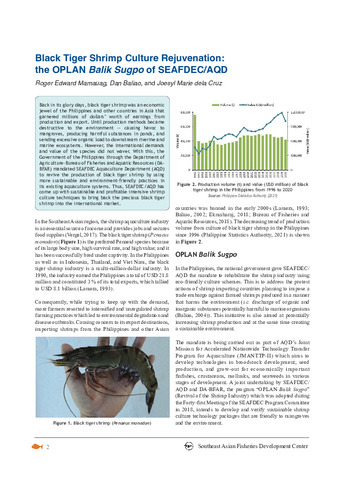
Back in its glory days, black tiger shrimp was an economic jewel of the Philippines and other countries in Asia that garnered millions of dollars’ worth of earnings from production and export. Until production methods became destructive to the environment — causing havoc to mangroves, producing harmful substances in ponds, and sending excessive organic load to downstream riverine and marine ecosystems. However, the international demands and value of the species did not waver. With this, the Government of the Philippines through the Department of Agriculture-Bureau of Fisheries and Aquatic Resources (DABFAR) mandated SEAFDEC Aquaculture Department (AQD) to revive the production of black tiger shrimp by using more sustainable and environment-friendly practices in its existing aquaculture systems. Thus, SEAFDEC/AQD has come up with sustainable and profitable intensive shrimp culture techniques to bring back the precious black tiger shrimp into the international market. -
Boosting the sustainability of aquaculture feed for the lucrative business of mangrove crab grow-out culture
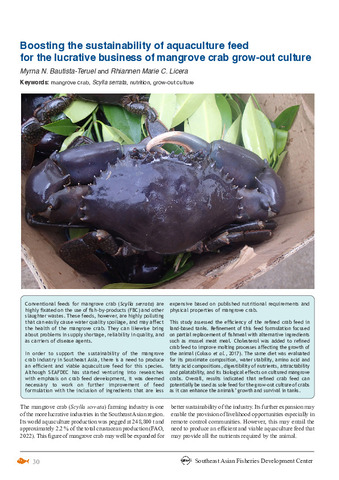
(Secretariat, Southeast Asian Fisheries Development Center, 2023-12)Conventional feeds for mangrove crab (Scylla serrata) are highly fixated on the use of fish-by-products (FBC) and other slaughter wastes. These feeds, however, are highly polluting that can easily cause water quality spoilage, and may affect the health of the mangrove crab. They can likewise bring about problems in supply shortage, reliability in quality, and as carriers of disease agents. In order to support the sustainability of the mangrove crab industry in Southeast Asia, there is a need to produce an efficient and viable aquaculture feed for this species. Although SEAFDEC has started venturing into researches with emphasis on crab feed development, it was deemed necessary to work on further improvement of feed formulation with the inclusion of ingredients that are less expensive based on published nutritional requirements and physical properties of mangrove crab. This study assessed the efficiency of the refined crab feed in land-based tanks. Refinement of this feed formulation focused on partial replacement of fishmeal with alternative ingredients such as mussel meat meal. Cholesterol was added to refined crab feed to improve molting processes affecting the growth of the animal (Coloso et al., 2017). The same diet was evaluated for its proximate composition, water stability, amino acid and fatty acid compositions, digestibility of nutrients, attractability and palatability, and its biological effects on cultured mangrove crabs. Overall, results indicated that refined crab feed can potentially be used as sole feed for the grow-out culture of crabs as it can enhance the animals’ growth and survival in tanks. -
Development of a sustainable mangrove crab industry through science-based research
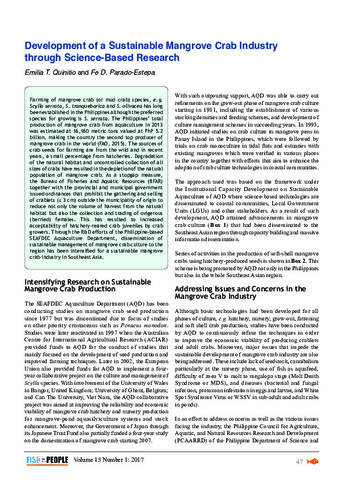
(Secretariat, Southeast Asian Fisheries Development Center, 2017)Farming of mangrove crab (or mud crab) species, e.g. Scylla serrata, S. tranquebarica and S. olivacea has long been established in the Philippines although the preferred species for growing is S. serrata. The Philippines’ total production of mangrove crab from aquaculture in 2013 was estimated at 16,160 metric tons valued at PhP 5.2 billion, making the country the second top producer of mangrove crab in the world (FAO, 2015). The sources of crab seeds for farming are from the wild and in recent years, a small percentage from hatcheries. Degradation of the natural habitat and uncontrolled collection of all sizes of crabs have resulted in the depletion of the natural population of mangrove crab. As a stopgap measure, the Bureau of Fisheries and Aquatic Resources (BFAR) together with the provincial and municipal government issued ordinances that prohibit the gathering and selling of crablets (≤3 cm) outside the municipality of origin to reduce not only the volume of harvest from the natural habitat but also the collection and trading of ovigerous (berried) females. This has resulted to increased acceptability of hatchery-reared crab juveniles by crab growers. Through the R&D efforts of the Philippine-based SEAFDEC Aquaculture Department, dissemination of sustainable management of mangrove crab culture to the region has been intensified for a sustainable mangrove crab industry in Southeast Asia. -
Development of aquaculture techniques on new aquatic species to create and promote a local aquaculture industry in Southeast Asia
Legaspi, Ma. Irene; Buen-Ursua, Shelah Mae ; Ito, Sayaka ; ; (Secretariat, Southeast Asian Fisheries Development Center, 2024-12)
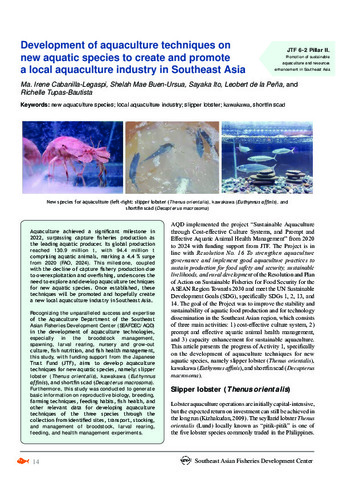
Aquaculture achieved a significant milestone in 2022, surpassing capture fisheries production as the leading aquatic producer. Its global production reached 130.9 million t, with 94.4 million t comprising aquatic animals, marking a 4.4 % surge from 2020 (FAO, 2024). This milestone, coupled with the decline of capture fishery production due to overexploitation and overfishing, underscores the need to explore and develop aquaculture techniques for new aquatic species. Once established, these techniques will be promoted and hopefully create a new local aquaculture industry in Southeast Asia. Recognizing the unparalleled success and expertise of the Aquaculture Department of the Southeast Asian Fisheries Development Center (SEAFDEC/AQD) in the development of aquaculture technologies, especially in the broodstock management, spawning, larval rearing, nursery and grow-out culture, fish nutrition, and fish health management, this study, with funding support from the Japanese Trust Fund (JTF), aims to develop aquaculture techniques for new aquatic species, namely: slipper lobster (Thenus orientalis), kawakawa (Euthynnus affinis), and shortfin scad (Decapterus macrosoma). Furthermore, this study was conducted to generate basic information on reproductive biology, breeding, farming techniques, feeding habits, fish health, and other relevant data for developing aquaculture techniques of the three species through the collection from identified sites, transport, stocking, and management of broodstock, larval rearing, feeding, and health management experiments. -
Enhanced biosecurity measures for sustainable aquaculture: Shrimp hatchery operations
; ; Mamauag, Roger Edward; ; (Secretariat, Southeast Asian Fisheries Development Center, 2021-01-30)
Long before the COVID-19 pandemic, the Broodstock Facility and Shrimp Hatchery Complex of SEAFDEC Aquaculture Department (AQD) in Tigbauan, Iloilo, Philippines, has already been practicing the best quarantine protocols. The gold standards to ensure the production of diseasefree and high-quality shrimp are being developed by AQD under the program “OPLAN Balik Sugpo” or Operation Plan for Black Tiger Prawn Revival. Initiated in 2017, this Program generally aims to bring back the Penaeus monodon industry of the Philippines and help farmers revive their hopes and venture again into shrimp culture. Under the Program, the disease prevention scheme is currently undergoing verification for responsible management of shrimp broodstock obtained from the natural environment at AQD’s Broodstock Facility, and for the care of the postlarval stage at AQD’s Shrimp Hatchery Complex. -
Enhancing the reproductive performance of cultured shrimp: novel information on scent, maturation, and mating
Santander-Avancena, Sheryll (Secretariat, Southeast Asian Fisheries Development Center, 2022-07)
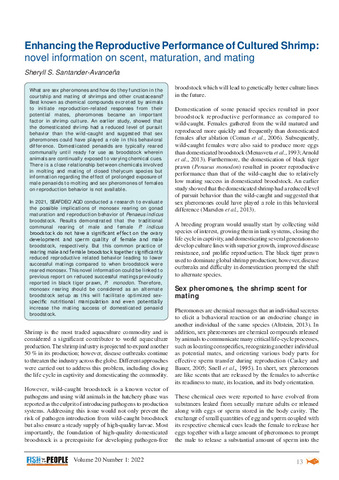
What are sex pheromones and how do they function in the courtship and mating of shrimps and other crustaceans? Best known as chemical compounds excreted by animals to initiate reproduction-related responses from their potential mates, pheromones became an important factor in shrimp culture. An earlier study, showed that the domesticated shrimp had a reduced level of pursuit behavior than the wild-caught and suggested that sex pheromones could have played a role in this behavioral difference. Domesticated penaeids are typically reared communally until ready for use as broodstock wherein animals are continually exposed to varying chemical cues. There is a close relationship between chemicals involved in molting and mating of closed thelycum species but information regarding the effect of prolonged exposure of male penaeids to molting and sex pheromones of females on reproduction behavior is not available. In 2021, SEAFDEC/AQD conducted a research to evaluate the possible implications of monosex rearing on gonad maturation and reproduction behavior of Penaeus indicus broodstock. Results demonstrated that the traditional communal rearing of male and female P. indicus broodstock do not have a significant effect on the ovary development and sperm quality of female and male broodstock, respectively. But this common practice of rearing male and female broodstock together significantly reduced reproductive related behavior leading to lower successful matings compared to when broodstock were reared monosex. This novel information could be linked to previous report on reduced successful matings previously reported in black tiger prawn, P. monodon. Therefore, monosex rearing should be considered as an alternate broodstock setup as this will facilitate optimized sexspecific nutritional manipulation and even potentially increase the mating success of domesticated penaeid broodstock. -
Establishing a community-based sea cucumber ranch: Merging science with local knowledge
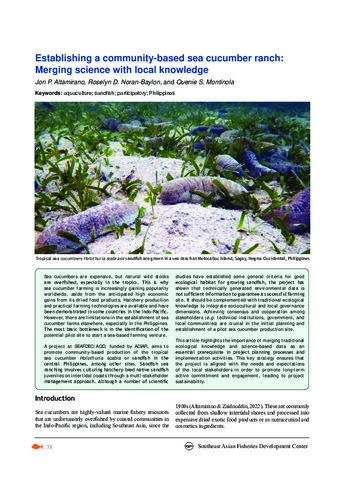
(Secretariat, Southeast Asian Fisheries Development Center, 2024-07)Sea cucumbers are expensive, but natural wild stocks are overfished, especially in the tropics. This is why sea cucumber farming is increasingly gaining popularity worldwide, aside from the anticipated high economic gains from its dried food products. Hatchery production and practical farming technologies are available and have been demonstrated in some countries in the Indo-Pacific. However, there are limitations in the establishment of sea cucumber farms elsewhere, especially in the Philippines. The most basic bottleneck is in the identification of the potential pilot site to start a sea-based farming venture. A project at SEAFDEC/AQD, funded by ACIAR, aims to promote community-based production of the tropical sea cucumber Holothuria scabra or sandfish in the central Philippines, among other sites. Sandfish sea ranching involves culturing hatchery-bred native sandfish juveniles on intertidal coasts through a multi-stakeholder management approach. Although a number of scientific studies have established some general criteria for good ecological habitat for growing sandfish, the project has shown that technically generated environmental data is not sufficient information to guarantee a successful farming site. It should be complemented with traditional ecological knowledge to integrate sociocultural and local governance dimensions. Achieving consensus and cooperation among stakeholders (e.g. technical institutions, government, and local communities) are crucial in the initial planning and establishment of a pilot sea cucumber production site. This article highlights the importance of merging traditional ecological knowledge and science-based data as an essential prerequisite in project planning processes and implementation activities. This key strategy ensures that the project is aligned with the needs and expectations of the local stakeholders in order to promote long-term active commitment and engagement, leading to project sustainability. -
Establishing adaptive strategies towards a climate-resilient seaweed farming: A case in Panobolon Island, Guimaras, Philippines
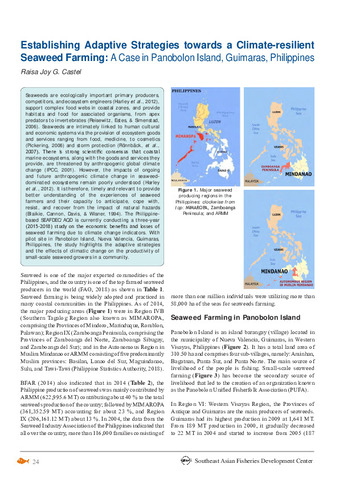
(Secretariat, Southeast Asian Fisheries Development Center, 2018)Seaweeds are ecologically important primary producers, competitors, and ecosystem engineers (Harley et al., 2012), support complex food webs in coastal zones, and provide habitats and food for associated organisms, from apex predators to invertebrates (Reisewitz, Estes, & Simenstad, 2006). Seaweeds are intimately linked to human cultural and economic systems via the provision of ecosystem goods and services ranging from food, medicine, to cosmetics (Pickering, 2006) and storm protection (Rönnbäck, et al., 2007). There is strong scientific consensus that coastal marine ecosystems, along with the goods and services they provide, are threatened by anthropogenic global climate change (IPCC, 2001). However, the impacts of ongoing and future anthropogenic climate change in seaweeddominated ecosystems remain poorly understood (Harley et al., 2012). It is therefore, timely and relevant to provide better understanding of the experiences of seaweed farmers and their capacity to anticipate, cope with, resist, and recover from the impact of natural hazards (Blaikie, Cannon, Davis, & Wisner, 1994). The Philippine-based SEAFDEC/AQD is currently conducting a three-year (2015-2018) study on the economic benefits and losses of seaweed farming due to climate change indicators. With pilot site in Panobolon Island, Nueva Valencia, Guimaras, Philippines, the study highlights the adaptive strategies and the effects of climatic change on the productivity of small-scale seaweed growers in a community. -
Establishment of a responsible shrimp farming system using an ecosystem approach
Tendencia, Eleonor; Ito, Sayaka ; ; (Secretariat, Southeast Asian Fisheries Development Center, 2024-12)
Green algae (Caulerpa), red algae (Gracilaria), and sandfish were nominated as purifying organisms suitable for shrimp farms in this study. Circulating microcosm experiments were conducted to examine the effects of those purifying organism candidates on rearing water quality and disease-causative bacteria and their impact on shrimp production. However, the three nominated purifying organisms could not enhance shrimp survival. Due to mass weight reduction during the experimental period, these purifying organisms were unlikely to be used as aquaculture by-products. On the other hand, the experiment showed that Caulerpa, Gracilaria, and sandfish, while not having the potential to reduce or remove disease-causing bacteria, can still effectively remove NH₄ and total assimilated nutrients (TAN). The removal level did not differ among the three septic organisms, indicating that they can improve water quality equally. The septic organisms are expected to contribute in maintaining a healthy aquaculture environment by mitigating harmful substances for shrimp, such as NH₄ and TAN, in aquaculture effluents. It is essential to note that if these purifying organisms are utilized in an aquaculture system, proper adjustments to their culture environment, such as salinity, should be made to ensure higher rates of survival and efficiency. This valuable information may help small-scale shrimp farmers establish aquaculture management plans to improve productivity through the proper maintenance of the aquaculture environment by using septic organisms. -
Exploring the aquaculture potential of ayungin, an endemic freshwater fish in the Philippines
Aya, Frolan (Secretariat, Southeast Asian Fisheries Development Center, 2021-01-30)
In the early 1960s, silver therapon (Leiopotherapon plumbeus), locally known as ayungin, is regarded as one of the most abundant freshwater fishery resources in the largest lake in the Philippines, Laguna de Bay. Smallscale fishing communities around the lake are reliant on this fishery resource for subsistence consumption and livelihood. Recently, ayungin is touted as the most exploited commercial freshwater fish species in most regions of the country. The decline of this important food fish has led to a growing interest in its domestication for culture production and for possible replenishment of depleted stocks in the wild. Therefore, efforts to domesticate, manage, and conserve this native aquatic species have been given a high priority. Due to its readiness to spawn in captivity and successful hatchery production in outdoor tanks, ayungin is considered an emerging species with potential for inland freshwater aquaculture. -
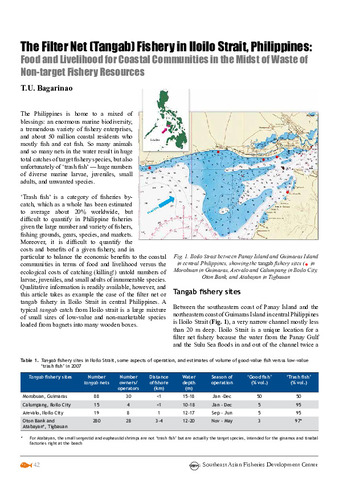
The filter net [tangab] fishery in Iloilo Strait, Philippines: Food and livelihood for coastal communities in the midst of waste of non-target fishery resources
Bagarinao, Teodora (Secretariat, Southeast Asian Fisheries Development Center, 2008)
The Philippines is home to a mixed of blessings: an enormous marine biodiversity, a tremendous variety of fishery enterprises, and about 50 million coastal residents who mostly fish and eat fish. So many animals and so many nets in the water result in huge total catches of target fishery species, but also unfortunately of ‘trash fish’ — huge numbers of diverse marine larvae, juveniles, small adults, and unwanted species. 'Trash fish' is a category of fisheries bycatch, which as a whole has been estimated to average about 20% worldwide, but difficult to quantify in Philippine fisheries given the large number and variety of fishers, fishing grounds, gears, species, and markets. Moreover, it is difficult to quantify the costs and benefits of a given fishery, and in particular to balance the economic benefits to the coastal communities in terms of food and livelihood versus the ecological costs of catching (killing!) untold numbers of larvae, juveniles, and small adults of innumerable species. Qualitative information is readily available, however, and this article takes as example the case of the filter net or tangab fishery in Iloilo Strait in central Philippines. A typical tangab catch from Iloilo strait is a large mixture of small sizes of low-value and non-marketable species loaded from bagnets into many wooden boxes. -
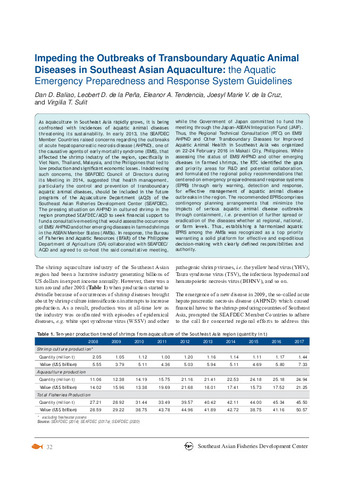
Impeding the outbreaks of transboundary aquatic animal diseases in Southeast Asian aquaculture: The aquatic emergency preparedness and response system guidelines
; ; Tendencia, Eleonor; ; (Secretariat, Southeast Asian Fisheries Development Center, 2020)
As aquaculture in Southeast Asia rapidly grows, it is being confronted with incidences of aquatic animal diseases threatening its sustainability. In early 2013, the SEAFDEC Member Countries raised concerns regarding the outbreaks of acute hepatopancreatic necrosis disease (AHPND), one of the causative agents of early mortality syndrome (EMS), that affected the shrimp industry of the region, specifically in Viet Nam, Thailand, Malaysia, and the Philippines that led to low production and significant economic losses. In addressing such concerns, the SEAFDEC Council of Directors during its Meeting in 2014, suggested that health management, particularly the control and prevention of transboundary aquatic animal diseases, should be included in the future programs of the Aquaculture Department (AQD) of the Southeast Asian Fisheries Development Center (SEAFDEC). The pressing situation on AHPND in cultured shrimp in the region prompted SEAFDEC/AQD to seek financial support to fund a consultative meeting that would assess the occurrence of EMS/AHPND and other emerging diseases in farmed shrimps in the ASEAN Member States (AMSs). In response, the Bureau of Fisheries and Aquatic Resources (BFAR) of the Philippine Department of Agriculture (DA) collaborated with SEAFDEC/AQD and agreed to co-host the said consultative meeting, while the Government of Japan committed to fund the meeting through the Japan-ASEAN Integration Fund (JAIF). Thus, the Regional Technical Consultation (RTC) on EMS/AHPND and Other Transboundary Diseases for Improved Aquatic Animal Health in Southeast Asia was organized on 22-24 February 2016 in Makati City, Philippines. While assessing the status of EMS/AHPND and other emerging diseases in farmed shrimps, the RTC identified the gaps and priority areas for R&D and potential collaboration, and formulated the regional policy recommendations that centered on emergency preparedness and response systems (EPRS) through early warning, detection and response, for effective management of aquatic animal disease outbreaks in the region. The recommended EPRS comprises contingency planning arrangements that minimize the impacts of serious aquatic animal disease outbreaks through containment, i.e. prevention of further spread or eradication of the diseases whether at regional, national, or farm levels. Thus, establishing a harmonized aquatic EPRS among the AMSs was recognized as a top priority warranting a solid platform for effective and expeditious decision-making with clearly defined responsibilities and authority. -
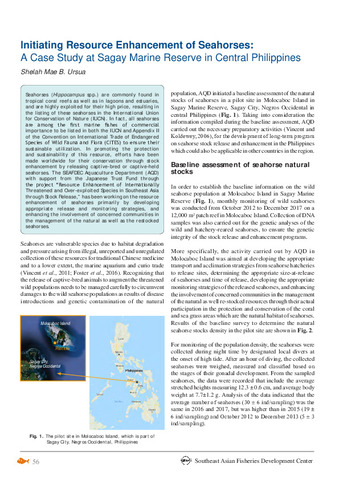
Initiating resource enhancement of seahorses: A case study at Sagay marine reserve in central Philippines
(Secretariat, Southeast Asian Fisheries Development Center, 2017)Seahorses (Hippocampus spp.) are commonly found in tropical coral reefs as well as in lagoons and estuaries, and are highly exploited for their high price, resulting in the listing of these seahorses in the International Union for Conservation of Nature (IUCN). In fact, all seahorses are among the first marine fishes of commercial importance to be listed in both the IUCN and Appendix II of the Convention on International Trade of Endangered Species of Wild Fauna and Flora (CITES) to ensure their sustainable utilization. In promoting the protection and sustainability of this resource, efforts have been made worldwide for their conservation through stock enhancement by releasing captive-bred or captive-held seahorses. The SEAFDEC Aquaculture Department (AQD) with support from the Japanese Trust Fund through the project ‘Resource Enhancement of Internationally Threatened and Over-exploited Species in Southeast Asia through Stock Release,’ has been working on the resource enhancement of seahorses primarily by developing appropriate release and monitoring strategies, and enhancing the involvement of concerned communities in the management of the natural as well as the restocked seahorses. -
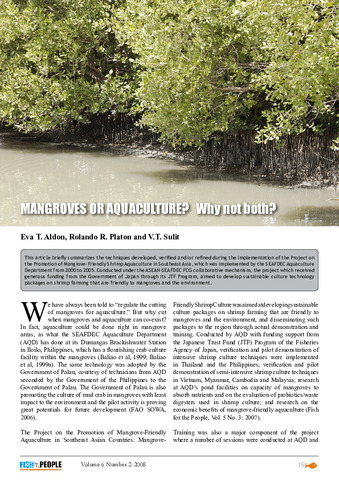
Mangroves or aquaculture? Why not both?
(Secretariat, Southeast Asian Fisheries Development Center, 2008)This article briefly summarizes the techniques developed, verified and/or refined during the implementation of the Project on the Promotion of Mangrove-Friendly Shrimp Aquaculture in Southeast Asia, which was implemented by the SEAFDEC Aquaculture Department from 2000 to 2005. Conducted under the ASEAN-SEAFDEC FCG collaborative mechanism, the project which received generous funding from the Government of Japan through its JTF Program, aimed to develop sustainable culture technology packages on shrimp farming that are friendly to mangroves and the environment. -
Mapping gendered spaces for sandfish resource management in Guimaras, Philippines
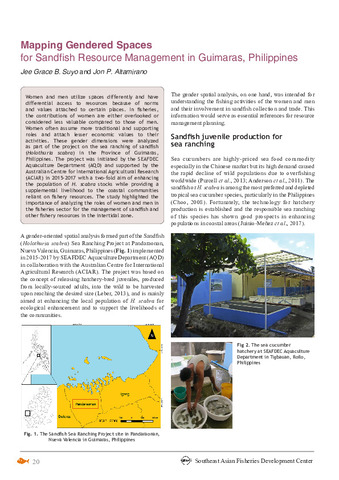
(Secretariat, Southeast Asian Fisheries Development Center, 2018)Women and men utilize spaces differently and have differential access to resources because of norms and values attached to certain places. In fisheries, the contributions of women are either overlooked or considered less valuable compared to those of men. Women often assume more traditional and supporting roles and attach lesser economic values to their activities. These gender dimensions were analyzed as part of the project on the sea ranching of sandfish (Holothuria scabra) in the Province of Guimaras, Philippines. The project was initiated by the SEAFDEC Aquaculture Department (AQD) and supported by the Australian Centre for International Agricultural Research (ACIAR) in 2015-2017 with a two-fold aim of enhancing the population of H. scabra stocks while providing a supplemental livelihood to the coastal communities reliant on fishery resources. The study highlighted the importance of analyzing the roles of women and men in the fisheries sector for the management of sandfish and other fishery resources in the intertidal zone. -
Meeting social and economic challenges in Southeast Asian aquaculture: Targeting rural aquaculture development for poverty alleviation
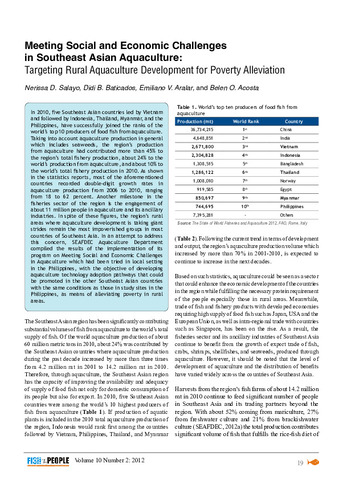
(Secretariat, Southeast Asian Fisheries Development Center, 2012)In 2010, five Southeast Asian countries led by Vietnam and followed by Indonesia, Thailand, Myanmar, and the Philippines, have successfully joined the ranks of the world’s top 10 producers of food fish from aquaculture. Taking into account aquaculture production in general which includes seaweeds, the region’s production from aquaculture had contributed more than 45% to the region’s total fishery production, about 24% to the world’s production from aquaculture, and about 10% to the world’s total fishery production in 2010. As shown in the statistics reports, most of the aforementioned countries recorded double-digit growth rates in aquaculture production from 2006 to 2010, ranging from 18 to 62 percent. Another milestone in the fisheries sector of the region is the engagement of about 11 million people in aquaculture and its ancillary industries. In spite of these figures, the region’s rural areas where aquaculture development is taking giant strides remain the most impoverished groups in most countries of Southeast Asia. In an attempt to address this concern, SEAFDEC Aquaculture Department compiled the results of the implementation of its program on Meeting Social and Economic Challenges in Aquaculture which had been tried in local setting in the Philippines, with the objective of developing aquaculture technology adoption pathways that could be promoted in the other Southeast Asian countries with the same conditions as those in study sites in the Philippines, as means of alleviating poverty in rural areas.