
Magazine and Newsletter Articles by SEAFDEC/AQD Staff
Browse by
These articles were contributed by AQD staff to various national and international magazines and newsletters.
Collections in this community
-
Fish for the People [41]
These articles were contributed by SEAFDEC/AQD staff to Fish for the People Magazine -
Magazine Articles [20]
Recent Submissions
-
Development of aquaculture techniques on new aquatic species to create and promote a local aquaculture industry in Southeast Asia
Legaspi, Ma. Irene ; Buen-Ursua, Shelah Mae ; Ito, Sayaka ; ; (Secretariat, Southeast Asian Fisheries Development Center, 2024-12)
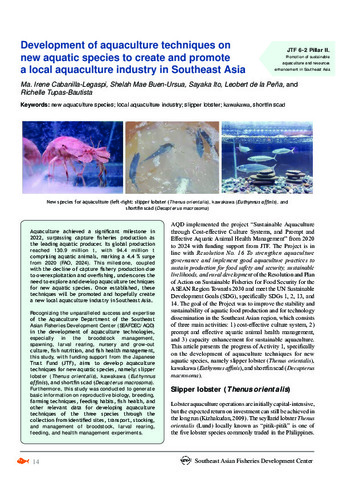
Aquaculture achieved a significant milestone in 2022, surpassing capture fisheries production as the leading aquatic producer. Its global production reached 130.9 million t, with 94.4 million t comprising aquatic animals, marking a 4.4 % surge from 2020 (FAO, 2024). This milestone, coupled with the decline of capture fishery production due to overexploitation and overfishing, underscores the need to explore and develop aquaculture techniques for new aquatic species. Once established, these techniques will be promoted and hopefully create a new local aquaculture industry in Southeast Asia. Recognizing the unparalleled success and expertise of the Aquaculture Department of the Southeast Asian Fisheries Development Center (SEAFDEC/AQD) in the development of aquaculture technologies, especially in the broodstock management, spawning, larval rearing, nursery and grow-out culture, fish nutrition, and fish health management, this study, with funding support from the Japanese Trust Fund (JTF), aims to develop aquaculture techniques for new aquatic species, namely: slipper lobster (Thenus orientalis), kawakawa (Euthynnus affinis), and shortfin scad (Decapterus macrosoma). Furthermore, this study was conducted to generate basic information on reproductive biology, breeding, farming techniques, feeding habits, fish health, and other relevant data for developing aquaculture techniques of the three species through the collection from identified sites, transport, stocking, and management of broodstock, larval rearing, feeding, and health management experiments.
; Buen-Ursua, Shelah Mae ; Ito, Sayaka ; ; (Secretariat, Southeast Asian Fisheries Development Center, 2024-12)
Aquaculture achieved a significant milestone in 2022, surpassing capture fisheries production as the leading aquatic producer. Its global production reached 130.9 million t, with 94.4 million t comprising aquatic animals, marking a 4.4 % surge from 2020 (FAO, 2024). This milestone, coupled with the decline of capture fishery production due to overexploitation and overfishing, underscores the need to explore and develop aquaculture techniques for new aquatic species. Once established, these techniques will be promoted and hopefully create a new local aquaculture industry in Southeast Asia. Recognizing the unparalleled success and expertise of the Aquaculture Department of the Southeast Asian Fisheries Development Center (SEAFDEC/AQD) in the development of aquaculture technologies, especially in the broodstock management, spawning, larval rearing, nursery and grow-out culture, fish nutrition, and fish health management, this study, with funding support from the Japanese Trust Fund (JTF), aims to develop aquaculture techniques for new aquatic species, namely: slipper lobster (Thenus orientalis), kawakawa (Euthynnus affinis), and shortfin scad (Decapterus macrosoma). Furthermore, this study was conducted to generate basic information on reproductive biology, breeding, farming techniques, feeding habits, fish health, and other relevant data for developing aquaculture techniques of the three species through the collection from identified sites, transport, stocking, and management of broodstock, larval rearing, feeding, and health management experiments. -
Establishment of a responsible shrimp farming system using an ecosystem approach
Tendencia, Eleonor; Ito, Sayaka ; ; (Secretariat, Southeast Asian Fisheries Development Center, 2024-12)
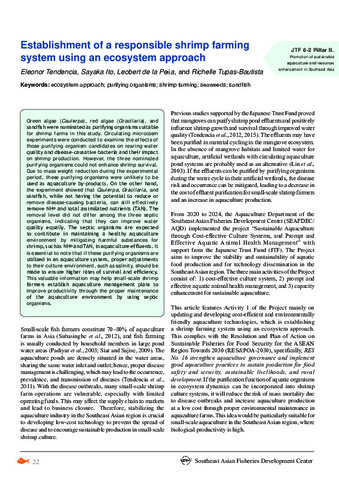
Green algae (Caulerpa), red algae (Gracilaria), and sandfish were nominated as purifying organisms suitable for shrimp farms in this study. Circulating microcosm experiments were conducted to examine the effects of those purifying organism candidates on rearing water quality and disease-causative bacteria and their impact on shrimp production. However, the three nominated purifying organisms could not enhance shrimp survival. Due to mass weight reduction during the experimental period, these purifying organisms were unlikely to be used as aquaculture by-products. On the other hand, the experiment showed that Caulerpa, Gracilaria, and sandfish, while not having the potential to reduce or remove disease-causing bacteria, can still effectively remove NH₄ and total assimilated nutrients (TAN). The removal level did not differ among the three septic organisms, indicating that they can improve water quality equally. The septic organisms are expected to contribute in maintaining a healthy aquaculture environment by mitigating harmful substances for shrimp, such as NH₄ and TAN, in aquaculture effluents. It is essential to note that if these purifying organisms are utilized in an aquaculture system, proper adjustments to their culture environment, such as salinity, should be made to ensure higher rates of survival and efficiency. This valuable information may help small-scale shrimp farmers establish aquaculture management plans to improve productivity through the proper maintenance of the aquaculture environment by using septic organisms. -
Achieving sustainable aquaculture in Southeast Asia: A case study on community-based giant freshwater prawn production in Laguna Lake, Philippines
; Aya, Frolan; ; Ito, Sayaka ; ; (Secretariat, Southeast Asian Fisheries Development Center, 2024-10)
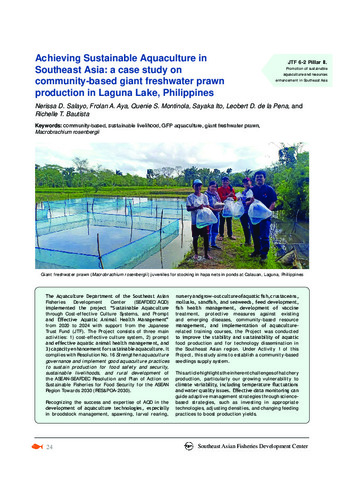
The Aquaculture Department of the Southeast Asian Fisheries Development Center (SEAFDEC/AQD) implemented the project “Sustainable Aquaculture through Cost-effective Culture Systems, and Prompt and Effective Aquatic Animal Health Management” from 2020 to 2024 with support from the Japanese Trust Fund (JTF). The Project consists of three main activities: 1) cost-effective culture system, 2) prompt and effective aquatic animal health management, and 3) capacity enhancement for sustainable aquaculture. It complies with Resolution No. 16 Strengthen aquaculture governance and implement good aquaculture practices to sustain production for food safety and security, sustainable livelihoods, and rural development of the ASEAN-SEAFDEC Resolution and Plan of Action on Sustainable Fisheries for Food Security for the ASEAN Region Towards 2030 (RES&POA-2030). Recognizing the success and expertise of AQD in the development of aquaculture technologies, especially in broodstock management, spawning, larval rearing, nursery and grow-out culture of aquatic fish, crustaceans, mollusks, sandfish, and seaweeds, feed development, fish health management, development of vaccine treatment, protective measures against existing and emerging diseases, community-based resource management, and implementation of aquaculture related training courses, the Project was conducted to improve the stability and sustainability of aquatic food production and for technology dissemination in the Southeast Asian region. Under Activity 1 of this Project, this study aims to establish a community-based seedlings supply system. This article highlights the inherent challenges of hatchery production, particularly our growing vulnerability to climate variability, including temperature fluctuations and water quality issues. Effective data monitoring can guide adaptive management strategies through science-based strategies, such as investing in appropriate technologies, adjusting densities, and changing feeding practices to boost production yields. -
Promoting sustainable aquaculture of freshwater species: The continuous quest for alternative feeds and adoption of feeding strategies
Aya, Frolan; Ito, Sayaka ; ; (Secretariat, Southeast Asian Fisheries Development Center, 2024-10)
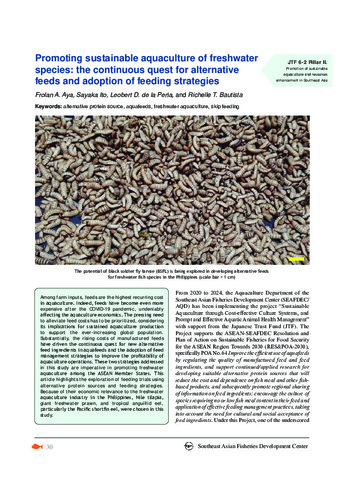
Among farm inputs, feeds are the highest recurring cost in aquaculture. Indeed, feeds have become even more expensive after the COVID-19 pandemic, undeniably affecting the aquaculture economics. The pressing need to alleviate feed costs has to be prioritized, considering its implications for sustained aquaculture production to support the ever-increasing global population. Substantially, the rising costs of manufactured feeds have driven the continuous quest for new alternative feed ingredients in aquafeeds and the adoption of feed management strategies to improve the profitability of aquaculture operations. These two strategies addressed in this study are imperative in promoting freshwater aquaculture among the ASEAN Member States. This article highlights the exploration of feeding trials using alternative protein sources and feeding strategies. Because of their economic relevance to the freshwater aquaculture industry in the Philippines, Nile tilapia, giant freshwater prawn, and tropical anguillid eel, particularly the Pacific shortfin eel, were chosen in this study. -
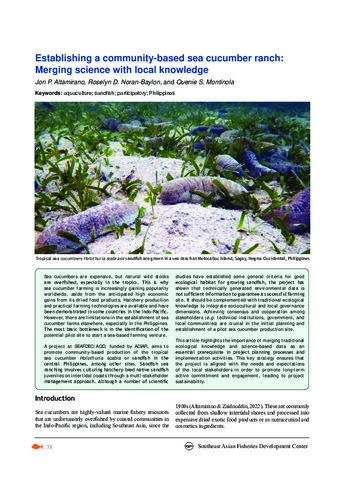
Establishing a community-based sea cucumber ranch: Merging science with local knowledge
(Secretariat, Southeast Asian Fisheries Development Center, 2024-07)Sea cucumbers are expensive, but natural wild stocks are overfished, especially in the tropics. This is why sea cucumber farming is increasingly gaining popularity worldwide, aside from the anticipated high economic gains from its dried food products. Hatchery production and practical farming technologies are available and have been demonstrated in some countries in the Indo-Pacific. However, there are limitations in the establishment of sea cucumber farms elsewhere, especially in the Philippines. The most basic bottleneck is in the identification of the potential pilot site to start a sea-based farming venture. A project at SEAFDEC/AQD, funded by ACIAR, aims to promote community-based production of the tropical sea cucumber Holothuria scabra or sandfish in the central Philippines, among other sites. Sandfish sea ranching involves culturing hatchery-bred native sandfish juveniles on intertidal coasts through a multi-stakeholder management approach. Although a number of scientific studies have established some general criteria for good ecological habitat for growing sandfish, the project has shown that technically generated environmental data is not sufficient information to guarantee a successful farming site. It should be complemented with traditional ecological knowledge to integrate sociocultural and local governance dimensions. Achieving consensus and cooperation among stakeholders (e.g. technical institutions, government, and local communities) are crucial in the initial planning and establishment of a pilot sea cucumber production site. This article highlights the importance of merging traditional ecological knowledge and science-based data as an essential prerequisite in project planning processes and implementation activities. This key strategy ensures that the project is aligned with the needs and expectations of the local stakeholders in order to promote long-term active commitment and engagement, leading to project sustainability. -
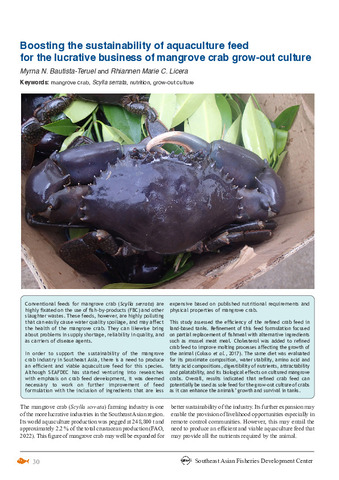
Boosting the sustainability of aquaculture feed for the lucrative business of mangrove crab grow-out culture
(Secretariat, Southeast Asian Fisheries Development Center, 2023-12)Conventional feeds for mangrove crab (Scylla serrata) are highly fixated on the use of fish-by-products (FBC) and other slaughter wastes. These feeds, however, are highly polluting that can easily cause water quality spoilage, and may affect the health of the mangrove crab. They can likewise bring about problems in supply shortage, reliability in quality, and as carriers of disease agents. In order to support the sustainability of the mangrove crab industry in Southeast Asia, there is a need to produce an efficient and viable aquaculture feed for this species. Although SEAFDEC has started venturing into researches with emphasis on crab feed development, it was deemed necessary to work on further improvement of feed formulation with the inclusion of ingredients that are less expensive based on published nutritional requirements and physical properties of mangrove crab. This study assessed the efficiency of the refined crab feed in land-based tanks. Refinement of this feed formulation focused on partial replacement of fishmeal with alternative ingredients such as mussel meat meal. Cholesterol was added to refined crab feed to improve molting processes affecting the growth of the animal (Coloso et al., 2017). The same diet was evaluated for its proximate composition, water stability, amino acid and fatty acid compositions, digestibility of nutrients, attractability and palatability, and its biological effects on cultured mangrove crabs. Overall, results indicated that refined crab feed can potentially be used as sole feed for the grow-out culture of crabs as it can enhance the animals’ growth and survival in tanks. -
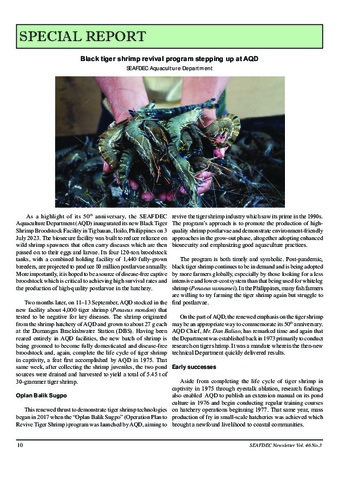
Black tiger shrimp revival program stepping up at AQD
(Secretariat, Southeast Asian Fisheries Development Center, 2023-11)As a highlight of its 50th anniversary, the SEAFDEC Aquaculture Department (AQD) inaugurated its new Black Tiger Shrimp Broodstock Facility in Tigbauan, Iloilo, Philippines on 3 July 2023. The biosecure facility was built to reduce reliance on wild shrimp spawners that often carry diseases which are then passed on to their eggs and larvae. Its four 120-ton broodstock tanks, with a combined holding facility of 1,440 fully-grown breeders, are projected to produce 80 million postlarvae annually. More importantly, it is hoped to be a source of disease-free captive broodstock which is critical to achieving high survival rates and the production of high-quality postlarvae in the hatchery. -
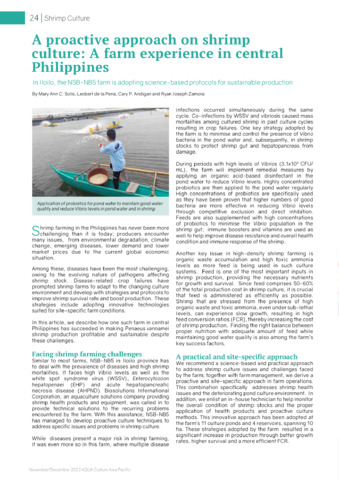
A proactive approach on shrimp culture: A farm experience in central Philippines
(Aqua Research Pte Ltd, 2022) -
Achieving high production of micropropagated seaweed through optimization of the culture protocol
; Faisan, Joseph P., Jr.; (Secretariat, Southeast Asian Fisheries Development Center, 2023-07)
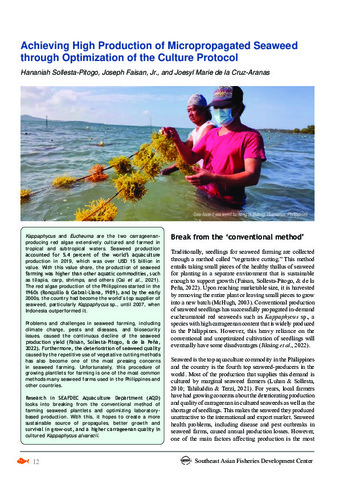
Kappaphycus and Eucheuma are the two carrageenanproducing red algae extensively cultured and farmed in tropical and subtropical waters. Seaweed production accounted for 5.4 percent of the world’s aquaculture production in 2019, which was over USD 15 billion in value. With this value share, the production of seaweed farming was higher than other aquatic commodities, such as tilapia, carp, shrimps, and others (Cai et al., 2021). The red algae production of the Philippines started in the 1960s (Ronquillo & Gabral-Llana, 1989), and by the early 2000s, the country had become the world’s top supplier of seaweed, particularly Kappaphycus sp., until 2007, when Indonesia outperformed it. Problems and challenges in seaweed farming, including climate change, pests and diseases, and biosecurity issues, caused the continuous decline of the seaweed production yield (Faisan, Sollesta-Pitogo, & de la Peña, 2022). Furthermore, the deterioration of seaweed quality caused by the repetitive use of vegetative cutting methods has also become one of the most pressing concerns in seaweed farming. Unfortunately, this procedure of growing plantlets for farming is one of the most common methods many seaweed farms used in the Philippines and other countries. Research in SEAFDEC Aquaculture Department (AQD) looks into breaking from the conventional method of farming seaweed plantlets and optimizing laboratorybased production. With this, it hopes to create a more sustainable source of propagules, better growth and survival in grow-out, and a higher carrageenan quality in cultured Kappaphycus alvarezii. -
Mussel culture gathers momentum in the Philippines
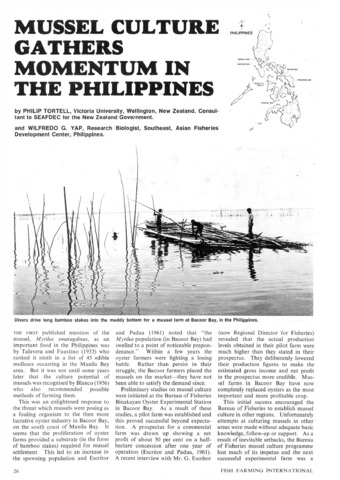
(Arthur J. Heighway Publications Ltd., 1976-12)Mussels (Mytilus smaragdinus) were posing a threat as fouling organisms in Bacoor Bay, on the south coast of Manila Bay but when attempts were made to market the mussel so much success was achieved that attempts to culture it were begun. A pilot farm was established; mussels now exceed oysters as the most important an profitable crop, 4 mussel projects have now been established, at Bacoor, Tinagong Dagat in northeast Panay, Jiabon in western Samar, and Panguil Bay in northwest Minanao. Projects of the Southeast Asian Fisheries Development Center (SEAFDEC) are also noted. The methods used in mussel culture are described; at Bacoor, Bamboo stakes are used as substrate. Cost and production estimates for a 1 ha farm using the bamboo stake substrate are given. -
The lowdown on world shrimp culture - II
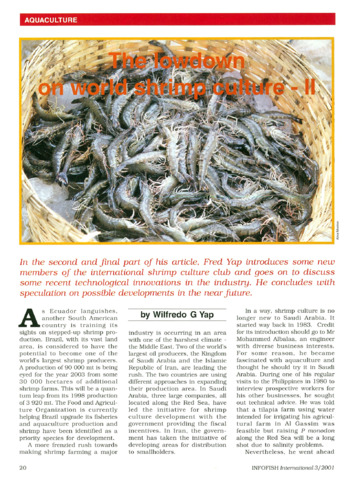
(INFOFISH, 2001)This paper introduces some new members of the international shrimp culture club and goes on to discuss some recent technological innovations in the industry, particularly the polyculture of tilapia (mainly Oreochromis mossambicus) and shrimp. -
The lowdown on world shrimp culture - I
(INFOFISH, 2001)Based on FAO time series data, in 1984 there were only 33 countries reporting farmed shrimp production. This increased to 51 in 1989 and rose to 60 in 1996. The world total shrimps and prawns production reached 1.114 million mt in 1998. This level represents more than a five-fold increase over the 1985 production of 213 640 mt. The outbreak of disease in shrimp farms has been a serious problem; the example of the white spot virus (WSSV) is given. The situation in two major shrimp producing countries, Thailand and Ecuador, is illustrated. -
Promoting tropical eel culture in the Philippines: Comparative performance of Anguilla bicolor pacifica and A. marmorata in captivity
Aya, Frolan (Secretariat, Southeast Asian Fisheries Development Center, 2023-02)
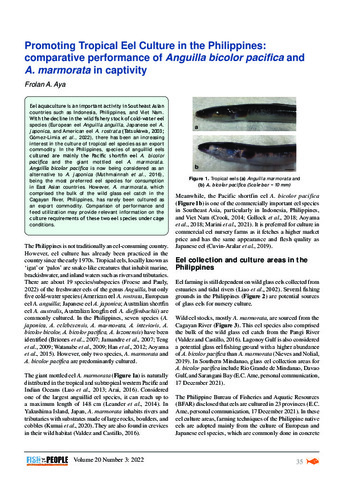
Eel aquaculture is an important activity in Southeast Asian countries such as Indonesia, Philippines, and Viet Nam. With the decline in the wild fishery stock of cold-water eel species (European eel Anguilla anguilla, Japanese eel A. japonica, and American eel A. rostrata (Tatsukawa, 2003; Gómez-Limia et al., 2022), there has been an increasing interest in the culture of tropical eel species as an export commodity. In the Philippines, species of anguillid eels cultured are mainly the Pacific shortfin eel A. bicolor pacifica and the giant mottled eel A. marmorata. Anguilla bicolor pacifica is now being considered as an alternative to A. japonica (Muthmainnah et al., 2016), being the most preferred eel species for consumption in East Asian countries. However, A. marmorata, which comprised the bulk of the wild glass eel catch in the Cagayan River, Philippines, has rarely been cultured as an export commodity. Comparison of performance and feed utilization may provide relevant information on the culture requirements of these two eel species under cage conditions. -
Research breakthrough seen to curb shortage of 'poor man's fish'
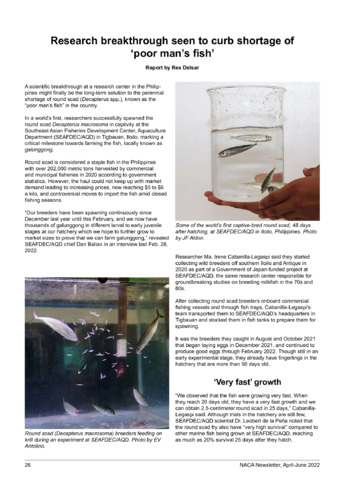
(Network of Aquaculture Centres in Asia-Pacific (NACA), 2022)A scientific breakthrough at a research center in the Philippines might finally be the long-term solution to the perennial shortage of round scad (Decapterus spp.), known as the “poor man’s fish” in the country. In a world’s first, researchers successfully spawned the round scad Decapterus macrosoma in captivity at the Southeast Asian Fisheries Development Center, Aquaculture Department (SEAFDEC/AQD) in Tigbauan, Iloilo, marking a critical milestone towards farming the fish, locally known as galunggong. -
Enhancing the reproductive performance of cultured shrimp: novel information on scent, maturation, and mating
Santander-Avancena, Sheryll (Secretariat, Southeast Asian Fisheries Development Center, 2022-07)
What are sex pheromones and how do they function in the courtship and mating of shrimps and other crustaceans? Best known as chemical compounds excreted by animals to initiate reproduction-related responses from their potential mates, pheromones became an important factor in shrimp culture. An earlier study, showed that the domesticated shrimp had a reduced level of pursuit behavior than the wild-caught and suggested that sex pheromones could have played a role in this behavioral difference. Domesticated penaeids are typically reared communally until ready for use as broodstock wherein animals are continually exposed to varying chemical cues. There is a close relationship between chemicals involved in molting and mating of closed thelycum species but information regarding the effect of prolonged exposure of male penaeids to molting and sex pheromones of females on reproduction behavior is not available. In 2021, SEAFDEC/AQD conducted a research to evaluate the possible implications of monosex rearing on gonad maturation and reproduction behavior of Penaeus indicus broodstock. Results demonstrated that the traditional communal rearing of male and female P. indicus broodstock do not have a significant effect on the ovary development and sperm quality of female and male broodstock, respectively. But this common practice of rearing male and female broodstock together significantly reduced reproductive related behavior leading to lower successful matings compared to when broodstock were reared monosex. This novel information could be linked to previous report on reduced successful matings previously reported in black tiger prawn, P. monodon. Therefore, monosex rearing should be considered as an alternate broodstock setup as this will facilitate optimized sexspecific nutritional manipulation and even potentially increase the mating success of domesticated penaeid broodstock. -
Efficacy of tilapia oral vaccine coupled with a nanocomposite biomaterial as carrier for vaccine delivery
; ; Pakingking, Rolando V., Jr.; Argayosa, Anacleto (Food and Agriculture Organization of the United Nations, 2021-12)
Fish diseases have seriously threatened and hampered the aquaculture industry. Low stress yet effective mass vaccination strategies for disease control and prevention are needed for sustainable aquaculture. Fishvax, a vaccine using a nanocomposite biomaterial for oral delivery, was developed and applied in this study for vaccination against Aeromonas veronii, a bacteria that can cause major disease outbreaks in fish. The project team, based at the Institute of Biology, College of Science, University of the Philippines Diliman, was headed by Dr. Anacleto Argayosa, in collaboration with Dr. Rolando Pakingking Jr. of SEAFDEC Aquaculture Department. The project was funded by the Department of Science and Technology, Philippine Council for Aquatic and Marine Research and Development, now the Philippine Council for Agriculture, Aquatic and Natural Resources Research and Development. -
Influence of water temperature on induced reproduction of milkfish during the off-season
; Mamauag, Roger Edward; (Aqua Research Pte Ltd, 2022)
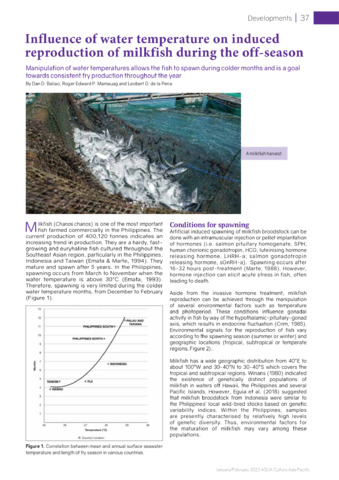
Scientific studies on milkfish’s induced spawning and larval rearing by increasing water temperature in tanks are very limited. In order to increase the production capacity of milkfish fingerlings, a preliminary experiment was conducted at the Southeast Asian Fisheries Development Center, Aquaculture Department (SEAFDEC/AQD). This study was on the effect of increased water temperature in milkfish broodstock and larval tanks during the cold and off-breeding season (October to February). -
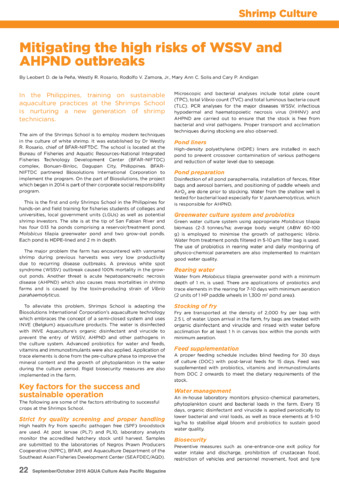
Mitigating the high risks of WSSV and AHPND outbreaks
(Aqua Research Pte Ltd, 2016) -
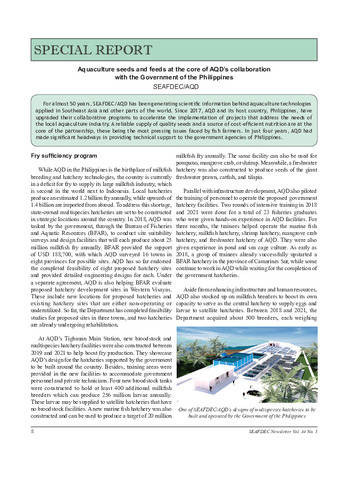
Aquaculture seeds and feeds at the core of AQD’s collaboration with the government of the Philippines
(Secretariat, Southeast Asian Fisheries Development Center, 2021-12-15)For almost 50 years, SEAFDEC/AQD has been generating scientific information behind aquaculture technologies applied in Southeast Asia and other parts of the world. Since 2017, AQD and its host country, Philippines, have upgraded their collaborative programs to accelerate the implementation of projects that address the needs of the local aquaculture industry. A reliable supply of quality seeds and a source of cost-efficient nutrition are at the core of the partnership, these being the most pressing issues faced by fish farmers. In just four years, AQD had made significant headways in providing technical support to the government agencies of Philippines. -
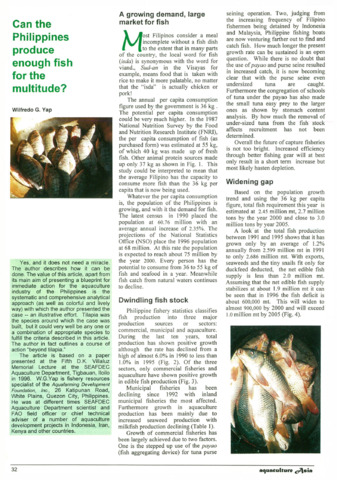
Can the Philippines produce enough fish for the multitude?
(Network of Aquaculture Centres in Asia-Pacific (NACA), 1997)Philippine fishery statistics classified fish production into 3 major production sources: commercial, municipal and aquaculture. Of these, only commercial fisheries and aquaculture have shown positive growth; municipal fisheries has been declining since 1992, with the inland sector being the most affected. Alternative ways to lighten the current fish supply crises are considered. It is believed that a sustainable option is to raise more fish, rather than merely hunt for them. An examination is made of available resources, including physical, technical and financial, which would enable increased production. Particular reference is made to increased tilapia production, but milkfish, carps, groupers and seabass are also considered.

 RSS 1.0