
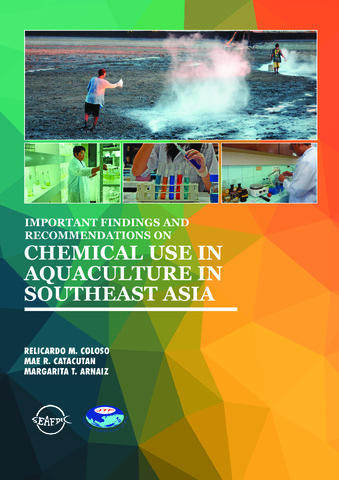
Important Findings and Recommendations on Chemical Use in Aquaculture in Southeast Asia
Browse by
Recent Submissions
-
Important findings and recommendations on chemical use in aquaculture in Southeast Asia
(Aquaculture Department, Southeast Asian Fisheries Development Center, 2015)Under the program of Fisheries Consultative Group of the ASEAN (Association of South-East Asian Nations) - SEAFDEC (Southeast Asian Fisheries Development Center) Strategic Partnership Mechanism, a research project entitled “Food Safety of Aquaculture Products in Southeast Asia” was implemented by SEAFDEC/AQD (Aquaculture Department of SEAFDEC) from 2010 to 2014 with the financial support of the Government of Japan Trust Fund V (GOJ-TF5). The objectives of the project were to 1) contribute to the establishment of guidelines on the production of safe aquaculture products; 2) determine the presence and levels of commonly used chemicals in aquaculture in aquaculture products; 3) compile and disseminate SEAFDEC guidelines on the use of antibiotics and chemicals in aquaculture; and 4) implement training course/workshop to promote food safety awareness in the ASEAN region. Along with the said objectives, research activities, particularly focusing both on withdrawal periods of antibiotics often used in aquaculture and on surveillance of chemical contaminants in aquaculture products and feeds, were implemented (in 2010-2014). In addition, knowledge and technologies on food safety of aquaculture products were disseminated to local and national government staff, practitioners, stakeholders, etc. through an international seminar (in January 2011) and an international training course (in November 2013). Furthermore, AQD organized The International Workshop on Food Safety of Aquaculture Products in the Southeast Asia – Challenges in Sustaining the Food Safety of Aquaculture Products in May 2013 to promote and influence the regional initiatives in securing wholesome and safe aquaculture commodities in the ASEAN region. The publication of this volume consolidates the activities of the project which AQD has pursued during the period of the GOJ-TF5. Although the title of this volume does not include the word “guideline,” this volume surely includes and refers to the ASEAN guidelines recently published with the title of Guidelines for the Use of Chemicals in Aquaculture and Measures to Eliminate the Use of Harmful Chemicals courtesy of the ASEAN secretariat based on the understanding of the collaboration between ASEAN-SEAFDEC, as well as the basic and new findings of AQD scientists accomplished through the research activities, which were not covered by the ASEAN guidelines. Although the food safety of aquaculture products would be strictly required in the ASEAN region in the future, this volume will make a great contribution to the requirement. -
Guidelines for the use of chemicals in aquaculture and measures to eliminate the use of harmful chemicals
(Association of Southeast Asian Nations, 2013)This set of guidelines has been developed to help national regulators and stakeholders on managing the diverse use of chemicals in aquaculture. It recognising the existing variation in capacity among AMS but has been designed so that it could be adopted and implemented within the specific policy and legal framework of each country. This document aims to provide guidance for Competent Authorities (CAs) in standards setting / regulating the use of Chemicals in Aquaculture and Measures to Eliminate the Use of Harmful Chemical among AMS. AMS are encouraged to assess and review gaps at their national level with regard to chemicals used in aquaculture, as listed in this document. Furthermore, it would also help to develop measures to eliminate the use of harmful chemicals in aquaculture; and it is further envisaged that a harmonised regional set of guidelines for the use of chemicals in aquaculture for ASEAN could be produced. The purpose of this set of guidelines is to list the major chemicals and other substances commonly used in AMS. This set of guidelines will also list the banned chemicals that should not be used or practiced by farmers or aquaculturist in all AMS. The list was compiled and agreed from previous workshops to assess and review gaps exist among AMS with regards to chemical use in aquaculture. -
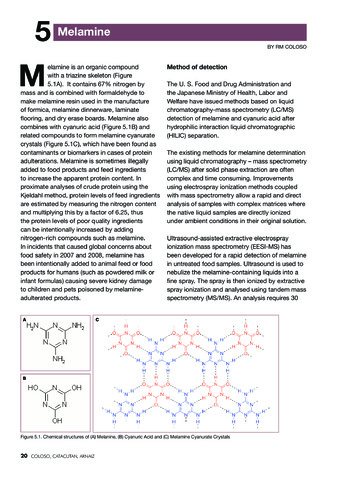
Melamine
(Aquaculture Department, Southeast Asian Fisheries Development Center, 2015)Melamine is an adulterant that can be added to feed ingredients for aquafeeds to artificially inflate the apparent protein content. Together with cyanuric acid, it has been found that crystals formed from melamine and ... -
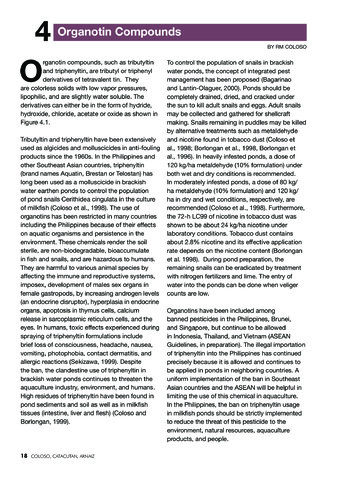
Organotin compounds
(Aquaculture Department, Southeast Asian Fisheries Development Center, 2015)Organotin compounds, such as tributyltin and triphenyltin, are tributyl or triphenyl derivatives of tetravalent tin. They are colorless solids with low vapor pressures, lipophilic, and are slightly water-soluble. The ... -
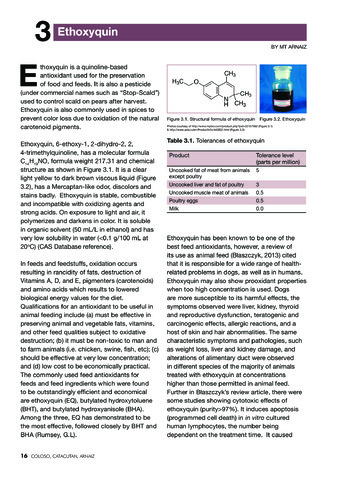
Ethoxyquin
(Aquaculture Department, Southeast Asian Fisheries Development Center, 2015) -
Withdrawal periods of antibiotics, oxytetracycline, and oxolinic acid, in fish species cultured in the tropics
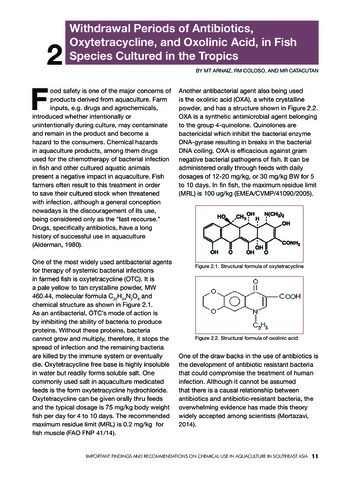
(Aquaculture Department, Southeast Asian Fisheries Development Center, 2015)Food safety is one of the major concerns of products derived from aquaculture. Farm inputs, e.g. drugs and agrochemicals, introduced whether intentionally or unintentionally during culture, may contaminate and remain in the product and become a hazard to the consumers. Chemical hazards in aquaculture products, among them drugs used for the chemotherapy of bacterial infection in fish and other cultured aquatic animals present a negative impact in aquaculture. Fish farmers often result to this treatment in order to save their cultured stock when threatened with infection, although a general conception nowadays is the discouragement of its use, being considered only as the “last recourse.” Drugs, specifically antibiotics, have a long history of successful use in aquaculture (Alderman, 1980). -
Survey of antibiotic and pesticide residues in aquaculture products in the Philippines
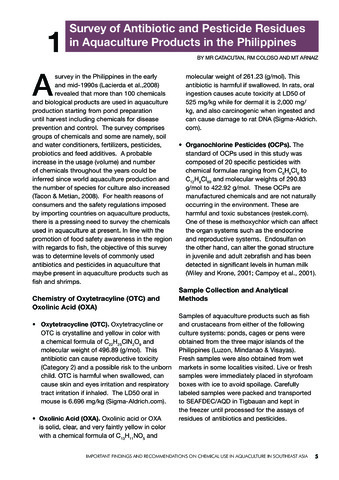
(Aquaculture Department, Southeast Asian Fisheries Development Center, 2015)A survey in the Philippines in the early and mid-1990s (Lacierda et al.,2008) revealed that more than 100 chemicals and biological products are used in aquaculture production starting from pond preparation until harvest including chemicals for disease prevention and control. The survey comprises groups of chemicals and some are namely, soil and water conditioners, fertilizers, pesticides, probiotics and feed additives. A probable increase in the usage (volume) and number of chemicals throughout the years could be inferred since world aquaculture production and the number of species for culture also increased (Tacon & Metian, 2008). For health reasons of consumers and the safety regulations imposed by importing countries on aquaculture products, there is a pressing need to survey the chemicals used in aquaculture at present. In line with the promotion of food safety awareness in the region with regards to fish, the objective of this survey was to determine levels of commonly used antibiotics and pesticides in aquaculture that maybe present in aquaculture products such as fish and shrimps.

 RSS 1.0