Pichia kudriavzevii as feed additive in Nile tilapia (Oreochromis niloticus) diet
View/
Date
2024-06Page views
865ASFA keyword

AGROVOC keyword
Taxonomic term

Metadata
Show full item recordShare
Abstract
Yeasts are unicellular eukaryotic microorganisms extensively employed in various applications, notably as an alternative source of protein in feeds, owing to their nutritional benefits. Despite their potential, marine and mangrove yeast species used in the aquaculture industry have received little attention in the Philippines. Pichia kudriavzevii (A2B R1 ISO 3), sourced from bark samples, was selected and mass-produced due to its high protein content and amino acid profile. The dried biomass of P. kudriavzevii was incorporated into the diets of Nile tilapia (Oreochromis niloticus) juveniles at varying inclusion levels (0, 1, 2, and 4 g/kg diet) and its effect on their growth performance, body composition, and liver and intestinal morphology was assessed after 40 days of feeding. The groups that received P. kudriavzevii at a concentration of 2 g/kg diet exhibited higher final body weight, percent weight gain, and specific growth rate in comparison to the other treatment groups. Whole body proximate composition did not vary among the dietary groups. Intestinal and liver histopathology also indicated no abnormalities. These findings suggest the potential of ascomycetous P. kudriavzevii as a beneficial feed additive in Nile tilapia diets, warranting further investigation into its long-term effects and broader applications in fish culture.
Contributes to SDGs





Suggested Citation
Agpoon, I. E. P., Aya, F., Watanabe, K., Bennett, R. M., Aki, T., & Dedeles, G. (2024). Pichia kudriavzevii as feed additive in Nile tilapia (Oreochromis niloticus) diet. Letters in Applied Microbiology , 77(6), ovae057. https://doi.org/10.1093/lambio/ovae057
Type
ArticleISSN
0266-8254; 1472-765XCollections
- Journal Articles [1267]
Related items
Showing items related by title, author, creator and subject.
-
Series: Aquaculture extension manual; No. 36
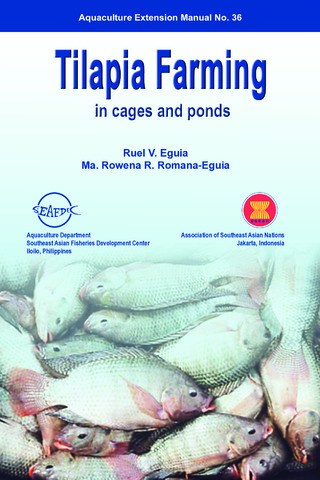
Tilapia farming in cages and ponds
; Romana-Eguia, Ma. Rowena R.This 40-page manual describes the farming practices for tilapia in cages, pens, ponds, and tanks. Also details selection of quality seedstock, maintenance of stock (feeding, water management), and harvesting. A list of ... (Aquaculture Department, Southeast Asian Fisheries Development Center, 2004)
-
Nursery and grow-out operation for tilapia and carp
(Aquaculture Department, Southeast Asian Fisheries Development Center, 1988)Most researches conducted at the Binangonan Freshwater Station of the SEAFDEC Aquaculture Department were directed toward enhancing growth and survival of the young tilapia and carp in the nursery as well as increasing yields in grow-out cages, pens, and ponds. Studies included the culture and evaluation of phytoplankton and zooplankton as feeds of the tilapia and carp fry to fingerlings; determination of protein and amino acid requirements of young Nile tilapia; development of practical dry diets; evaluation of feeding regimes, feeding rates, and feeding frequencies ; and the use of fertilizers in nursery ponds. For the grow-out aspect, one of the earliest studies demonstrated the profitability of the monoculture of tilapia in cages which triggered the initial proliferation of tilapia cage culture by the private sector in areas near the Station. Subsequently, supplemental feeds were developed and evaluated; non-conventional feedstuffs were tested as feeds or feed components; and the growth rates of Nile tilapia fingerlings in cages at varying stocking densities were evaluated at three distinct rearing periods covering one year. Prior to the successful mass production of bighead carp fingerlings at the Station, studies on polyculture of tilapia, milk fish, and different species of carp were conducted in cages and pens with remarkable results. This led to the technology-verification projects on polyculture at various areas in Laguna Lake. With the availability of freshwater fishponds for research purposes, studies on polyculture in ponds were also conducted. -
Influence of feeding rate and diet form on growth and survival of Nile tilapia (Oreochromis niloticus) fry
(Elsevier, 1987)Young Nile tilapia (12 mg mean body weight and 11 mm total length) were stocked at a density of 5 fish/l in twelve 50-l aquaria filled with 30 l of tap water. They were fed pellet crumbles containing 35% crude protein at various daily feeding rates expressed as percentages of fish biomass. Mean increases in body weight after 5 weeks were 63, 198, 232 and 228 mg for the 15, 30, 45 and 60% feeding rates, respectively, when ambient temperature ranged from 19 to 21°C. Corresponding survival rates were 53, 85, 87 and 84%. Growth and survival rates were enhanced significantly (P < 0.01) at the 30, 45 and 60% feeding rates. Two feeding trials were conducted to compare the growth and survival of fry fed pellet crumbles and an unpelleted form of the same diet. Results showed that growth and feed conversion were similar for both forms of diet. However, the survival rate of fry fed pellet crumbles was significantly higher (P < 0.01) than the survival rate of fry fed the unpelleted diet. Prior pelleting of the formulated diet for the tilapia fry given at 30% to 45% of fish biomass daily ensured high survival, fast growth and efficient feed conversion.