SEAFDEC/AQD Institutional Repository: Recent submissions
3081-3100 / 4221
-
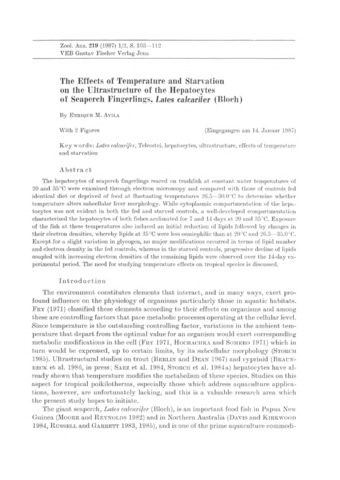
The effects of temperature and starvation on the ultrastructure of the hepatocytes of seaperch fingerlings, Lates calcarifer (Bloch).
(Elsevier, 1987)The hepatocytes of seaperch fingerlings reared on trashfish at constant water temperatures of 20 and 35°C were examined through electron microscopy and compared with those of controls fed identical diet or deprived of food at fluctuating temperatures 26.5-30°C to determine whether temperature alters subcellular liver morphology. While cytoplasmic compartmentation of the hepatocytes was not evident in both the fed and starved controls, a well-developed compartmentation characterized the hepatocytes of both fishes acclimated for 7 and 14 days at 20 and 35°C. Exposure of the fish at these temperatures also induced an initial reduction of lipids followed by changes in their electron densities, whereby lipids at 35°C were less osmiophilic than at 20°C and 26.5-35.0°C. Except for a slight variation in glycogen, no major modifications occurred in terms of lipid number and electron density in the fed controls, whereas in the starved controls, progressive decline of lipids coupled with increasing electron densities of the remaining lipids were observed over the 14-day experimental period. The need for studying temperature effects on tropical species is discussed. -
Acute nitrite toxicity and methemoglobinemia in juvenile milkfish (Chanos chanos Forsskal)
(Elsevier, 1987)Nitrite was about 55 times more toxic to milkfish juveniles in fresh water than in 16% brackish water: the 48-h median lethal concentrations were 12 mg NO2-N/l (95% confidence limit=7.4–19.6) and 675 mg NO2-N/l (95% confidence limit = 435.8–1,045.4) respectively. Methemoglobin levels were higher for a given concentration of nitrite in milkfish kept in fresh water than in the brackish water. Methemoglobin decreased to a normal level within 24–26 hours of the removal of nitrite. -
Comparison of the silo and broadcast methods of applying organic fertilizer in milkfish, Chanos chanos (Forsskal), ponds
(Elsevier, 1988)The efficacy of the silo and broadcast methods of applying organic fertilizers in ponds for the production of pond-floor, microbenthic biological complex, a natural food source known as lablab, was tested in 1-ha ponds, replicated thrice in time. Although there were no statistically significant differences (P > 0.05) in milkfish growth, survival and production between the two treatments tested, after 90 days production tended to be higher in ponds prepared with the silo method. Advantages of the silo method are that it is less laborious, cheaper, and less time consuming than the broadcast method and results in consistent lablab growth until the end of the culture period. -
Critical factors influencing survival and hatching of milkfish (Chanos chanos Forsskal) eggs during simulated transport
Garcia, Luis Maria ; (Elsevier, 1988)
The effects of loading density, length of transit time, temperature and salinity on milkfish (Chanos chanos Forsskal) eggs during simulated transport were examined. Rocking motion approximating conditions of transport of eggs collected from milkfish broodstock floating net cages to a hatchery was simulated using a laboratory orbit shaker. Loading densities of more than 7000 eggs/l in shipping bags resulted in decreased rates of survival and correspondingly lower hatching rates. Prolonged shaking simulating extended periods of egg transport also resulted in low egg survival and hatching rates compared to fertilized eggs not subjected to simulated transport. Egg survival after simulated transport at 20°C was lower than at 28°C, except at 20 ppt salinity, where survival was equal. Egg survival at 20°C progressively increased with declining salinity levels whereas high egg survival rates were observed after 2 h of simulated egg transport at 28°C and at the three salinities tested. Hatching rates of fertilized eggs after simulated transport were higher at 28°C than at 20°C regardless of salinity. Neither salinity nor its interaction with temperature affected hatching rates of eggs after simulated transport. These results indicate that survival and hatching of fertilized milkfish eggs after simulated transport is influenced by loading density, transport time, temperature and, to some degree, the salinity of the water. Based on these results, guidelines for handling and transporting milkfish eggs are given.
; (Elsevier, 1988)
The effects of loading density, length of transit time, temperature and salinity on milkfish (Chanos chanos Forsskal) eggs during simulated transport were examined. Rocking motion approximating conditions of transport of eggs collected from milkfish broodstock floating net cages to a hatchery was simulated using a laboratory orbit shaker. Loading densities of more than 7000 eggs/l in shipping bags resulted in decreased rates of survival and correspondingly lower hatching rates. Prolonged shaking simulating extended periods of egg transport also resulted in low egg survival and hatching rates compared to fertilized eggs not subjected to simulated transport. Egg survival after simulated transport at 20°C was lower than at 28°C, except at 20 ppt salinity, where survival was equal. Egg survival at 20°C progressively increased with declining salinity levels whereas high egg survival rates were observed after 2 h of simulated egg transport at 28°C and at the three salinities tested. Hatching rates of fertilized eggs after simulated transport were higher at 28°C than at 20°C regardless of salinity. Neither salinity nor its interaction with temperature affected hatching rates of eggs after simulated transport. These results indicate that survival and hatching of fertilized milkfish eggs after simulated transport is influenced by loading density, transport time, temperature and, to some degree, the salinity of the water. Based on these results, guidelines for handling and transporting milkfish eggs are given. -
Spawning response of mature female sea bass, Lates calcarifer (Bloch), to a single injection of luteinizing hormone-releasing hormone analogue: effect of dose and initial oocyte size
Garcia, Luis Maria (Blackwell Publishing, 1989)
The effect of various doses of luteinizing hormone-releasing hormone analogue (LHRHa) ranging from 1 to 100 μg/kg body weight on the spawning response of mature female sea bass, Lates calcarifer (Bloch) was tested. A single intramuscular injection of LHRHa resulted in a dose-related increase in the spawning rate (number of spawnings of each fish over four consecutive days) of mature fish. An LHRHa dose of 5 μg/kg and less induced low spawning rates of 16.7% to 37.5% or at least one spawning every four days. However, mature sea bass spawned more than once (43.8–58.3%) in four days at dose levels of 10 μg/kg and above. Hormone treatment within the dose range tested did not influence the number, fertilization and hatching rates of spawned eggs. The influence of initial oocyte size on the LHRHa-induced spawning response of mature sea bass was also examined. Sea bass with an initial oocyte diameter of 0.30–0.39 mm did not respond to the single injection of 100 μg LHRHa/kg. In contrast, LHRHa induced spawning among sea bass with an initial egg size of 0.40–0.49 mm, although two of four sea bass of the same stage of ovarian maturity spawned spontaneously. Fish having an initial oocyte size of 0.50–0.55 mm spawned with and without LHRHa treatment. Spontaneous spawning among saline-injected sea bass occurred at a later time (24–58 h post-injection) compared to fish induced to spawn by a single injection of LHRHa (8–36 h post-injection). The initial spawning response time interval for fish with an initial egg size of 0.50 mm or greater was further reduced to 8–9 h by LHRHa. These results indicate that LHRHa can successfully induce spawning in mature female sea bass which have attained a critical oocyte diameter and that the spawning response interval is reduced with a further increase in egg size beyond the critical oocyte diameter limit. -
Advancement of sexual maturation and spawning of sea bass, Lates calcarifer (Bloch), using pelleted luteinizing hormone-releasing hormone analogue and 17α-methyltestosterone.
Garcia, Luis Maria (Elsevier, 1990)
The ability of luteinizing hormone-releasing hormone analogue [(D-Ala6, Pro9-NEt)LHRH], 17α-methyltestosterone (MT), and their combination to advance gonadal maturation and spawning in captive sea bass (Lates calcarifer Bloch) broodstock was tested. Several hormonal therapies were tested including monthly implantations of a low dose (100 μg/kg body weight) of each hormone and a high dose (200 μg/kg) implanted to sexually-quiescent sea bass at 45-day intervals. A high dose of LHRHa alone or in combination with MT induced a significant number of mature females (43–71%) in April, 45 days after a single implantation in early March. A lower dose of pelleted LHRHa and LHRHa plus MT was found effective (78–80%) only in May following three monthly implantations. Two and three monthly implantations of a low dose of MT failed to stimulate oocyte growth in April and May whereas a less frequent mode of application of a high dose of the androgen inhibited ovarian growth in April only. A low dose of MT alone significantly increased the number of mature males in April (90%) and May (100%) after two and three monthly implantations. All male sea bass which received three monthly implantations of a low dose of LHRHa and LHRHa plus MT were sexually mature in May. Sexually mature sea bass obtained from these experiments spawned in early May after a single intramuscular injection of LHRHa. These results demonstrate the potential use of pelleted LHRHa and MT to significantly advance gonadal development and spawning in sea bass earlier than the annual breeding season. -
A collecting gear for naturally-spawned milkfish (Chanos chanos Forsskal) eggs in circular floating net cages
Garcia, Luis Maria; ; (Elsevier, 1988)
A collecting gear for naturally-spawned milkfish (Chanos chanos Forsskal) eggs in circular floating net cages is described. The gear has been shown to be effective in collecting large numbers of eggs. The collecting gear can be adopted for other broodstock fish species held in circular floating net cages. -
An inexpensive tag for short-term studies in milkfish (Chanos chanos Forsskal) and in seabass (Lates calcarifer Bloch)
Garcia, Luis Maria; (Blackwell Publishing, 1988)
An opercular tag for marking adult milkfish (Chanos chanos Forsskal) and seabass (Lates calcarifer Bloch) is described. High tag retention and relatively low mortality rates were observed in adult fish handled two to ten times during 14-to 60-day tests. The features and advantages of the tag for marking large-sized fish in short-term studies are discussed. -
Variation in the biochemical composition of Penaeus monodon tissues during the reproductive cycle.
(Bamidgeh, 1990)The gonadosomatic index (GSI) and the hepatosomatic index (HSI) were determined for wild-caught, eyestalk ablated Penaeus monodon at 5 reproductive stages (I to V). Tissues of the muscle, ovary and hepatopancreas in each stage were analyzed for crude protein and amino acid composition. Results showed that the GSI increased from stage I (immature) to IV (fully mature) but declined at stage V (spent) while the HSI did not change significantly (P less than or equal to 0.05). Muscle protein content did not vary markedly from stage I to V except for a slight lowering at stage III (late maturing). Ovarian protein increased from stage I to IV and decreased at stage V while from stage II, the reverse was true for hepatopancreas. Generally, few significant differences in amino acid content were found. Glutamic acid content significantly differed among stages in all three tissues. In addition, phenylalanine in the muscle, histidine and lysine in the ovary and arginine and luecine in the hepatopancreas differed among stages. The muscle had slightly higher arginine and gluatmic acid contents than the ovary and hepatopancreas but was lower in threonine and valine. The ovary had the lowest glycine content. Results showed similar amino acid levels among tissues and maturation stages, suggesting that amino acids are fixed and not affected by much variation. -
Changes in plasma osmolality and chloride concentration during abrupt transfer of milkfish (Chanos chanos) from seawater to different test salinities
(Elsevier, 1988)Milkfish juveniles (40, 120 or 260 g) were acclimated to 32 ppt seawater, then abruptly transferred to water with salinities of 0, 16, 32 (control) or 48 ppt. Blood samples were taken 0, 1, 2, 3, 5, 7 or 14 days after transfer. Survival rate was 95% or greater in all salinities. Plasma osmolality in fish exposed to salinities other than 16 or 32 ppt deviated from control values immediately after transfer but were subsequently regulated to near normal levels after several days. Although these deviations were significant, they were relatively small (≤20% of initial) as plasma osmolality changed by less than 0.07 mOsm/kg per unit change environmental salinity. Plasma chloride values generally followed the same pattern of changes as plasma osmolality. When these deviations were integrated across time, summed deviations (mOsm·day kg−1 or mEq·day l−1) were proportional to the osmotic or ionic gradient but were inversely proportional to size. For 40-g fish, summed deviations were larger in 48 than in 0 ppt; for 120- or 260-g fish, these deviations were larger in 0 than in 48 ppt. These results indicate that small milkfish tend to adapt better to fresh than to hypersaline water while larger milkfish are more likely to find hypersaline water less stressful than freshwater. Like other organ systems previously studied in milkfish, these size-dependent adaptations in osmoregulatory mechanisms reflect natural habitat shifts during development. -
Larval rearing of bighead carp, Aristichthys nobilis Richardson, using different types of feed and their combinations
(Blackwell Publishing, 1988)The effects of different types of feed, given singly or in combination, on the growth and survival of bighead carp, Arislichlhys nobilis Richardson, larvae reared for a period of 12 weeks were determined. Growth was highest for fish fed with the combination of Moina and artificial feed followed by fish fed with artificial feed alone. Significantly lower (P < 0.05) growth was found in fish fed with green water +Moina+ artificial feed; green water + artificial feed; green water +Moina and Moina alone, in a descending order. Carp larvae reared in green water alone did not survive after the fifth day of feeding. Specific growth rales ranging from 0.59% day−1 to 2.75% day−1 were exhibited by fish in all the remaining six treatments. Although green water alone did not support the growth of the larvae, enhanced survival rates were observed when green water was given in combination with other feeds. Survival rate was highest in fish fed with the combination of green water, Moina and artificial feed, but was not significantly different (P > 0.01) from those given Moina+ artificial feed. Consequently, normalized biomass index was significantly high (P < 0.05) in fish fed with the combination of green water, Moina and artificial feed. -
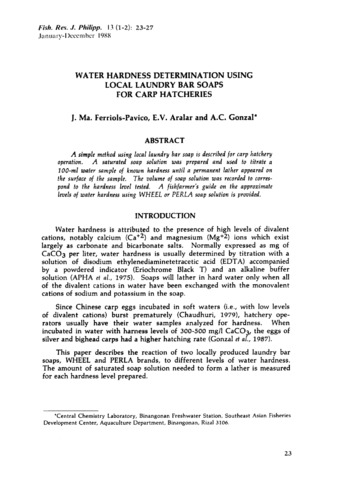
Water hardness determination using local laundry bar soaps for carp hatcheries
(Fisheries Research Society of the Philippines, 1988)A simple method using local laundry soap is described for carp hatchery operation. A saturated soap solution was prepared and uses to titrate a 100-ml water sample of known hardness until a permanent lather appeared on the surface of the sample. The volume of soap solution was recorded to correspond to the hardness level tested. A fish farmer’s guide on the approximate levels of water hardness using WHEEL or PERLA soap solution is provided. -
Improved larval survival at metamorphosis of Asian seabass (Lates calcarifer) using ω3-HUFA-enriched live food
(Elsevier, 1990)Asian seabass (Lates calcarifer) larvae were fed Brachionus cultured on Chlorella and, as soon as ingestin was possible, different types of Artemia, i.e., nauplii of the San Francisco Bay (SFB) strain, Great Salt Lake (GSL) strain or GSL nauplii that had been bioencapsulated with an emulsion containing high levels of the ω3-HUFAs (highly unsaturated fatty acids) 20:5 and 22:6. San Francisco Bay Artemia with a good natural fatty acid profile and small body size could be offered earlier than the larger but HUFA-poor Great Salt Lake strain. The poor nutritional quality of the latter, however, could be corrected by enriching the nauplii with an ω3-HUFA emulsion for 24 h, after which time high levels of the ω3-HUFAs 20:5 and 22:6 were obtained. When the Artemia diet offered before metamorphosis included natural or supplemented essential fatty acids, no significant differences in dry weight, length or survival of the fish were noticed, as compared to fish fed the naturally deficient GSL Artemia. Onset of metamorphosis and physiological condition after metamorphosis, however, were influenced by the HUFA content of the ingested prey. Seabass larvae fed SFB or enriched GSL Artemia started metamorphosis on day 19, while those in the non-enriched series never achieved metamorphosis and died of a nutritional deficiency syndrome by day 27. An indication of the physiological condition of the larvae and the early detection of the syndrome was possible by subjecting 21- and 25-day-old larvae to a stress test: abrupt exposure of the larvae to 65-ppt saline water resulted in abundant and early mortality in HUFA-deficient fish larvae. Fry receiving ω3-HUFA-fortified Artemia had a superior physiological condition which was reflected by significantly lower mortality figures in the stress test. -
The effects of Vibrio anguillarum extracellular products on Japanese eels
(Elsevier, 1989)To test the effect of Vibrio anguillarum extracellular products (ECP) on Japanese eels (Anguilla japonica ), test fish were injected intramuscularly with ECP at a dose of 1 mg protein/100 g body weight of fish.At 3,6,12,24 and 36 h post-injection, blood samples were collected for haematocrit, haemoglobin, and serum protein determinations and tissues were fixed in Bouin's solution. Histopathological observations 24 h post-injection revealed that the ECP caused severe damage to muscle tissue, characterized by extensive muscle liquefaction and haemorrhaging. In addition, extensive haemosiderin deposits were observed in the spleen, with lesser deposits occurring in the kidney and liver. Haematocrit, haemoglobin, and serum protein values were lower in ECP-treated fish than in the untreated controls. -
Effects of continuous lighting on growth and survival of first-feeding larval rabbitfish, Siganus guttatus
(Elsevier, 1988)The effects of 24-h lighting on feeding, growth and survival of first-feeding larvae of Siganus guttatus were tested. Continuous light gave a higher mean survival (31.69%) with a maximum of 40.50% compared to natural daylight (17.10%). Larval size on day 7 also showed that continuous lighting gave improved results. Although feeding incidence increased with age of the larvae, a higher incident rate was observed for larvae held in continuous light from day 3. -
Tissue distribution of mercury and selenium in minnows, Phoxinus phoxinus
(Springer Verlag, 1990)The protective effect of selenium against mercury toxicity has been extensively demonstrated in a number of studies (Burke eta]. 1977; Kasuya 1976). Since mercury uptake is not always diminished by the presence of selenium (Kim eta]. 1977) and neither does selenium enhance the elimination of mercury (Lucu and Skreblin i981; Cuvin and Furness 1988), these findings indicate that the mechanism for the observed protective action of selenium against mercury toxicity lie along different lines. It is believed that the rechanelling of mercury from one organ or tissue to another is one of the general mechanisms involved in the protective action of selenium against mercury toxicity. This is supported by the fact that one of the observed effects of selenium treatment on mercury-intoxicated animals is the apparent modification of the distribution pattern of mercury in the different organs and tissues. Decreased mercury levels in the kidney after selenium treatment has been demonstrated in rats by Chen eta]. (1974) and Potter and Matrone (1974). The following study aims to determine the effect of selenium on the distribution pattern of mercury in a common freshwater fish, the minnow Phoxinus phoxinus (Order Cypriniformes; Family Cyprinidae). Conversely, the effect of mercury on the tissue distribution of selenium will also be studied. -
Effect of storage temperature on the quality of diets for the prawn, Penaeus monodon Fabricius
(Elsevier, 1989)The effect of storage temperature was evaluated on the basis of growth response of prawns fed for 10 weeks with diets stored at 0°C, 10°C, 28°C-31°C (ambient temperatures) and 40°C for a period of 10 weeks. Prawns were stocked at 15 pieces per 60-1 oval thank supplied with water at 28°C and 32 ppt in a flow-trough aerated system.There were five replicate tanks per treatment. Lowest weight gain (20 g) was observed for prawns fed the diet stored at 40°C and significantly higher growth response was observed as the storage temperature decreased (30.2g at 28-31°C; 37.7g at 0°C and 10°C). Body size was significantly (P<0.05) affected by diet after 6 weeks of feeding and highly significantly (P<0.01) after 8 weeks of culture.Peroxide values for diets exposed for 10 weeks to 28°-31°C (2.9 meq/kg). The highest survival rate (76%) and feed conversion (8.9%) were observed for prawns fed diets stored at low temperatures (0° or 10°C). Severe necrosis of the hepatopancreatic cells was observed in P. monodon fed with diet stored at the high temperature. -
Uptake and elimination of iodine-131 by the freshwater clam Corbicula manilensis Philippi from water
(College of Arts and Sciences, University of the Philippines, 1988)Whole body uptake of Iodine-131 by the freshwater clam, Corbicula manilensis, from contaminated water was followed using NaI scintillation counter. The bioaccumulation factor (BF) exclusive of shell was 5.44. The degree of bioaccumulation of I-131 by the different tissues is as follows: visceral remains > gills > gut > gonads > mantle > muscle > foot. The specific activities of the different tissues corresponded with their BF values. The relative distribution of I-131 in the different tissues was generally proportional to the weight ratio of each tissue. Elimination studies gave the effective half-life, \(T^{e}_{0.5}\), of 4.5 days. Estimation of \(T_{0.5}^{e}\) in the different tissues gave the following values: 12 d (mantle), 3.9 d (gonad and muscle), 3.6 d (gut), 3.4 d (gills), 2.4 d (foot) and 1.9 d (visceral remains). -
Mercury levels in the sediment, water, and selected finfishes of Laguna Lake, the Philippines
(Elsevier, 1990)Monthly samples of sediment, water and commercially important species of fish, primarily Oreochromis niloticus and Chanos chanos , plus a few other species, were collected from the West Bay area of Laguna Lake, The Philippines from January to December 1987. Mercury levels were determined in all samples by cold vapor atomic absorption spectrophotometry. Results showed that sediment samples contained mercury levels ranging from 26.7 to 117 ppb. Mercury levels in water samples were low, ranging from below detectable to 0.5670 ppb. The mercury levels in the water were negatively correlated with conductivity and dissolved oxygen and positively correlated with turbidity. The mercury burden of the fish species samples was below the maximum permissible level set by the WHO and USFDA of 0.05 ppm. No direct correlation was observed between mercury levels in sediment and water, water and fish and sediment and fish. -
Cage culture of Oreochromis aureus and Oreochromis niloticus hybrids in Laguna Lake, Philippines
(Taylor & Francis, 1988)A reciprocal cross of male Oreochromis aureus and female Oreochromis niloticus were made to produce the hybrids stocked in cages in Laguna Lake, Philippines with and without feeding. The growth rates of the hybrids from the cross of female O. aureus and male O. niloticus were better than the other hybrids. From the first to the sixth culture months. The hybrids in terms of bulk weight per cage and percentage survival did not differ significantly. However, the average weight per fish was higher in the hybrids of O. aureus (female) x O. niloticus (male) than that of that of the original cross. The stocking density of 40/m3, supplemental feeding did not influence growth compared to the control.