SEAFDEC/AQD Institutional Repository: Recent submissions
Now showing items 381-400 of 4220
-
Application of carriers and RNAi to enhance the antiviral immune response of shrimp to WSSV
Amar, Edgar ; ; ; ; (Aquaculture Department, Southeast Asian Fisheries Development Center, 2021-12)
In aquaculture, vaccination is one of the approaches for disease prevention and control. The aim of the present study was to determine the efficacy of a VP28 double stranded RNA (VP28 dsRNA) and recombinant VP28 protein (rVP28) administered together as an antiviral treatment against WSSV. Double-stranded RNA was produced in RNAsedeficient Escherichia coli HT115 following published methods. To determine the appropriate dose, different concentrations of dsRNA ranging between 0.2 μg and 20 μg, were either injected intramuscularly or delivered orally to the shrimp via the feed ration. Thereafter, the shrimp were challenged with WSSV either by injection (LD50=10-7 dilution of the gill tissue filtrate) or bath immersion (LD50=10-4 dilution of the filtrate) in glass aquaria and transferred to fiberglass tanks for daily monitoring and recording of mortalities. Results showed significant differences in survival between PBS and the 0.2, 10, and 20 μg dsRNA/shrimp doses. Time to 100 % mortality significantly differed among the treatments with the control reaching mortality earlier (day 4) while shrimp injected with 0.2 and 10 μg dsRNA succumbed to WSSV much later on days 9–12. Different frequencies of dsRNA administration were also tested. The best result obtained was a dose of 20 μg/shrimp administered 4 times over 28 days (2 times before and 2 times during challenge for a total 80 μg/shrimp). Finally, VP28 dsRNA was combined with rVP28 at ratios of 1:1, 1:2, 1:3, 3:1, and 2:1, entrapped in chitosan microparticles and delivered per os via the feed according to the dose and frequency as previously determined. Following bath exposure challenge with WSSV, the best survival obtained in trials 1 and 2 was 40 % and 43 % at 1:3 VP28 dsRNA to rVP28 ratio.
; ; ; ; (Aquaculture Department, Southeast Asian Fisheries Development Center, 2021-12)
In aquaculture, vaccination is one of the approaches for disease prevention and control. The aim of the present study was to determine the efficacy of a VP28 double stranded RNA (VP28 dsRNA) and recombinant VP28 protein (rVP28) administered together as an antiviral treatment against WSSV. Double-stranded RNA was produced in RNAsedeficient Escherichia coli HT115 following published methods. To determine the appropriate dose, different concentrations of dsRNA ranging between 0.2 μg and 20 μg, were either injected intramuscularly or delivered orally to the shrimp via the feed ration. Thereafter, the shrimp were challenged with WSSV either by injection (LD50=10-7 dilution of the gill tissue filtrate) or bath immersion (LD50=10-4 dilution of the filtrate) in glass aquaria and transferred to fiberglass tanks for daily monitoring and recording of mortalities. Results showed significant differences in survival between PBS and the 0.2, 10, and 20 μg dsRNA/shrimp doses. Time to 100 % mortality significantly differed among the treatments with the control reaching mortality earlier (day 4) while shrimp injected with 0.2 and 10 μg dsRNA succumbed to WSSV much later on days 9–12. Different frequencies of dsRNA administration were also tested. The best result obtained was a dose of 20 μg/shrimp administered 4 times over 28 days (2 times before and 2 times during challenge for a total 80 μg/shrimp). Finally, VP28 dsRNA was combined with rVP28 at ratios of 1:1, 1:2, 1:3, 3:1, and 2:1, entrapped in chitosan microparticles and delivered per os via the feed according to the dose and frequency as previously determined. Following bath exposure challenge with WSSV, the best survival obtained in trials 1 and 2 was 40 % and 43 % at 1:3 VP28 dsRNA to rVP28 ratio. -
Efficacy of the inactivated nervous necrosis virus vaccine against viral nervous necrosis in pond-reared orange-spotted grouper Epinephelus coioides
Pakingking, Rolando V., Jr.; ; (Aquaculture Department, Southeast Asian Fisheries Development Center, 2021-12)
The field efficacy of the formalin-inactivated nervous necrosis virus (NNV) against viral nervous necrosis (VNN) in orange-spotted grouper (Epinephelus coioides) reared in floating net cages in earthen pond was investigated. Seroneutralization assay conducted on the sera of vaccinated fish exhibited the occurrence of neutralizing antibody titers from Day 30 (mean titer 1:1792±701) to Day 150 (1:704±351) with the highest titer observed at Day 60 (1:6656±3435) post-vaccination. Because mortality attributed to VNN was not encountered during the pond experiment, intramuscular challenges of vaccinated and unvaccinated (L-15 injected) fish with NNV (106.5 TCID50/fish) were conducted in indoor tanks at Day 30 (Mean body weight [MBW]: vaccinated [21±3.4 g]; unvaccinated [20.6±1 g) and Day 120 (MBW: vaccinated [178±27 g]; unvaccinated [176±19 g) postvaccination, respectively, to demonstrate the in vivo efficacy of the inactivated vaccine. Nil and 25 % mortality rate were obtained in vaccinated and control fish, respectively, challenged with NNV at Day 30 post-vaccination. On the contrary, nil mortality were obtained in both groups challenged with NNV at Day 120 post-vaccination. Although nil mortality was obtained in NNV-challenged unvaccinated fish, 30 % of the fish manifested dark coloration of the skin and abnormal swimming behavior that commenced and disappeared at Day 3 and Day 7 post-NNV challenge, respectively, suggesting an age/ weight-dependent resistance to the disease. Our current data illustrate that single vaccination with inactivated vaccine could mount the production of protective antibodies and concomitant conferment of protection against VNN in groupers especially during the early phase of grow-out culture in earthen ponds where they are highly susceptible to the disease. -
Growth performance, production and economic viability of Indian white shrimp (Penaeus indicus H. Milne Edwards) fed with varying dietary protein levels
Estante-Superio, Erish; Santander-Avancena, Sheryll ; ; ; ; (Wiley, 2022-03)
The growth efficiency, productivity and economic viability of Indian white shrimp (Penaeus indicus) fed with diet containing 40% (CPhigh) and 34% (CPlow) crude protein (CP) levels were determined in a 90-day grow-out culture trial. Growth parameters including average body weight (ABW), specific growth rate (SGR), survival and feed conversion ratio (FCR) were not statistically different. CPlow had lower overall shrimp production (797.53 kg/ha, DOC 90), but was not significantly different from CPhigh (843.78 kg/ha, DOC 90). The mean values for the water parameters of both treatments, such as DO, pH, salinity, temperature, TAN, NO2-N, NO3-N and PO4-P, also showed no significant differences. However, the TAN values of CPhigh were consistently higher from day of culture (DOC) 63 and increased significantly (p = .048) at DOC 90. Furthermore, the total bacterial and Vibrio counts in both treatments were not significant throughout the culture period. The economic analysis revealed that CPlow obtained higher net profits (6093 USD/ha/year), return on investment (72%) and discounted benefit–cost ratio (1.73). The current study found that feeding a low protein diet to P. indicus is economically viable and profitable and results in improved growth efficiency and productivity while also improving water quality and lowering nitrogen discharge. -
AQD Matters 2021 September - October
(Aquaculture Department, Southeast Asian Fisheries Development Center, 2021-12)In this issue: 1) Trainees complete intensive aquaculture course; 2) First online sandfish training course a success; 3) SEAFDEC/AQD reviews achievements for 2021; 4) NFRDI and BFAR staff attend an online course on marine ... -
Numerical study of diurnal tidal currents on the Pacific shelf off the southern coast of Hokkaido, Japan
; ; Ito, Sayaka; (Elsevier, 2021-11)
We developed a triply nested, high-resolution (1/50°) ocean model to reproduce tides and tidal currents under realistic oceanographic conditions, mainly on the Pacific shelf around Hokkaido, Japan. The model reproduced observed properties of tides and tidal currents reasonably well. Dominant diurnal tidal currents were simulated and accounted for mainly by propagation of coastal-trapped waves (CTWs) of the first mode. The first-mode CTWs were generated mainly around the Four Islands, which are located to the east of Hokkaido, where the massive energy of gravity waves was scattered to CTWs. After leaving the forcing area around the islands, diurnal CTWs propagated along the Hokkaido coast to Cape Erimo. Around the cape, CTWs were also excited via scattering of gravity waves and superposed with first-mode CTWs propagating from the Four Islands. The K1 (O1) currents associated with the CTWs weakened (strengthened) around and west of the cape because of out-of-phase (in-phase) superposition. The K1 currents therefore ended up being smaller than the O1 currents by one order of magnitude. Moreover, the first-mode CTWs generated around the Four Islands were attenuated along the propagation route through complicated processes. The unsteadiness of the K1 and O1 currents related to their 13.67-day beats therefore increased gradually along the propagation route. The unsteadiness on the shelf west of the cape was further enhanced by superposition with CTWs forced around the cape, which were occasionally unstable. -
Antioxidant activities and selenogene transcription in the European sea bass (Dicentrarchus labrax) liver depend, in a non-linear manner, on the Se/Hg molar ratio of the feeds
(Springer, 2022-05)Feeding 3.9 and 6.7 mg Hg/kg (Se/Hg molar ratios of 0.8 and 0.4, respectively) for 14 days negatively affected Dicentrarchus labrax growth and total DNTB- and thioredoxin-reductase (TrxR) activities and the transcription of four redox genes (txn1, gpx1, txnrd3, and txnrd2) in the liver, but a diet with 0.5 mg Hg/kg (Se/Hg molar ratio 6.6) slightly increased both reductase activities and the transcription of txn1, gpx1, and txnrd2. Feeding 6.7 mg Hg/kg for 53 days downregulated the genes of the thioredoxin system (txn1, txnrd3, and txnrd2) but upregulated gpx1, confirming the previously proposed complementarity among the antioxidant systems. Substitution of 20% of the feed by thawed white fish (hake) slightly counteracted the negative effects of Hg. The effects were not statistically significant and were dependent, in a non-linear manner, on the Se/Hg molar ratio of the feed but not on its Hg concentration. These results stress the need to consider the Se/Hg molar ratio of the feed/food when evaluating the toxicity of Hg. -
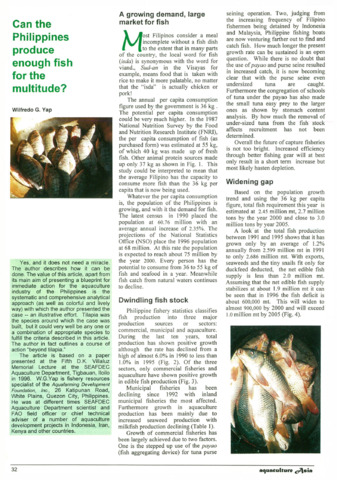
Can the Philippines produce enough fish for the multitude?
(Network of Aquaculture Centres in Asia-Pacific (NACA), 1997)Philippine fishery statistics classified fish production into 3 major production sources: commercial, municipal and aquaculture. Of these, only commercial fisheries and aquaculture have shown positive growth; municipal fisheries has been declining since 1992, with the inland sector being the most affected. Alternative ways to lighten the current fish supply crises are considered. It is believed that a sustainable option is to raise more fish, rather than merely hunt for them. An examination is made of available resources, including physical, technical and financial, which would enable increased production. Particular reference is made to increased tilapia production, but milkfish, carps, groupers and seabass are also considered. -
Differentiation of crocodilian granulocytes using histochemical techniques
(Fish Health Section, Asian Fisheries Society, 2002)Blood smears from 54 crocodiles of three breeds (Crocodylus siamensis, C. porosus, and crossbred) were examined after Wright-Giemsa staining. Detection for alkaline phosphatase and peroxidase activities were performed. Four types of granulocytes are distinguished: heterophil, eosinophil, basophil and azurophil. Heterophils with the size of 9-10 µm have an oval eccentric nucleus with mostly spiculate granules and a few tear drop-shaped granules. Heterophils contain both alkaline phosphatase and peroxidase. Eosinophils with the size of 8-9 µm have a round or oval eccentric nucleus. The round, rod- and few tear drop-shaped and spiculate granules are packed in the cytoplasm. Eosinophils are strongly peroxidase positive, but devoid of alkaline phosphatase. Basophils are 9 - 11 µm with a centrally located round nucleus. Their cytoplasm is full of round granules of various sizes and contains neither alkaline phosphatase nor peroxidase activity. A fourth type of granulocyte (8-10 µm) has a centrally located round, oval or kidney shaped nucleus, and a small amount of azurophilic granules. The cytoplasm of this cell gives very strong alkaline phosphatase activity, but no peroxidase is detected. Morphological and physiological characteristics of this questionable leukocyte suggest the possibility that this cell is azurophil. All agranulocytes (monocytes and lymphocytes) and thrombocytes are devoid of both alkaline phosphatase and peroxidase activities. -
Isolation and characterization of an Achlya sp. associated with diseased soft-shelled turtle (Trionyx sinensis) from Hong Kong
(Fish Health Section, Asian Fisheries Society, 2002)In September 1996, a disease outbreak was reported in one turtle farm in the New Territories, Hong Kong. Soft-shelled turtle (Trionyx sinensis) cultured in tanks showed white spots on their body surface and carapace resulting in gradual, but high levels of mortalities. Microscopic examination of the affected tissues revealed the involvement of thick, non-septate fungal mycelia. A fastgrowing straminipilous oomycete was isolated from the infected animals and identified as Achlya sp. Physiological studies on vegetative growth and sporulation were undertaken and results showed that the isolate could grow from pH 4 to 10 with maximum growth at pH 5 to 9. Growth was also observed at 0-20 salinities, at temperatures of 10-35°C, with an optimum at 0 salinity (distilled water) at 30-35°C. Abundant zoosporangia were produced and primary zoospores released at 0-5 , but secondary zoospores were only released in freshwater (0 ). A wide temperature range was observed for sporulation (10-40°C) with optimum at 15-35°C. This is the first report of a fungal infection in tank-cultured soft-shelled turtle in Hong Kong. -
Maize products
(Springer, 2000)Maize (Zea mays) is a cereal, belonging to the family Poaceae and has its origin in Central America. Now maize is grown world-wide whenever the climate permits cultivation. -
Effect of a non-native freshwater goby invasion on spawning habitat use of two native freshwater gobies
Ito, Sayaka; ; ; ; ; ; ; (Springer, 2021-10)
We tracked the spawning habitat use of two native stream gobies (Rhinogobius fluviatilis and Rhinogobius nagoyae) before and during the invasion of a non-native goby (Rhinogobius sp. OR) and after its disappearance in the Tani River, Japan. Throughout the three phases, the majority of the two native gobies showed high preference and use for the habitat with medium-fast current velocity and coarse substrates as spawning sites. When the non-native Rhinogobius sp. OR invaded, the majority of them also preferred and used the same habitat as spawning sites, and the spawning habitat use of the three Rhinogobius species substantially overlapped. These results suggest that the invasion by the non-native goby did not significantly change the spawning habitat use of the two native gobies. However, the similar habitat requirement among the three Rhinogobius species may cause competition for the spawning habitat when the availability of their favorite habitat is greatly restricted. The non-native Rhinogobius sp. OR could utilize the spawning space on the undersurface of nest stones more efficiently than the two native gobies. Therefore, in the non-native Rhinogobius sp. OR, the size of nest stones is unlikely to be a limiting factor for reproductive success. Such ecological characteristics on nest stone use may enable Rhinogobius sp. OR to easily acquire nest stones with less competition in the spawning habitat where they coexist, which have also helped Rhinogobius sp. OR to extend its distribution area. -
Bacterial diseases of cultured tiger frog (Rana tigerina)
(Fish Health Section, Asian Fisheries Society, 2002)Diseased cultured tiger frogs (Rana tigerina), from 173 farms throughout Thailand, were submitted for diagnosis at Aquatic Animal Health Research Institute from 1994-1998. Bacterial species were isolated from sick frogs comprised of Aeromonas spp., Achromobacter sp., Citrobacter freundii, Flexibacter columnaris, Pseudomonas spp., Proteus spp., Serratia sp., Staphylococcus sp. and Streptococcus sp. Most bacterial isolates were characterized as aeromonads (51.68 %). Affected frogs showed the following clinical signs: haemorrhage of skin and/or internal organs, opaque eyes, ulcerative lesions on skin, and loss of appetite. Pathogenicity of the strains was tested by challenging healthy frogs. Histopathological study of experimentally infected frogs revealed inflammatory exudates, congestion and haemorrhages in the kidney, spleen, liver and muscle. The sensitivity of bacterial isolates to antimicrobial agents was examined using sulfamethoxazole/ trimethoprim, nitrofurantoin, chloramphenicol, oxytetracycline, streptomycin and erythromycin. Pseudomonad isolates showed the highest level of resistance, with more than 50 percent of isolates showing resistance to almost every antimicrobial tested. -
Isolation of FV3-like iridovirus from a cutaneous ulceration disease of cultured frog, Rana tigrina Cantor, in Thailand
(Fish Health Section, Asian Fisheries Society, 2002)A new frog disease occurred in frog culture farms located in Central Thailand since early 1998. The disease affects 20-100% of the frog population in affected farms. Diseased adult frogs usually exhibit ulcerative lesions on the dorsal part of the body and legs with moderate mortality (20-50%). Some frogs had red lips, ulcerated mouths and rostrums. Diseased tadpoles and small frogs appeared weak with systemic inflammation. Mortality ranged from 50-100%. Histopathological changes observed include cutaneous ulceration and systemic inflammation with exuberant hematopoiesis. No bacteria could be isolated from the kidney, spleen and liver of frogs at the early stage of the disease. Viral investigation was, therefore, conducted. Seventy virus isolates were obtained from 107 diseased frogs collected from 8 provinces using the Epithelioma papulosum cyprini (EPC) cell line at 25°C. One virus isolate (AV9803) was partially characterized. The virions were enveloped, possessed genomic DNA and hexagonal nucleocapsid morphology, and were ~128 nm in diameter. The virus completely lost infectivity when incubated at 56°C for 30 min, in organic solvent or buffer pH 3. These findings indicate that this frog virus belongs to the family Iridoviridae. DNAs of 8 virus isolates from different provinces were extracted and compared using polymerase chain reaction or PCR. Similar sized PCR products were obtained using primers that were specific to different parts of a major capsid protein gene of Ranavirus type genus FV3. Over 99% nucleotide homology was observed between one sequenced PCR product of AV9803 and the sequence of FV3. These findings suggest that a single virus species was isolated which is most likely a strain of Ranavirus. This virus strain is temporally designated as Rana tigrina ranavirus (RTRV) . The RTRV seems to be associated with cutaneous ulceration. Further infection experiments and electron micrograph examinations in the diseased frog need to be done to confirm the causative agent. -
Hematological changes in snakeskin gourami, Trichogaster pectoralis, affected by epizootic ulcerative syndrome
(Fish Health Section, Asian Fisheries Society, 2002)Selected hematological parameters of the circulating blood of snakeskin gourami, Trichogaster pectoralis, naturally affected by epizootic ulcerative syndrome (EUS) were compared with those of apparently healthy fish collected from the same habitat to evaluate the effects of EUS on the general hematological profile of this species. Results show that erythrocyte count, haematocrit, and haemoglobin levels of the fish exhibiting advanced stages of EUS were significantly lower than those of the apparently healthy, mildly and moderately affected fish. Leucocyte counts of the fish exhibiting moderate stages of EUS indicate leucocytosis coupled with neutrophilia. Abundance of neutrophils was also significantly high in the fish exhibiting advanced stages of EUS. Alterations in the abundance of leucocytes in the fish with moderate and advanced stages of EUS may be associated with the non-specific immune response to the disease. -
Cross-sectional survey of epizootic ulcerative syndrome (EUS) cases in Bangladesh
(Fish Health Section, Asian Fisheries Society, 2002)An interview-based questionnaire survey of one fish farmer and one fisherman randomly selected in each of the 64 districts of Bangladesh was carried out to study prevalence of EUS, and risk factors associated with EUS outbreaks. The survey was carried out during the EUS season, November 1998 to March 1999. At each site, 100 fish were examined for lesions, and one fish of each species with lesions was sampled for histological diagnosis. A fish farm or wild fishery was classified as affected with EUS if one or more fish of any species had a positive diagnosis based on the presence of characteristic mycotic granulomas in histological sections. Univariate analyses were used to examine the association between EUS occurrence and putative risk factors using crude relative risk (RR) as the measure. Out of 64 districts, fish with lesions were recorded from fish farms in 32 districts and 30 were confirmed EUS positive, and from wild fisheries 52 districts demonstrated lesions and 49 were confirmed as EUS-positive. In total, 6434 wild fish and 6401-farmed fish were examined, and average prevalence of lesions was calculated as 16.0% and 15.5% respectively. Although disease was more widespread in the wild fisheries, the percentage fish with lesions was generally higher at farm sites (8-45%) than wild fisheries (3-32%). A total of 471 fish with lesions was sampled for histology from the 84 affected sites and 80% of these were diagnosed as EUS-positive. Thirty-one species of fish were confirmed as being EUS-positive out of 47 recorded with lesions. Combining data on affected species from both farmed and wild fisheries sites, the highest prevalences of EUS were recorded in Channa marulius (30%); Glossogobius sp. (25%); Cirrhinus mrigala (24%); Channa striata (22%); Channa punctata (21%); and Anabas testudineus (20%); and the lowest prevalence was in Lepidocephalus guntea (3%). Data showed that there is a significantly higher relative risk of EUS occurring in farmed fish when wild fish are present in the pond; pond embankments are not high enough to prevent in-coming flood water; ponds are connected to natural waters; ponds are not dried or limed prior to stocking; ponds are not limed post-stocking; and pond water colour is black or clear (as opposed to red or green). Of the wild-caught fish, those sampled from haors had a significantly higher relative risk of getting EUS. Fish from rivers and flood plains were at a lower risk of EUS infection. -
Epizootic ulcerative syndrome of fishes: rhabdovirus infection and EUS induction experiments in snakehead fish
(Fish Health Section, Asian Fisheries Society, 2002)Rhabdoviral agents have long been found to be associated with Epizootic Ulcerative Syndrome (EUS) although the presence of granulomas caused by the fungus Aphanomyces invadans is currently used as the diagnostic criterium of EUS. In the past few years, rhabdoviruses have been readily isolated from EUS-infected fish during the early period of some outbreaks in Thailand, but the role of viruses in EUS remained unclear. Rhabdovirus infection and EUS induction experiments were therefore conducted in this study. The rhabdovirus strain T9412 from EUS-diseased snakehead fish was used to infect healthy snakehead. The frequency of virus re-isolation from juvenile fish infected by a number of routes decreased to 50-75% on day 7, 0-50% on day 14 and 0-25% on day 30. The virus was more virulent at 20°C than 29°C, and caused death in snakehead fry with a LD50 equal to 2.16 Log10 TCID50/ml. EUS induction in juvenile snakehead fish was experimentally achieved using both rhabdovirus and Aphanomyces invadans type species RF-6. All (20/20) juvenile snakehead developed multiple EUS lesions by day 30 at 20°C when fish were first injected intramuscularly (i/m) with virus followed by bath challenge with fungal spores. Fish which received L-15 medium by injection and were then bathed with fungal spores also developed EUS lesions although, fewer (7/20) were affected. The rhabdovirus injection alone induced only small haemorrhagic wounds at the i/m injection site in some fish held at 20(C, and most wounds healed by the end of the experiment. A similar induction experiment conducted at 29(C failed to induce the EUS disease. Results of this study indicate that the rhabdovirus is lethal to snakehead fish fry at low temperature. The virus persists for only a short period of time in the juvenile fish and induces minor skin damage. Low temperature was found to be an important factor in facilitating the host fish to succumb to rhabdovirus and A. invadans infection in the laboratory. Therefore, one possible combination of events leading to EUS in snakehead fish is low temperature and the presence of rhabdovirus and Aphanomyces pathogens. -
VP2 protein carries neutralization epitopes in blotched snakehead virus (BSNV)
(Fish Health Section, Asian Fisheries Society, 2002)A new aquabirnavirus (BSNV, blotched snakehead virus) was isolated from a persistently infected warmwater fish cell line (BSN) developed from blotched snakehead (Channa lucius). Four polypeptides of molecular mass 112 (polyprotein, PP), 91 (VP1), 44 (VP2) and 37 (VP3) kDa have been identified in BSNV. The reciprocal cross-neutralisation studies involving BSNV and four classical strains of infectious pancreatic necrosis virus (IPNV), strains WB, Sp, Ab and TV-1, revealed that BSNV antiserum was capable of neutralising only homologous virus while no cross reaction was evident against the other viruses. In order to further study and compare the antigenic properties of the virion structural proteins of BSNV and IPNV strain Sp, Western blot analysis of separated viral proteins was conducted using antisera against BSNV and IPNV Sp. The analysis indicated that VP2 protein (44 kDa) of BSNV alone was recognised by homologous antiserum while antiserum against IPNV Sp did not recognise any BSNV polypeptides. This, combined with weak recognition of the structural protein VP2 of IPNV Sp and SGV using BSNV antiserum showed that VP2 is probably the only protein expressed on the virion surface and this protein carries neutralisation epitopes in BSNV. -
Genome analysis of Pasteurella piscicida
(Fish Health Section, Asian Fisheries Society, 2002)Genome analysis was conducted to detect the virulence genes in Pasteurella piscicida (Photobacterium damsela subsp. piscicida) KP9038. To date, we have analyzed 366 clones and determined 333,341 bp nucleotide sequences. As a result of comparison of these clones to the GenBank database, these clones were separated into functional categories; small-molecule metabolism, broad regulatory functions, macro-molecule metabolism, cell processes and others. At present, five clones from the genome analysis have been deduced to have homology with reported virulence genes. These are DsbA (required for enterotoxin biogenesis), nucleotide sugar epimerase, OpsX (lipopolysaccharide biosynthesis), LspA2 (filamentous hemagglutinin) and PldA (outer membrane phospholipase A). -
Cloning of biodefense and immune-related genes of Japanese flounder, Paralichthys olivaceus
(Fish Health Section, Asian Fisheries Society, 2002)A Japanese flounder Paralichthys olivaceus cDNA library was constructed from leukocytes that had been previously infected with hirame rhabdovirus (HRV). Eight hundred ninety six independent clones were isolated from which 1,237 sequence reads were obtained. These sequences consist of a total of 925,169 base pairs with an average sequence length of 758 base pairs. Six hundred three (67.3%) of the clones showed significant similarity to previously reported genes. These identified clones were derived from 350 distinct genes, in which 52 clones were considered as putative biodefense and immune-related genes. Forty-one of 52 putative biodefense and immune-related genes, including several clusters of differentiation (CDs), interleukin receptor, TNF receptor, and transcription factors, have not been previously reported in cDNA copies of fish genes. -
Effects of feeding rate and sediment depth on the survival, growth performance, and biomass of mud polychaete Marphysa iloiloensis from early juvenile to adult in grow-out tanks
Mandario, Mary Anne; ; (Elsevier, 2022-02-15)
Polychaete aquaculture has progressed in some countries to meet the high demand of fish bait and aquaculture industries. However, knowledge on the aquaculture requirements of polychaetes in the grow-out is still scarce. The present study aimed to determine the optimal feeding rate (FR) and sediment depth (SD) for the grow-out culture of mud polychaete Marphysa iloiloensis from early juvenile to adult stage. The effects of two FRs (50 and 100 g m−2) with three different levels of SD (2, 3, and 5 cm) on M. iloiloensis survival, growth performance, and biomass were evaluated. The study was performed in a 2 × 3 factorial experiment using completely randomized design with four replicates per treatment that lasted 120 days. Early juveniles (30 days old) were stocked in glass tanks at 1000 individuals m−2 and grown for 120 days (herein refer as 'adult', with musculature and capable of reproduction). Regardless of FR, M. iloiloensis had the highest survival of 45 ± 2% in 5 cm SD but statistically comparable to 3 cm SD (34 ± 5%), while survival was significantly lowest in 7 cm SD (26 ± 3%). The levels of nitrite (NO2) and total ammonia nitrogen (TAN) was significantly higher in the rearing water of 100 g m−2 FR than in 50 g m−2 FR. Higher FR resulted to poor water quality and appeared to contribute to the low M. iloiloensis survival in 100 g m−2 FR. Growth performance was similar among treatments. There was a significant interaction between FR and SD on M. iloiloensis biomass (p < 0.05). In 50 g m−2 FR, no difference was observed in the different levels of SD while in 100 g m−2 FR, biomass was significantly higher in 5 cm SD than in 7 cm SD (p < 0.05). M. iloiloensis biomass in 50 g m−2 FR was higher compared to 100 g m−2 FR, regardless of the SD. Overall, the culture of M. iloiloensis using 50 g m−2 FR in 3–5 cm SD showed the best survival and biomass. Based on these findings, it is recommended that the grow-out culture of M. iloiloensis from early juvenile to adult should follow the 50 g m−2 FR and should be done in tanks with 3–5 cm SD to improve production.