Comparison of fatty acid profile between cultured and wild-caught grouper Epinephelus coioides
Download URL
www.jstage.jst.go.jpDate
2005Page views
1,432AGROVOC keyword

Metadata
Show full item recordShare
Abstract
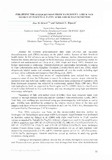
The lipid content and fatty acid composition were examined in the liver, eye, muscle, brain and intraperitoneal fat body (IPF) of hatchery-bred and wild-caught orange-spotted grouper, Epinephelus coioides. The cultured and wild grouper were classified into three different body weights (small, medium and large size), and submitted to lipid content and fatty acid analysis. Muscle lipid in cultured grouper increased lineally with growth, but that of wild fish decreased. The amount of lipid in the IPF in cultured fish was higher than wild fish. Lipid content and essential fatty acids in cultured fish showed significant change with growth. All organs in the early growth stage of cultured fish seemed to contain poor arachidonic acid (AA) than the wild fish. The liver of small sized cultured fish contained low AA and docosahexaenoic acid (DHA), but no profound change was found in AA during growth of fish. While the proportion of DHA in the liver and IPF increased with growth in cultured fish, muscle DHA decreased with growth. The difference in fatty acid composition between cultured and wild fish disappeared with growth.
Suggested Citation
Toledo, J. D., Ganzon-Naret, E. S., & Nakagawa, H. (2005). Comparison of fatty acid profile between cultured and wild-caught grouper Epinephelus coioides. Suisan Zoshoku , 53(2), 127-134. https://doi.org/10.11233/aquaculturesci1953.53.127
Type
ArticleISSN
0371-4217Collections
- Journal Articles [1267]
Related items
Showing items related by title, author, creator and subject.
-
Philippine thraustochytrids from mangroves: A rich new source of essential fatty acids for human nutrition
(Marine Science Institute, University of the Philippines, 2007) -
Evaluation of dietary freeze-dried Chaetoceros calcitrans supplementation to control Vibrio harveyi infection on Penaeus monodon juvenile
; ; ; ; Amar, Edgar (Elsevier, 2014)
Effects of supplementation of diets with freeze-dried Chaetoceros calcitrans to control Vibrio harveyi infection are evaluated through immune responses, and disease resistance of juvenile Penaeus monodon. Total lipid and fatty acid profile of Chaetoceros calcitrans is also analyzed. A challenge infection with 107 cfu/mL concentration of Vibrio harveyi is intramuscularly injected to juvenile Penaeus monodon after 45 days of feeding of diets supplemented with 15 g/kg and 30 g/kg dried Chaetoceros calcitrans. The use of dried Chaetoceros calcitrans is compared with that of ß-1,3 glucan Curdlan, a commercial immune enhancer. Incorporation of 30 g/kg Chaetoceros calcitrans in the diet enhances the immune system of shrimp as effected by high prophenoloxidase activity and plasma protein concentration and is better compared to the commercially available Curdlan. Chaetoceros calcitrans also contains polyunsaturated fatty acids (PUFAs) such as linolenic acid and eicosapentanoic acid (EPA) which are responsible for its antibacterial action against Vibrio harveyi. All these biological activities of Chaetoceros calcitrans add up to increase resistance of the juvenile Penaeus monodon to vibriosis as shown by its high survival rate from the challenge infection with Vibrio harveyi. Therefore, it is worthwhile to use Chaetoceros calcitrans as supplementary feed. Its effect in increasing the immune competence coupled with its antibacterial action, make the shrimp resistant to luminous vibriosis that continues to affect the industry, thereby augmenting aquaculture production.
(Elsevier, 2014)
Effects of supplementation of diets with freeze-dried Chaetoceros calcitrans to control Vibrio harveyi infection are evaluated through immune responses, and disease resistance of juvenile Penaeus monodon. Total lipid and fatty acid profile of Chaetoceros calcitrans is also analyzed. A challenge infection with 107 cfu/mL concentration of Vibrio harveyi is intramuscularly injected to juvenile Penaeus monodon after 45 days of feeding of diets supplemented with 15 g/kg and 30 g/kg dried Chaetoceros calcitrans. The use of dried Chaetoceros calcitrans is compared with that of ß-1,3 glucan Curdlan, a commercial immune enhancer. Incorporation of 30 g/kg Chaetoceros calcitrans in the diet enhances the immune system of shrimp as effected by high prophenoloxidase activity and plasma protein concentration and is better compared to the commercially available Curdlan. Chaetoceros calcitrans also contains polyunsaturated fatty acids (PUFAs) such as linolenic acid and eicosapentanoic acid (EPA) which are responsible for its antibacterial action against Vibrio harveyi. All these biological activities of Chaetoceros calcitrans add up to increase resistance of the juvenile Penaeus monodon to vibriosis as shown by its high survival rate from the challenge infection with Vibrio harveyi. Therefore, it is worthwhile to use Chaetoceros calcitrans as supplementary feed. Its effect in increasing the immune competence coupled with its antibacterial action, make the shrimp resistant to luminous vibriosis that continues to affect the industry, thereby augmenting aquaculture production. -
Advanced broodstock diets for the mangrove red snapper and a potential importance of arachidonic acid in eggs and fry
(Springer Verlag, 2003)Mangrove red snapper fed advanced broodstock diets containing squid meal and squid oil exhibited higher hatching rates, cumulative survival and survival activity index than those fed a basal diet or a basal diet supplemented with mixture of antioxidants. On the other hand, fatty acid analyses of ovaries and fry of wild fish and eggs and larvae of broodstock fed raw fish revealed high arachidonic acid (ARA) and docosahexaenoic acid (DHA) levels and relatively lower eicosapentaenoic acid (EPA) levels consequently showing high ARA/EPA and DHA/EPA ratios compared to cold water species. This suggests that ARA may be nutritionally more important for egg and larval development and survival in tropical marine fish and its supplementation in broodstock diets may enhance reproductive performance of mangrove red snapper.