Journal Articles, Conference Papers and Book Chapters by SEAFDEC Staff: Recent submissions
181-200 / 1693
-
Series: FAO Fisheries and Aquaculture Proceedings;67
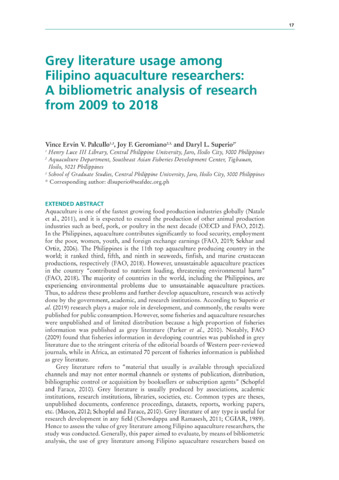
Grey literature usage among Filipino aquaculture researchers: A bibliometric analysis of research from 2009 to 2018
Palcullo, Vince Ervin ; Geromiano, Joy F. ; Superio, Daryl (FAO, 2021)
Aquaculture is one of the fastest growing food production industries globally (Natale et al., 2011), and it is expected to exceed the production of other animal production industries such as beef, pork, or poultry in the next decade (OECD and FAO, 2012). In the Philippines, aquaculture contributes significantly to food security, employment for the poor, women, youth, and foreign exchange earnings (FAO, 2019; Sekhar and Ortiz, 2006). The Philippines is the 11th top aquaculture producing country in the world; it ranked third, fifth, and ninth in seaweeds, finfish, and marine crustacean productions, respectively (FAO, 2018). However, unsustainable aquaculture practices in the country “contributed to nutrient loading, threatening environmental harm” (FAO, 2018). The majority of countries in the world, including the Philippines, are experiencing environmental problems due to unsustainable aquaculture practices. Thus, to address these problems and further develop aquaculture, research was actively done by the government, academic, and research institutions. According to Superio et al. (2019) research plays a major role in development, and commonly, the results were published for public consumption. However, some fisheries and aquaculture researches were unpublished and of limited distribution because a high proportion of fisheries information was published as grey literature (Parker et al., 2010). Notably, FAO (2009) found that fisheries information in developing countries was published in grey literature due to the stringent criteria of the editorial boards of Western peer-reviewed journals, while in Africa, an estimated 70 percent of fisheries information is published as grey literature.
; Geromiano, Joy F. ; Superio, Daryl (FAO, 2021)
Aquaculture is one of the fastest growing food production industries globally (Natale et al., 2011), and it is expected to exceed the production of other animal production industries such as beef, pork, or poultry in the next decade (OECD and FAO, 2012). In the Philippines, aquaculture contributes significantly to food security, employment for the poor, women, youth, and foreign exchange earnings (FAO, 2019; Sekhar and Ortiz, 2006). The Philippines is the 11th top aquaculture producing country in the world; it ranked third, fifth, and ninth in seaweeds, finfish, and marine crustacean productions, respectively (FAO, 2018). However, unsustainable aquaculture practices in the country “contributed to nutrient loading, threatening environmental harm” (FAO, 2018). The majority of countries in the world, including the Philippines, are experiencing environmental problems due to unsustainable aquaculture practices. Thus, to address these problems and further develop aquaculture, research was actively done by the government, academic, and research institutions. According to Superio et al. (2019) research plays a major role in development, and commonly, the results were published for public consumption. However, some fisheries and aquaculture researches were unpublished and of limited distribution because a high proportion of fisheries information was published as grey literature (Parker et al., 2010). Notably, FAO (2009) found that fisheries information in developing countries was published in grey literature due to the stringent criteria of the editorial boards of Western peer-reviewed journals, while in Africa, an estimated 70 percent of fisheries information is published as grey literature. -
Production of microalgal paste in the Philippines
(Philippine Science Letters, 2020)Technical advances have made possible the production of microalgal concentrate in paste form. Chaetoceros calcitrans was concentrated and made into an algal paste through centrifugation, chemical flocculation, and electrolytic flocculation. The paste can be stored up to three months when refrigerated, and is diluted with seawater for feeding to the tiger prawn, Penaeus monodon. This can also be done with other cultured diatoms, and they can be fed to other penaeid shrimp and other organisms such as the Sydney rock oyster and the Pacific oyster. The use of algal paste can simplify hatchery operations and reduce costs among hatcheries with no microalgal culture facilities. -
Dietary taurine in practical diet for two sizes of snubnose silver pompano, Trachinotus blochii
Mamauag, Roger Edward; ; ; ; ; (Wiley, 2021-09-27)
Two separate feeding experiments determined taurine requirement levels in diets for growth of two sizes of snubnose silver pompano. The first experiment was conducted for 14 weeks using pompano with average weight of 0.4 ± 0.01 g. Experimental diets were isonitrogenic, isolipidic and isoenergetic. Inclusion of 0.346% taurine in diet served as control, while five diets were with graded taurine levels at 0.5 (0.846%), 1.0 (1.346%), 1.5 (1.846%), 2.0 (2.346%) and 2.5 (2.846%) %. Three hundred and sixty pompano fishes were randomly distributed to experimental tanks (250-L, 15 fish per tank) in quadruplicate. Pompano fed diets with 1.0% taurine had significantly higher (\(p\) < .05) specific growth rate, per cent body weight gain (PWG) and feed utilization efficiency. The second experiment was conducted for 17 weeks using 104 ± 1.82 g pompano. Similar treatments were used except for diets with 0.5% and 2.5% taurine. Fifteen pompano were stocked in floating net cages in triplicate. Quadratic regression analysis of PWG and taurine levels revealed that pompano weighing 0.4 g required 1.55 g taurine 100 g-1 diet (0.352 g taurine 100 g-1 protein) while larger-sized pompano weighing 104 g required 0.937 g taurine 100 g-1 diet (0.213 g taurine 100g-1 protein). -
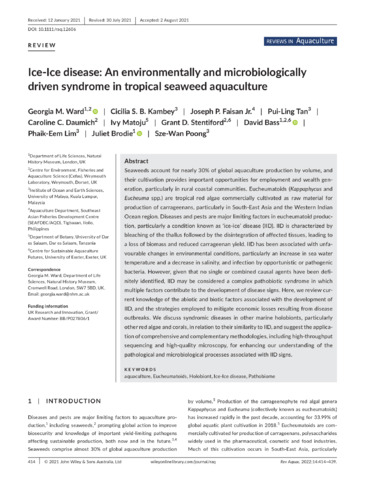
Ice-Ice disease: An environmentally and microbiologically driven syndrome in tropical seaweed aquaculture
; ; Faisan, Joseph P., Jr.; ; ; ; ; ; ; ; (Wiley, 2022-01)
Seaweeds account for nearly 30% of global aquaculture production by volume, and their cultivation provides important opportunities for employment and wealth generation, particularly in rural coastal communities. Eucheumatoids (Kappaphycus and Eucheuma spp.) are tropical red algae commercially cultivated as raw material for production of carrageenans, particularly in South-East Asia and the Western Indian Ocean region. Diseases and pests are major limiting factors in eucheumatoid production, particularly a condition known as ‘ice-ice’ disease (IID). IID is characterized by bleaching of the thallus followed by the disintegration of affected tissues, leading to a loss of biomass and reduced carrageenan yield. IID has been associated with unfavourable changes in environmental conditions, particularly an increase in sea water temperature and a decrease in salinity, and infection by opportunistic or pathogenic bacteria. However, given that no single or combined causal agents have been definitely identified, IID may be considered a complex pathobiotic syndrome in which multiple factors contribute to the development of disease signs. Here, we review current knowledge of the abiotic and biotic factors associated with the development of IID, and the strategies employed to mitigate economic losses resulting from disease outbreaks. We discuss syndromic diseases in other marine holobionts, particularly other red algae and corals, in relation to their similarity to IID, and suggest the application of comprehensive and complementary methodologies, including high-throughput sequencing and high-quality microscopy, for enhancing our understanding of the pathological and microbiological processes associated with IID signs. -
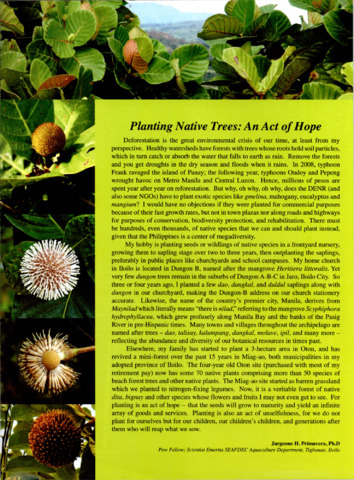
Planting native trees: An act of hope
Primavera, Jurgenne (Green Convergence for Safe Food, Healthy Environment and Sustainable Economy, 2012)
-
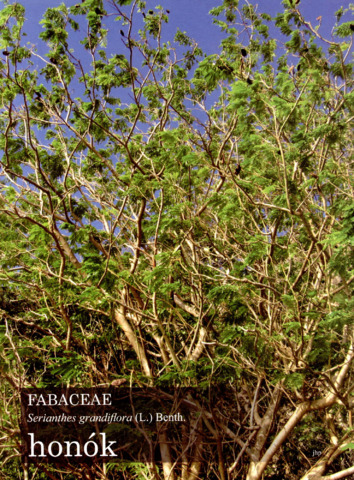
Fabaceae: Serianthes grandiflora (L.) Benth.: Honók
Primavera, Jurgenne (Green Convergence, 2018)
-
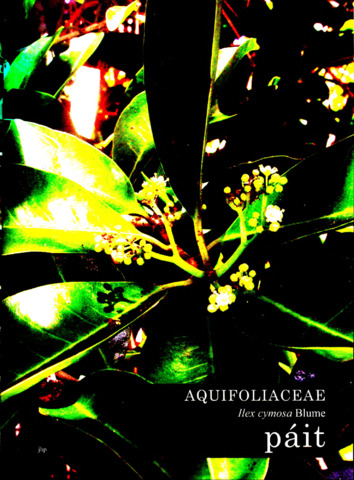
Aquifoliaceae: Ilex cymosa Blume: Páit
Primavera, Jurgenne (Green Convergence, 2018)
-
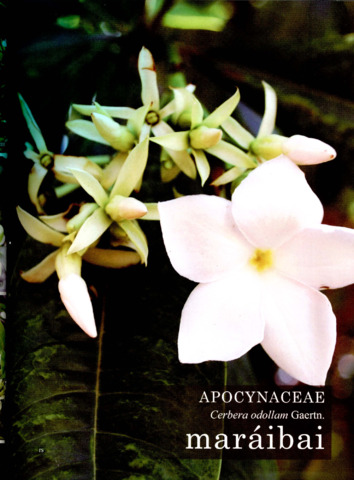
Apocynaceae: Cerbera odollam Gaertn.: Maráibai
Primavera, Jurgenne (Green Convergence, 2018)
-
"Katunggan it Ibajay" Mangrove Ecopark: A dream come true
Primavera, Jurgenne (Green Convergence for Safe Food, Healthy Environment and Sustainable Economy, 2012)
-
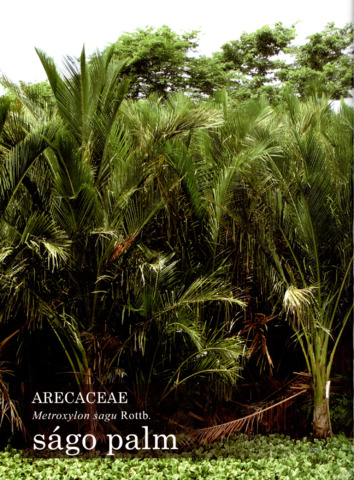
Arecaceae: Metroxylon sagu Rottb.: Ságo palm
Primavera, Jurgenne (Green Convergence, 2018)
-
Performance, digestibility efficiencies, gut and liver morphologies of snub nose pompano Trachinotus blochii fed spray‐dried haemoglobin meal as protein substitute for fishmeal
Mamauag, Roger Edward; ; (Wiley, 2021-07-12)
Spray-dried haemoglobin meal, a by-product and derivative of the swine processing industry, is formed when haemoglobin is separated hygienically from pig's blood. A 120-days feeding trial using snub nose pompano Trachinotus blochii (1.01 ± 0.02 g) tested spray-dried haemoglobin meal (SHM) as an ingredient in six iso-nitrogenous (crude protein of 50%) and iso-lipidic (crude fat of 8%) diets, namely, a diet with 0% SHM (control) and five diets replacing fishmeal with SHM at 4, 8, 12, 16 and 20%. Weight gain percentage (WG%) significantly decreased (p < 0.05) when fish were fed diets with 12, 16 and 20% SHM inclusion levels. Feed conversion ratio and survival significantly decreased (p < 0.05) when fish were fed diets with 16 and 20% SHM inclusion levels. However, visceral somatic index, hepatosomatic index, condition factor and proximate composition were not affected (p > 0.05) by SHM inclusion levels. As an ingredient for pompano feed, SHM has digestibilities for protein, lipid and dry matter at 89, 78 and 45% respectively. No apparent pathological changes were observed in the intestines. However, physiological changes in the liver have been seen in fish fed diets containing 12, 16 and 20% of SHM. Based on the quadratic regression model at the maximum response of weight gain percentage, the optimum inclusion level of SHM was estimated to be 3.08% (5.87% SHM protein in the diet). -
Flakes versus noodles as feed for the abalone Haliotis asinina, does form matter?
Lebata-Ramos, Ma. Junemie Hazel; ; ; (Wiley, 2021-12)
This paper reports the first use of thin flakes (310–315 μm thick) formulated diets as feed for the abalone Haliotis asinina. The study compared noodles and flakes prepared using refined and unrefined diets developed earlier for H. asinina (Bautista-Teruel et al., J. Shellfish Res., 35, 2016, 633). Four treatment diets in triplicates (refined flakes, MBTr-F; refined noodles, MBTr-N; unrefined flakes, MBTur-F; and unrefined noodles, MBTur-N) were used in a feeding experiment conducted in a tank facility. After three months, abalone fed MBTr-F had significantly higher mean shell length and body weight (35.92 ± 0.36 mm, 9.24 ± 0.29 g) compared with those fed MBTr-N (34.63 ± 0.37 mm, 8.22 ± 0.28 g) and MBTur-N (34.23 ± 0.36 mm, 7.66 ± 0.26 g), but did not significantly differ with those fed MBTur-F (35.40 ± 0.30 mm, 8.57 ± 0.24 g). Likewise, abalone fed MBTr-F had significantly higher mean growth rates (5.31 ± 0.08 mm, 2.59 ± 0.06 g/month), compared with those fed MBTr-N (4.90 ± 0.19 mm, 2.26 ± 0.12 g/month) and MBTur-N (4.71 ± 0.02 mm, 2.07 ± 0.06 g/month), but did not significantly differ with those fed MBTur-F (5.11 ± 0.06 mm, 2.37 ± 0.04 g/month). Survival (96.67–98.89%) and FCR (2.2–2.5) did not significantly differ among treatment diets. Between the flaked diets, MBTur-F is the cheaper option. However, the use of this unrefined diet resulted in distinct turquoise abalone shell colour, not observed in those fed MBTr-F. -
Biyah diin in pagparagan sin pagtanuman agal agal iban pag'ayad ha pag' urulan sin kabuhi: Binhi atawa tanumun agal agal, manga mangangaun iban kumakangii' iban sakit, manga anib atawa makamula' iban biyah diin in pagpahilunnah sin anib atawa piligru ha pagtanum agal agal
; Faisan, Joseph P., Jr.In buwk-buwk pahati ini nahinang iban kiyasulat paglabay upat tahun ha pagsaliksik ha pag’usaha agal agal ha Pilipinas hinang sin tumpukan sin GlobalSeaweedSTAR Philippine ha bitsara kahatihan sin kamatauran. Makatagama ...; Sibonga, Rema ; ; ; ; (United Kingdom Research and Innovation-Global Challenge Research Fund (UKRI-GCRF), 2021-03)
-
Pagdumala sa uma sa guso ug mga lakang para sa bayo-sekuridad: Semilya, mga peste ug sakit-sakit, mga risgo ug pagdumala niini
; Faisan, Joseph P., Jr.Gisulat kining brosyur matapos ang upat ka tuig nga panukiduki sa ‘GlobalSeaweedSTAR Philippine Team’ sa industriya sa guso sa Pilipinas gamit ang simple nga sinultian nga daling masabtan sa mga layko. Kini magahatag ug ...; Sibonga, Rema ; ; ; ; (United Kingdom Research and Innovation-Global Challenge Research Fund (UKRI-GCRF), 2021-03)
-
Pangangasiwa sa taniman at mga hakbang pangbayo-sekyuridad para sa Eucheumatoids: Mga kultibar, peste at sakit, mga risgo o peligro at mga paraan sa pangasiwaan nito
; Faisan, Joseph P., Jr.Ang polyeto na ito ay inihanda at isinulat ng GlobalSeaweedSTAR Philippine Team sa payak na lengwahe matapos ang apat na taong pananaliksik sa industriya ng pag-aalaga ng mga halamang-dagat sa Pilipinas. Nais nito na ...; Sibonga, Rema ; ; ; ; (United Kingdom Research and Innovation-Global Challenge Research Fund (UKRI-GCRF), 2021-03)
-
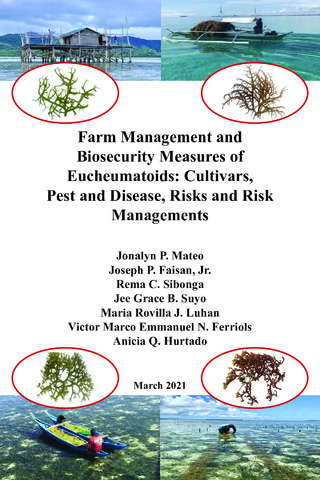
Farm management and biosecurity measures of Eucheumatoids: Cultivars, pest and disease, risks and risk managements
; Faisan, Joseph P., Jr.This brochure was prepared and written after four years of research of the seaweed industry of the Philippines by the GlobalSeaweedSTAR Philippine Team in a layman’s language. This provides the different stakeholders of ...; Sibonga, Rema ; ; ; ; (United Kingdom Research and Innovation-Global Challenge Research Fund (UKRI-GCRF), 2021-03)
-
Comparative transcriptome profiling of heat stress response of the mangrove crab Scylla serrata across sites of varying climate profiles
Shrestha, Anish; ; ; Romana-Eguia, Maria Rowena R. ; (BioMed Central, 2021)
Background: The fishery and aquaculture of the widely distributed mangrove crab Scylla serrata is a steadily growing, high-value, global industry. Climate change poses a risk to this industry as temperature elevations are expected to threaten the mangrove crab habitat and the supply of mangrove crab juveniles from the wild. It is therefore important to understand the genomic and molecular basis of how mangrove crab populations from sites with different climate profiles respond to heat stress. Towards this, we performed RNA-seq on the gill tissue of S. serrata individuals sampled from 3 sites (Cagayan, Bicol, and Bataan) in the Philippines, under normal and heat-stressed conditions. To compare the transcriptome expression profiles, we designed a 2-factor generalized linear model containing interaction terms, which allowed us to simultaneously analyze within-site response to heat-stress and across-site differences in the response. Results: We present the first ever transcriptome assembly of S. serrata obtained from a data set containing 66 Gbases of cleaned RNA-seq reads. With lowly-expressed and short contigs excluded, the assembly contains roughly 17,000 genes with an N50 length of 2,366 bp. Our assembly contains many almost full-length transcripts – 5229 shrimp and 3049 fruit fly proteins have alignments that cover >80% of their sequence lengths to a contig. Differential expression analysis found population-specific differences in heat-stress response. Within-site analysis of heat-stress response showed 177, 755, and 221 differentially expressed (DE) genes in the Cagayan, Bataan, and Bicol group, respectively. Across-site analysis showed that between Cagayan and Bataan, there were 389 genes associated with 48 signaling and stress-response pathways, for which there was an effect of site in the response to heat; and between Cagayan and Bicol, there were 101 such genes affecting 8 pathways. Conclusion: In light of previous work on climate profiling and on population genetics of marine species in the Philippines, our findings suggest that the variation in thermal response among populations might be derived from acclimatory plasticity due to pre-exposure to extreme temperature variations or from population structure shaped by connectivity which leads to adaptive genetic differences among populations. -
Hi-density tank culture of Nile tilapia (Oreochromis niloticus) using lake water with effluent management
(Southeast Asian Regional Center for Graduate Study and Research in Agriculture (SEARCA), 2005)Nine concrete tanks (2 x 2 x 1 m) were stocked with tilapia fingerlings (abw = 3.3±0.9 g) and three stocking rates (50 fish/m2, 100/m2, and 150/m2) were tried. The rearing period lasted for 120 days. Fingerlings were fed commercial diet containing approximately 27% crude protein. The amount of feed was adjusted based on monthly weight samplings. Pre-filtered lake water pumped through gravity aerators into the tanks was used throughout the culture period. Although production was intensified, water agitators and similar mechanical implements were not employed to cut production costs. Results show that tilapia stocked at 50/m3 grew significantly heavier at 109.2 ± 8.0 g. This was significantly better (P<0.05) than fish stocked at 100 and 150/m3, which had basically the same final weight of 82.4 ± 1.8 g and 83.4 ± 8.7 g, respectively. Likewise, survival or recovery at harvest was highest at 92.8% for the stocking rate of 50 fish/m3. The results suggest that stocking at lower densities would result to bigger fish but a lower total yield per tank, or higher stocking densities would mean higher yield but smaller individual fish size at harvest. The rate of water flow through at harvest time was equivalent to 0.30 L/min/kg biomass at the highest stocking density of 150/m3, 0.40 L/min/kg biomass at 100/m3, and 0.60 L/min/kg biomass at the lowest density of 50/m3. Siddiqui et al. (1991) suggested a minimum of 0.50 L/min/kg biomass flow rate for intensive culture of tilapia, but this was generally for clean culture water, not like lake water whose quality varies naturally. After determining the optimum stocking density, a second experiment using bigger fingerlings (57.5±12.6 g) was conducted for 101 days to determine the ideal water flow rate in the system. Varying flow rates (10 liters per minute (Lpm), 15 Lpm and 20 Lpm) were evaluated at a fixed stocking density of 50 fish/m3. Feed ration was 5% during the first two months, 4% on the third month, and 3% thereafter. Tilapia size at harvest increased with increasing flow rate when stocked at 50 fish/m3. From an initial stocking size of 57.5 ± 12.6 g, biggest fish harvests were obtained in tanks with a flow through rate of 20 Lpm (152.2 ± 15.1 g) after 101 days of culture. However, this was not significantly different to fish grown in tanks at 15 Lpm (139.9 ± 7.6 g). Smallest fish harvests were obtained at 10 Lpm at 111.20 ± 8.3 mm. A similar trend was observed with fish length at 157.7 ± 15.5 mm, 150.8 ± 11.0 mm, and 142.1±17.6 mm for 20 Lpm, 15 Lpm, and 10 Lpm, respectively. Feed conversion ratio (FCR) ranged from 1.7 to 2.5 in all treatments. The rate of water flow through at harvest time was equivalent to 1.2 L/min/kg biomass at 20 Lpm, 0.6 L/min/kg at 15 Lpm (sufficient for Laguna de Bay water), and 0.4 L/min/kg at 10 Lpm flowrate. Except for a slight increase in ammonia levels (maximum 1.1 mg/L total ammonia nitrogen) towards the final two weeks of the rearing period, water quality in the culture tanks was generally within tolerable levels throughout the run. Thus, the quality of water from Laguna de Bay can safely support the stocking density used in the experiment. However, if stocking density is further increased, aeration may need to be provided because very low early morning dissolved oxygen levels (DO) were observed, especially in tanks with high stocking density. The significant amount of sludge, mainly fish feces and uneaten feeds, effectively trapped and collected from the settling apparatus, clearly demonstrated the apparatus efficiency. Effluent water was practically rid of solid wastes, and gravity aeration oxygenated the water before it was discharged back to the lake. Ammonia, pH and DO levels of the effluent water were similar to those recorded from the water in the header tank. -
Aquaculture practices in Laguna de Bay, Philippines
(Southeast Asian Regional Center for Graduate Study and Research in Agriculture (SEARCA), 2005)A survey was conducted to obtain information on the fish culture practices of the fish farmers in Laguna de Bay, Philippines. Fish farms vary greatly in size. Nile tilapia and bighead carp are the two fish species cultured in cages. Milkfish as well as tilapia and bighead carp are cultured in pens. The fish in cages and pens in the lake are grown in monoculture and polyculture systems. About one-half of the cage operators and two-thirds of the pen operators do not use artificial feeds in growing fish. Estimates of N load in the lake due to feeding indicated that the contribution of feeds to N in the water is low in relation to the N present in the water. The fish farmers vary in their practices in terms of stocking rate, culture period, and feeding. Production per unit area also varies. However, fish farmers have common concerns and problems. -
Microcystins from the cyanobacteria Microcystis aeruginosa in Laguna de Bay, Philippines
(Southeast Asian Regional Center for Graduate Study and Research in Agriculture (SEARCA), 2005)Laguna de Bay, the largest freshwater lake in the Philippines, experiences periodic blooms of the cyanobacteria Microcystis aeruginosa. The results of analysis for the presence of the hepatotoxin microcystins in bloom samples of this cyanobacteria from 1996, 1998, 1999 and laboratory cultures from 1997 isolates, based on the studies conducted at Binangonan Freshwater Station of SEAFDEC/AQD are presented. Twenty structural variants of the toxin have been isolated with microcystin LR (MC-LR) being the most abundant form. MC-LR contribution ranged from 22% to almost 100% of the total microcystins in the samples. Microcystis bloom in 1998 had MC-RR as the most dominant form of the toxin with almost 38% followed closely by MC-WR (23%) and MC-LR (22%). The harvest from 1996 had the highest total toxin concentration (4048 µg g-1). Laboratory-cultured M. aeruginosa had even higher total toxin concentrations ranging from 11,472 to 12,160 µg g-1. The presence of high microcystins concentrations in M. aeruginosa from Laguna de Bay has far reaching implications in terms of the use of this resource for fishery and domestic water supply.