Acute hepatopancreatic necrosis disease (AHPND)) and hepatopancreatic microsporidiosis (HPM):): Two threats to sustainable shrimp aquaculture


Share
抄録
Infectious diseases caused by viruses and bacteria are a major threat to sustainable shrimp farming globally. Since early 80’s viral diseases such as White Spot Disease, Taura Syndrome disease have caused enormous losses to shrimp aquaculture both in eastern and western hemisphere. As the shrimp industry tried to recover from the onslaught of these diseases, a bacterial, Acute Hepatopancreatic Necrosis Disease (AHPND), also known as Early Mortality Syndrome, and a fungal disease Hepatopancreatic Microsporidiosis (HPM) caused by Enterocytozoon hepatopenaei (EHP) are now posing new threat to shrimp aquaculture.
Acute Hepatopancreatic Necrosis Disease is caused by Vibrio spp. expressing plasmidborne binary toxins, PirA and PirB that is similar to entomopathogenic bacterium, Photorhabdus encoded toxin. In 2009, AHPND emerged in China and since then spread to many countries in East Asia and in the Americas. Another disease that has caused alarm in recent year is Hepatopancreatic Microsporidiosis (HPM) caused by Enterocytozoon penaei (EHP), a microsporidium. While AHPND causes acute infection and large-scale mortalities, EHP causes chronic infection and results growth retardation and size variation in population reducing marketability of the infected shrimp. Both diseases affect hepatopancreas, an organ involved in metabolism and humoral immunity in shrimp. The binary toxin, PirA/ PirB are the primary virulence factor for AHPND, but specific virulence factor(s) for EHP is not known. It is, however, known that EHP does not have mitochondria and appears to transport ATP from the cytoplasm of infected cells as it contains ATP transporter genes in its genome. EHP has been shown to be a risk factor for AHPND. Due to lack of therapeutics, preventative measures remain as a corner stone for managing these diseases and efforts are underway to develop genetically improved lines of shrimp having resistance to AHPND and EHP.
Suggested Citation
Dhar, A. K., & Mai, H. N. (2021). Acute hepatopancreatic necrosis disease (AHPND)) and hepatopancreatic microsporidiosis (HPM):): Two threats to sustainable shrimp aquaculture. In F. A. Aya, L. D. de la Peña, N. D. Salayo, & E. A. Tendencia (Eds.), Proceedings of the International Workshop on the Promotion of Sustainable Aquaculture, Aquatic Animal Health, and Resource Enhancement in Southeast Asia (pp. 200–216). Tigbauan, Iloilo, Philippines: Aquaculture Department, Southeast Asian Fisheries Development Center.
Type
Conference paperISBN
9789719931102 (Print); 9789719931119 (PDF)
Except where otherwise noted, this item's license is described as Attribution-NonCommercial-ShareAlike 3.0 IGO
Related items
Showing items related by title, author, creator and subject.
-
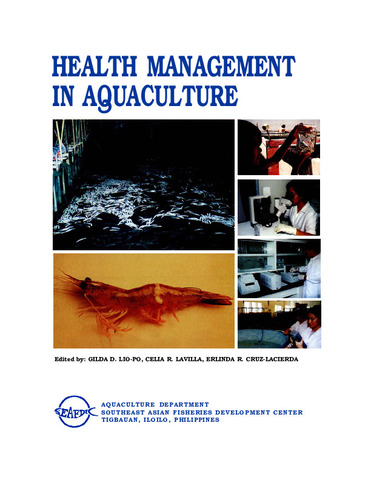
Health management in aquaculture
(Aquaculture Department, Southeast Asian Fisheries Development Center, 2001)A textbook on diseases of cultured warmwater fish and shrimps in the Philippines. Eleven chapters cover essential information on the basic principles of disease causation, major diseases of cultured fish and crustaceans, particularly shrimps, and methods of prevention and control. Emphasis is made on major diseases that occur in the Philippines and other countries in the Asian region. Included also are topics on harmful algae, immunology and molecular biological diagnostic techniques. -
Country status of aquatic emergency preparedness and response systems for effective management of aquatic animal disease outbreaks in Myanmar
(Aquaculture Department, Southeast Asian Fisheries Development Center, 2019)Myanmar is one of the OIE members and the Department of Fisheries (DoF) is highly concerned with transboundary aquatic animal pathogens. Therefore, the Aquatic Animal Health & Disease Control Section has already been formed not only for field diagnostic surveys but also for border control especially at international airport and border trade areas by checking and counter checking export and import of aquatic animals and products. At the moment, the DoF is stressing an issue of some transboundary diseases for finfish such as Gyrodactylus sp., Dactylogyrus sp., Argulus sp., Trichodena sp., Streptococcus sp., Aeromonas sp., and for crustacean are MrNV/XSV and WSSV. In addition, the DoF is facing challenges with parasitic disease and bacterial disease problems due to poor water quality management at culturing fish ponds. For the prevention and control of fish diseases within the country, the DoF is issuing Health Certificates by physical and microbiological examination of fishes and fisheries products. At the same time, Quarterly report on fish disease has being regularly submitted to NACA, OIE since 1998 until now. Although the DoF has no specific law and legislation on the control of quarantine pest and disease of aquatic animal, a good aquaculture practice has been implemented and code of conduct responsible for aquaculture is being followed in the country. The aquatic health management is a challenging issue in aquaculture development. Myanmar is still needing technical assistance to improve quarantine system especially for importation and exportation of live aquatic animals. Moreover, monitoring and surveillance programs with harmonized aquatic emergency preparedness and response system are required to boost up not only for Myanmar but also for effective management of transboundary disease outbreaks in Southeast Asia. -
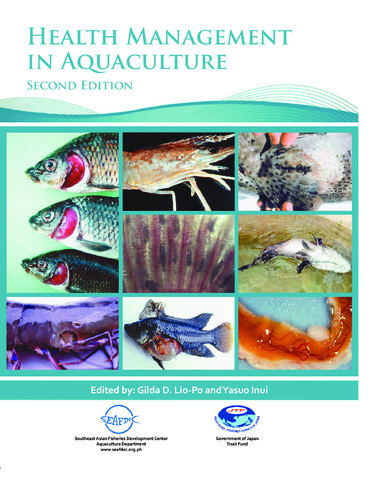
Health management in aquaculture
(Aquaculture Department, Southeast Asian Fisheries Development Center, 2010-07)A textbook on diseases of cultured warmwater fish and shrimps in the Philippines. Eleven chapters cover essential information on the basic principles of disease causation, major diseases of cultured fish and crustaceans, particularly shrimps, and methods of prevention and control. Emphasis is made on major diseases that occur in the Philippines and other countries in the Asian region. Included also are topics on harmful algae, immunology and molecular biological diagnostic techniques.