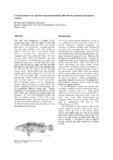
Growth, plasma cortisol, liver and kidney histology, and resistance to vibriosis in brown-marbled grouper, Epinephelus fuscoguttatus fed onion and ginger

Download URL
www.bioflux.com.ro日付
2013
Page views
2,888ASFA keyword

AGROVOC keyword
Taxonomic term

Metadata
アイテムの詳細レコードを表示するShare
抄録
The health-promoting effects of dietary onion and ginger were studied in brown marbled grouper, Epinephelus fuscoguttatus. An eight-week feeding trial was conducted to evaluate the effects of dietary onion and ginger on growth, cortisol levels, histology and disease resistance in the fish. Five experimental diets were formulated to contain either onion (2%), ginger (2%), β-glucan (1%) or vitamin C (3%) and a control diet (without immunostimulants). Each diet was fed to triplicate groups of fish with an average weight of 10.85±0.69 g. Fish supplemented with either of the immunostimulants exhibited a significantly higher growth compared to the control group. Specific growth rate (SGR) and feed conversion efficiency (FCE) were significantly higher in the onion and ginger-supplemented fish than the control. Cortisol level was higher in the control compared to the immunostimulant-fed groups with onion and ginger-fed fish showing significantly lower cortisol levels. When experimentally infected with Vibrio harveyi, fish fed onion or ginger exhibited significantly reduced mortality when compared with the control and β-glucan, but not when compared with the vitamin C-fed group. Liver sections sampled 4 days postinfection showed no remarkable pathology except for the slight reduction in glycogen granules in the supplement-fed fish. The liver of non-supplemented infected fish showed necrosis, fatty globule deposition, vacuolation, and presence of short rod-shaped bacteria. Kidney sections in the supplemented groups, likewise, did not show significant pathology similar to the uninfected control, whereas those of infected control fish showed necrosis of the tubules and glomeruli resulting in severely altered morphology of the tissues and presence of bacteria in the necrotic areas. As a result of circumventing tissue damage, wound healing was faster in fish supplemented with ginger, onion, and vitamin C compared to the β-glucan and the control groups. This study showed the benefits of onion and ginger in promoting growth and alleviating stress and severity of vibriosis in grouper.
Keywords
immunostimulant onion ginger grouperSuggested Citation
Apines-Amar, M. J. S., Amar, E. C., & Faisan, J. P., Jr. (2013). Growth, plasma cortisol, liver and kidney histology, and resistance to vibriosis in brown-marbled grouper, Epinephelus fuscoguttatus fed onion and ginger. Aquaculture, Aquarium, Conservation and Legislation , 6(6), 530-538. http://hdl.handle.net/10862/2230
Type
ArticleISSN
1844-8143; 1844-9166Collections
- Journal Articles [1267]
Related items
Showing items related by title, author, creator and subject.
-
Use of soybean meal and rice bran in formulated diets for the grouper Epinephelus coioides
(Bureau of Agricultural Research, Department of Agriculture, 2007)Two diets were formulated to include 8–14% soybean meal and 9–18% rice bran, 34–40% fish meal, 4–5% mussel meal, and 7–8% Acetes shrimp meal, and 11–13% cod liver oil. Soy bean meal and rice bran were included at 4:1 ratio together to replace 12.5% and 25% of the animal protein sources in the two diets. The two diets were prepared in dry D form and moist M form. The four test diets, D12.5, M12.5, D25, and M25 diets had 40–42% protein and 4,000 kcal/g gross energy. The control diet used was a dry diet with 44% crude protein and 4,260 kcal/g, made with 30% Peruvian fish meal, 8% squid meal, 22% Acetes shrimp meal, 8% cod liver oil, 8% soybean oil, but no plant protein sources. The five diets were fed to juvenile grouper (mean weights ranging from 1.63 ± 0.47 to 2.41 ± 0.91 g) in indoor 400 L concrete tanks (10 fish per tank). After 10 weeks, growth, feed intake, feed conversion ratios (1.2–2.2), and survival (60–80%) of juvenile grouper were not significantly different between the test diets and the control. The carcass composition of the harvested grouper was not significantly different among diets. Protein utilization was best among the fish fed the test diet D12.5. This study showed that soybean meal and rice bran at 4:1 ratio can be included in formulated diets for grouper to replace 12.5% to 25% of the animal protein sources. However, the results for the test diets may also have been due to other factors - the high fish meal content, inclusion of mussel meal, and increase in cod liver oil. -
A practical guide to feeds and feed management for cultured groupers
(Network of Aquaculture Centres in Asia-Pacific, 2005)Farming of groupers (members of the Serranidae, subfamily Epinephelinae) is widely practiced in Asia. Groupers are carnivorous and consequently prefer feeds high in fish protein. Most farms in Asia still rely on what is commonly termed "trash fish". Despite the apparent abundance and availability of "trash" fish in many areas, there are some issues and problems related to its use in fish farming. To provide farmers with a viable alternative to feeding trash fish to grouper, the Australian Centre for International Agricultural Research (ACIAR) supported project FIS/97/73 Improved hatchery and grow-out technology for grouper aquaculture in the Asia-Pacific region from 1999 to 2002, with one component to develop formulated feed for grouper aquaculture. The experiences of the project have been synthesized into this Practical Guide to Feeds and Feed Management for Cultured Groupers to promote the use of formulated feeds; promote reduction in the use of trash fish in grouper aquaculture; and to assist farmers in making more efficient use of feeds and feed resources. This guide explores new and better farming practices making use of formulated feeds, as well as technical aspects of feed storage and quality control, management of feeding including weaning of groupers onto formulated feeds and economic considerations. -
The commercial production of green grouper fingerlings, Epinephelus suillus, from wild caught fry - an industry experience
(Aquaculture Department, Southeast Asian Fisheries Development Center, 1996)Wild-caught fry of the green groupers, Epinephelus malabaricus and E. suillus ranging in standard lengths (SL) from 1.5 to 3.0 cm were bought from different fry dealers all over the Philippines. These were reared from 1.0 to 2.5 months in 10 to 40 m3 (small) concrete tanks, in 240 m3 (large) concrete nursery tanks with sandy bottom, in 10 m3 hapa nets installed either in large nursery concrete tanks with sandy bottom or in 0.8 to 1.0 ha earthen ponds. The initial stocking density was 33-150/m3. When the fingerlings reached 5 to 7 cm SL, these were harvested and stocked in cages. The wild fry were fed adult brine shrimps for the first few days and later, trash fish. Rearing water in small concrete tanks was changed daily while that in large nursery tanks and hapas was changed only when dissolved oxygen level was about 4 ppt or lower. Survival rates ranged from 3% to 64%. Although survival rates varied, rearing grouper fry in hapa nets installed in earthen ponds were found to be the most suitable for the commercial production of grouper fingerlings to a size suitable for stocking in cages. The large variation in survival rates is attributed mainly to the quality of wild fry bought from different fry dealers all over the country and the occurrence of diseases during the culture period. The problems encountered in the commercial production of fingerlings are discussed.