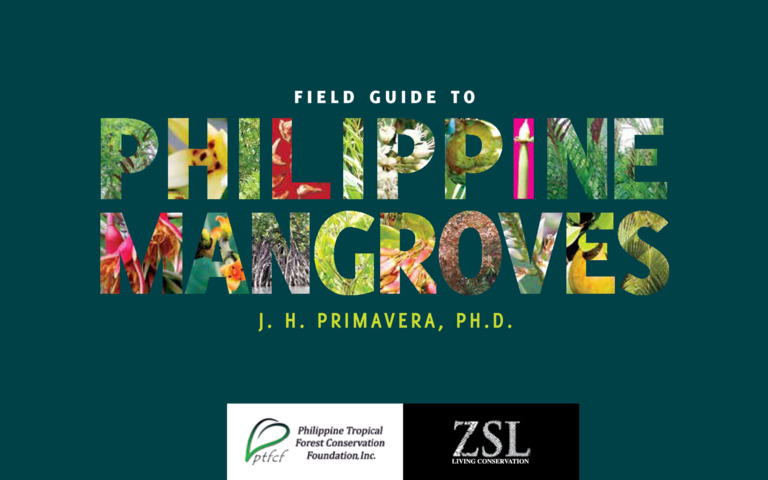
Field guide to Philippine mangroves
Download URL
www.zsl.orgDate
2009Author
Page views
NaN
AGROVOC keyword
Taxonomic term
Acrostichum 
Acrostichum aureum
Acrostichum speciosum
Aegiceras
Aegiceras corniculatum
Aegiceras floridum
Avicennia alba
Avicennia marina
Avicennia officinalis
Avicennia rumphiana
Brownlowia
Brownlowia tersa
Bruguiera cylindrica
Bruguiera gymnorrhiza
Bruguiera parviflora
Bruguiera sexangula
Camptostemon philippinensis
Ceriops
Ceriops decandra
Ceriops tagal
Excoecaria agallocha
Heritiera littoralis
Lumnitzera
Lumnitzera littorea
Lumnitzera racemosa
Osbornia octodonta
Pemphis acidula
Rhizophora mucronata
Rhizophora stylosa
Scyphiphora hydrophylacea
Sonneratia
Sonneratia alba
Sonneratia caseolaris
Sonneratia ovata
Xylocarpus
Xylocarpus granatum
Xylocarpus moluccensis
Acrostichum aureum
Acrostichum speciosum
Aegiceras
Aegiceras corniculatum
Aegiceras floridum
Avicennia alba
Avicennia marina
Avicennia officinalis
Avicennia rumphiana
Brownlowia
Brownlowia tersa
Bruguiera cylindrica
Bruguiera gymnorrhiza
Bruguiera parviflora
Bruguiera sexangula
Camptostemon philippinensis
Ceriops
Ceriops decandra
Ceriops tagal
Excoecaria agallocha
Heritiera littoralis
Lumnitzera
Lumnitzera littorea
Lumnitzera racemosa
Osbornia octodonta
Pemphis acidula
Rhizophora mucronata
Rhizophora stylosa
Scyphiphora hydrophylacea
Sonneratia
Sonneratia alba
Sonneratia caseolaris
Sonneratia ovata
Xylocarpus
Xylocarpus granatum
Xylocarpus moluccensis
Metadata
Perlihat publikasi penuhShare
Description
Awareness of mangrove importance, particularly for coastal protection, has grown among the general public over the past several years. In turn, this has led to numerous planting initiatives by various groups. However, most of these programs did not yield positive results mainly due to lack of science-guided protocols, particularly on what species to grow under certain conditions.
This field guide is an attempt towards broader awareness and appreciation of the common mangroves found in the Philippines. It is based on the original material, “Field Guide to Philippine Mangroves,” developed with support from the Pew Fellows Program in Marine Conservation and SEAFDEC PREFACE Aquaculture Department, and published by the Zoological Society of London-Philippines.
Seeing the vitality of this field guide, Philippine Tropical Forest Conservation Foundation, Inc. (PTFCF) partnered with ZSL-Philippines and Foundation for Communication Initiatives (FOCI) in repackaging this field guide for distribution to groups and individuals keen on mangrove rehabilitation. Together with the “Community-based Mangrove Rehabilitation Training Manual” and posters, this hopes to increase prospects of success for mangrove rehabilitation efforts, particularly in areas hit by Super Typhoon Yolanda, the most destructive typhoon ever recorded in modern history
Suggested Citation
Primavera, J. H. (2009). Field guide to Philippine mangroves. Zoological Society of London-Philippines.
Type
BookKoleksi
- Books and Book Chapters [123]
Related items
Showing items related by title, author, creator and subject.
-
Mangroves and community aquaculture
(Aquaculture Department, Southeast Asian Fisheries Development Center, 2000)Describes the efforts of AQD to raise mudcrab in pens in mangrove areas in Palawan and Aklan with the participation of local communities. -
Philippine mangroves: status, threats and sustainable development
Primavera, Jurgenne (United Nations University Press, 2004)
The status of the Philippine mangroves is examined, the functions of mangrove areas are highlighted, the threats to mangrove resources are identified, and the prospects for sustainable use are discussed. The Philippines harbour 39 species of true mangroves belonging to the following genera: Acanthus, Camptostemon, Lumnitzera, Excoecaria, Pemphis, Xylocarpus, Aegiceras, Osbornia, Nypa, Aegialitis, Bruguiera, Ceriops, Kandelia, Rhizophora, Scyphiphora, and Sonneratia. The fauna is equally diverse. Apart from fish and shrimp, other animals collected from mangroves are crabs and lobsters, bivalve and gastropod molluscs, and other invertebrates. Mangrove services include coastal protection, erosion control, sediment stabilization, flood regulation, nutrient supply and regeneration, waste treatment, and wildlife habitats. Mangroves could be valuated at around 10,000 US$/ha/year. As elsewhere, it can be expected that the net present value is highest if the mangrove cover is maintained. The decline of mangroves from about 500,000 ha in 1918 to only 120,500 ha in 1994 was caused by overexploitation by coastal dwellers and to conversion to settlements, agriculture, aquaculture, salt pans, and industry. The remaining mangroves should be conserved. It is recommended to establish the following zones: (1) protected forest; (2) productive forest; (3) reforestation areas; and (4) conversion areas.
(United Nations University Press, 2004)
The status of the Philippine mangroves is examined, the functions of mangrove areas are highlighted, the threats to mangrove resources are identified, and the prospects for sustainable use are discussed. The Philippines harbour 39 species of true mangroves belonging to the following genera: Acanthus, Camptostemon, Lumnitzera, Excoecaria, Pemphis, Xylocarpus, Aegiceras, Osbornia, Nypa, Aegialitis, Bruguiera, Ceriops, Kandelia, Rhizophora, Scyphiphora, and Sonneratia. The fauna is equally diverse. Apart from fish and shrimp, other animals collected from mangroves are crabs and lobsters, bivalve and gastropod molluscs, and other invertebrates. Mangrove services include coastal protection, erosion control, sediment stabilization, flood regulation, nutrient supply and regeneration, waste treatment, and wildlife habitats. Mangroves could be valuated at around 10,000 US$/ha/year. As elsewhere, it can be expected that the net present value is highest if the mangrove cover is maintained. The decline of mangroves from about 500,000 ha in 1918 to only 120,500 ha in 1994 was caused by overexploitation by coastal dwellers and to conversion to settlements, agriculture, aquaculture, salt pans, and industry. The remaining mangroves should be conserved. It is recommended to establish the following zones: (1) protected forest; (2) productive forest; (3) reforestation areas; and (4) conversion areas. -
A review of mangrove rehabilitation in the Philippines: successes, failures and future prospects
Primavera, Jurgenne; (Springer, 2008)
From half a million hectares at the turn of the century, Philippine mangroves have declined to only 120,000 ha while fish/shrimp culture ponds have increased to 232,000 ha. Mangrove replanting programs have thus been popular, from community initiatives (1930s-1950s) to government-sponsored projects (1970s) to large-scale international development assistance programs (1980s to present). Planting costs escalated from less than US$100 to over $500/ha, with half of the latter amount allocated to administration, supervision and project management. Despite heavy funds for massive rehabilitation of mangrove forests over the last two decades, the long-term survival rates of mangroves are generally low at 10-20%. Poor survival can be mainly traced to two factors: inappropriate species and sites selection. The favored but unsuitable Rhizophora are planted in sandy substrates of exposed coastlines instead of the natural colonizers Avicennia and Sonneratia. More significantly, planting sites are generally in the lower intertidal to subtidal zones where mangroves do not thrive rather than the optimal middle to upper intertidal levels, for a simple reason. Such ideal sites have long been converted to brackishwater fishponds whereas the former are open access areas with no ownership problems. The issue of pond ownership may be complex and difficult, but such should not outweigh ecological requirements: mangroves should be planted where fishponds are, not on seagrass beds and tidal flats where they never existed. This paper reviews eight mangrove initiatives in the Philippines and evaluates the biophysical and institutional factors behind success or failure. The authors recommend specific protocols (among them pushing for a 4:1 mangrove to pond ratio recommended for a healthy ecosystem) and wider policy directions to make mangrove rehabilitation in the country more effective.