Philippines : In the forefront of the mud crab industry development: Recent submissions
Now showing items 1-20 of 44
-
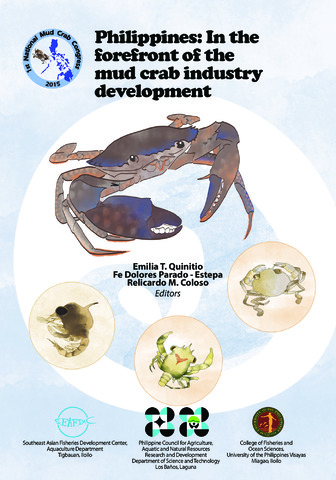
Philippines: In the forefront of the mud crab industry: Proceedings of the 1st National Mud Crab Congress
(Aquaculture Department, Southeast Asian Fisheries Development Center, 2017) -
Biological evaluation of existing feed formulations for the grow-out culture of the mud crab, Scylla serrata
(Aquaculture Department, Southeast Asian Fisheries Development Center, 2017)This study was conducted to identify a formulated pelleted feed for the grow-out culture of the mud crab. A commercial crab feed (CCF) was evaluated together with fish by-catch (FBC) and three test diets (formulated and pelleted) of similar dietary energy (1723 MJ/Kg diet) based on published works. The test diets contained 48% (D-1), 43% (D-2), and 38% (D-3) crude protein (CP), respectively. All the five dietary treatments were fed to crablets (5 to 6 g body weight) that were individually stocked in 60-L tanks. Each dietary treatment was fed to six crabs. Crustaceans grow by molting which is not simultaneous, hence, each crab was monitored daily. After the third molt (M3) survival rates in D-1, D-2 and D-3 ranged from 33%-66% compared with only 16% in FBC, and 0% in CCF where no crab survived to molt for the second time (M2). Nutrients in FBC may not be sufficient to sustain growth and survival, while water stable CCF may lack a feed attractant. Diets D-1, D-2, and D-3 were evaluated in another feeding experiment to identify the basal diet for the crab. All crabs molted until M3 and no significant differences were noted on growth performance between treatments. However, D-1 (48% CP) was identified as the basal diet due to better numerical values observed in terms of feed conversion ratios and specific growth rates. -
Effect of feed binder on water stability and digestibility of formulated feed for the mud crab Scylla serrata
(Aquaculture Department, Southeast Asian Fisheries Development Center, 2017)The binding capacity of six natural and eight synthetic feed binders were tested in a basal diet formulated for the mud crab. Incorporation levels of natural binders ranged from 1 to 25% while those of synthetic binders ranged from 0.1 to 5% and these were tested for pellet stability in seawater by a) 10-min immersion, and b) at different time intervals. Pellets with synthetic binders were more water-stable than pellets with natural binders. Three synthetic binders and natural binders (glutinous rice starch and carrageenan + CMC) showed best results. The Apparent Digestibility Coefficients (ADC) of crude protein (ADCCP) and crude fat (ADCCFt) of the basal diet were determined when selected feed binders were included in the formulation. These were determined by using an inert indicator, chromic oxide. Results showed that the ADCCP and ADCCFt of the basal diet were not similar when different binders were used, and these differences ranged from 3 to 7%. Carrageenan combined with a synthetic binder improved ADCCP and CDCCFt values. -
Nursery culture of mud crab Scylla serrata using different feeding rates
(Aquaculture Department, Southeast Asian Fisheries Development Center, 2017)The effect of different feeding rates on the production and profitability of Phases 1 and 2 (3-week each) nursery culture of hatchery-produced crab Scylla serrata was determined. Minced mussel meat and formulated diet (at a ratio of 30:70) were fed to crabs. The crabs were stocked randomly in 12-m2 net cages installed in the nursery earthen pond at stocking densities of 50 m-2 for Phase 1 and 10 m-2 for Phase 2. Crabs were fed three times daily at 0830, 1300 and 1630h h. In Phase 1, feed conversion ratio (FCR) at a feeding rate of 100% of initial crab biomass day-1 for the entire three weeks was the lowest (p<0.05) while survival, body weight (BW), carapace width (CW) and carapace length (CL) were not different (p>0.05) among crabs given different feeding rates. For Phase 2, the feeding rate of 40-30-20% of crab biomass day-1 (week 1-2-3) resulted in lowest (p<0.05) FCR that was not significantly different from FCRs of crabs fed 50-40-30% and 60-50-40% of BW. Crab BW, CW and CL were not different (p>0.05) among feeding rate treatments. Profitability was better when feeding rate used was 100% of initial crab biomass day-1 for the entire Phase 1 or 100-50-40% of crab biomass day-1 (for week 1-2-3). A feeding rate of 50-40-30 % of crab biomass day-1 (week 1-2-3) was more profitable in Phase 2. -
Nursery culture of mud crab, Scylla serrata, using different ratios of natural food to formulated feed
(Aquaculture Department, Southeast Asian Fisheries Development Center, 2017)The effect of feeding different ratios of natural food to formulated feed on the production and profitability of Phases 1 and 2 of nursery culture (3 weeks per phase) of hatchery-produced crab Scylla serrata was investigated. The feeds consisted of: mussel meat (M) alone, formulated diet (FD) alone, and their combination at M:FD ratios of 5 : 95, 10 : 90, 15 : 85, 20 : 80, 25 : 75 and 30 : 70. The crabs were stocked randomly in 12-m2 net cages installed in the nursery pond at stocking density of 50 m-2 for Phase 1 and 10 m-2 for Phase 2. Crabs were fed three times daily at 0830, 1300 and 1630 h. Results showed that in both phases, the survival rate, body weight, carapace width, and feed conversion ratio of crabs fed M, FD, and combination at different ratios were not significantly different (p>0.05). Profitability was better in 15 M:85 FD or 20 M :80 FD (Phase 1) and 30 M:70 FD ratio (Phase 2). The use of complete formulated diet as feed for crabs reduced the reliance on wet natural food. -
Breeding and culture of the polychaete, Marphysa mossambica, as feed for the mud crab
; ; Mandario, Mary Anne (Aquaculture Department, Southeast Asian Fisheries Development Center, 2017)
Marine worms (Annelida: Polychaeta) are considered as important food for crustacean broodstock because they contain hormones and correct balance of essential nutrients for reproduction. Marphysa mossambica (Peters, 1854) occurs in muddy coastal areas and is abundant in fish farms where it builds burrows in nutrient-rich sediments. This species encapsulates their eggs and larvae in gelatinous masses (jelly cocoons). It is a multiple spawner, and breeders are repeatedly spawning in tanks. Culture techniques have also been developed and established in tanks. Based on dry weight, cultured M. mossambica contained 62-66% crude protein and 7-12% lipids with levels of highly unsaturated fatty acids (HUFAs) such as arachidonic (20:4n-6), eicosapentaenoic (20:5n-3) and docosahexaenoic acid (22:6n-3) at 0.2-0.5%, 0.2-0.3% and 0.3-0.5%, respectively. Stocks were monitored for the presence of white spot syndrome virus (WSSV) using polymerase chain reaction-based diagnostic methods. The WSSV-free polychaetes mass-produced in tanks were utilized as live food for mud crab S. serrata broodstock. Mud crab broodstock fed natural food (mussel, fish, and squid) with live Marphysa on daily feed rotation produced higher number of crab zoeae, larval survival, total lipids and HUFAs than those fed natural food without live Marphysa. Production of nutrient-rich WSSV-free polychaetes in captivity can play a significant role in supporting crustacean hatcheries that supply seeds to the nursery and grow-out.
(Aquaculture Department, Southeast Asian Fisheries Development Center, 2017)
Marine worms (Annelida: Polychaeta) are considered as important food for crustacean broodstock because they contain hormones and correct balance of essential nutrients for reproduction. Marphysa mossambica (Peters, 1854) occurs in muddy coastal areas and is abundant in fish farms where it builds burrows in nutrient-rich sediments. This species encapsulates their eggs and larvae in gelatinous masses (jelly cocoons). It is a multiple spawner, and breeders are repeatedly spawning in tanks. Culture techniques have also been developed and established in tanks. Based on dry weight, cultured M. mossambica contained 62-66% crude protein and 7-12% lipids with levels of highly unsaturated fatty acids (HUFAs) such as arachidonic (20:4n-6), eicosapentaenoic (20:5n-3) and docosahexaenoic acid (22:6n-3) at 0.2-0.5%, 0.2-0.3% and 0.3-0.5%, respectively. Stocks were monitored for the presence of white spot syndrome virus (WSSV) using polymerase chain reaction-based diagnostic methods. The WSSV-free polychaetes mass-produced in tanks were utilized as live food for mud crab S. serrata broodstock. Mud crab broodstock fed natural food (mussel, fish, and squid) with live Marphysa on daily feed rotation produced higher number of crab zoeae, larval survival, total lipids and HUFAs than those fed natural food without live Marphysa. Production of nutrient-rich WSSV-free polychaetes in captivity can play a significant role in supporting crustacean hatcheries that supply seeds to the nursery and grow-out. -
Implication of mud crab culture technology transfer on rural coastal communities: The case in northern Samar, Philippines
; ; Quinitio, Emilia T. (Aquaculture Department, Southeast Asian Fisheries Development Center, 2017)
The socio-economic implications of technology transfer of mud crab culture on small-scale growers in Northern Samar and the mechanism of nursery technology transfer were investigated. The study covered four Peoples Organizations (POs), each operating in villages of the four municipalities of Northern Samar namely, Lavezares, Rosario, Laoang, and Pambujan. These were sites of the Philippine-Australian Community Assistance Program - assisted mud crab (Scylla) culture livelihood projects. Interviews from 60 beneficiaries revealed that most (76%) were relatively new to mud crab culture, particularly fattening or growout, but 65% were gleaners of mud crabs for more than 5 years. The average age of respondents was 45 years old and were predominantly male. Most (93%) were married with an average household size of six. A cost and return analysis of mud crab fattening in pens using only two compartments showed that the net income (P4,832/month for a 30-day culture period) is not sufficient if shared among 40 PO members participating in only one economic activity. Consequently, most (63 %) respondents whose livelihood projects were cooperative undertaking were no longer keen with the cooperative-run project. Interestingly, those (83 %) who operated their own farm wanted to continue and expand (26 %), particularly those in Rosario. The motivation factors that influenced growers to continue mud crab culture and adopt the nursery technology being disseminated were primarily economic with extra income and source of cash as main reasons for adoption. Majority also claimed that the nursery technology that was being transferred by SEAFDEC/AQD was simple. The mud crab pond nursery technology transfer involved community training and participation of beneficiaries, beginning with the linking of technologists and socio-economists with on-the-ground partners. Thereafter, season-long training and farm demonstration followed comprising lecture series and hands-on demonstration. Nursery pond operations were conducted in an open pond (Rosario) and in a pond within a mangrove area (Pambujan). Survival in the pond within a mangrove area was higher (68 %) than in an open pond (50 %) for phase 1, suggesting that the mangrove played a role on mud crab endurance. However, survival in phase 2 (72 %, Pambujan; 83 %, Rosario) showed a reversed trend, suggesting that bigger crablets can withstand/endure harsh pond conditions. Results of the demonstration indicated that the nursery technology is a viable enterprise, showing an ROI of 93.50% in Rosario and 198.04% in Pambujan. Most (83%) of the growers were interested in the nursery technology, although only few PO members participated in the season-long training. Ownership of area, market, and farm distance from household were the more important considerations that influenced small-scale growers in adopting the technology. -
Development of aquasilviculture at BFAR-NBFTC, Pagbilao, Quezon
(Aquaculture Department, Southeast Asian Fisheries Development Center, 2017)Aquasilviculture technology verification project was conducted at the National Brackishwater Fisheries Technology Center (NBFTC) of the Bureau of Fisheries and Aquatic Resources (BFAR) in 1996-2000. Results indicated that given the proper technology, management and favourable market, and polyculture of high-value species (grouper (Epinephelus) and mud crab (Scylla)) will provide better return on investment. Dissemination of the technology through training started in 2001. In 2002, a 4-hectare undeveloped fishpond of NBFTC was converted into an aquasilviculture project to showcase the technical and economic feasibility of the technology with emphasis on the polyculture of mud crab, grouper and saline tilapia (Oreochromis) that would serve as a model livelihood project for coastal fisherfolk. In 2011, the BFAR launched the Philippine National Aquasilviculture Program to help restore mangroves that serve as breeding and nursery grounds of fish, and to provide livelihood projects through aquasilviculture to coastal fisherfolk. With increasing cost of development and management for aquasilviculture, integration of mangrove crab fattening and/or soft-shelled crab production have shown to improve profit under the present economic condition. -
Enhancing mud crab population through mangrove restoration
Lebata-Ramos, Ma. Junemie Hazel; ; Sibonga, Rema ; ; ; (Aquaculture Department, Southeast Asian Fisheries Development Center, 2017)
Mangroves are known as important nurseries for different species of fish and shellfish. In the Philippines, mud crabs Scylla spp. are among the most valuable crustaceans harvested from the mangroves and are considered a delicacy. However, varying levels of overfishing have been reported in different parts of the country. The decrease in production may be due to increasing demand for the resource and the loss of mangrove habitat. This problem may be addressed through regulation of fishing effort, rehabilitation of habitats, mangrove-friendly aquaculture and enhancement of wild crab stocks. This study shows the effect of mangrove rehabilitation on mud crab population. From July 2010 to December 2011, a total of 2.166 tons of mud crabs (n=17,558) have been collected from a 66.5 ha abandoned pond that has been recolonized by mangroves. The catch was dominated by S. olivacea (79.96%), then S. tranquebarica (19.92%) and S. serrata (0.12%). Male to female ratio was at 1.09:1. Individual daily yield ranged from 0.06 to 8.4 kg while catch per unit effort in terms of quantity and biomass ranged 0.02-1.46 crab gear-1 day-1 and 1.1-213.54 g gear-1 day-1, respectively. The results showed that mud crab population in this study site was much higher than the population in the reforested (Walton et al., 2006, 2007) and natural mangroves (Lebata et al., 2007) with almost the same area. For 18 months of sampling (April 2002-September 2003), only 3,924 crabs were sampled in the natural mangroves while 10,504 in the reforested mangroves. Mud crab production in the present study site resulted in a yield of 21 kg ha-1 yr-1, 5 and 3 times higher than the yield reported in the natural and reforested mangrove areas, respectively. These results imply that habitat restoration can be very effective in restoring natural populations of mud crab. -
Handling, storage and transport conditions of mud crabs in trading centers
(Aquaculture Department, Southeast Asian Fisheries Development Center, 2017)This study aims to improve the handling, storage and transport conditions of mud crabs. The usual practice of the crab growers in the Philippines is to bring the market size crabs to middlemen, brokers or operators of small trading centers immediately after harvest; then the crabs are brought to municipal traders or operators of bigger buying station. The crabs are sent to the exporters in Manila or Cebu. The crabs are exported mostly to Singapore, Taiwan, Hongkong and mainland China. The crabs are classified based on the species, body weight, sex, gonad maturity and intactness of limbs. Crabs are rejected for export when they are soft-shelled, very lean, or have incomplete limbs and abnormalities. Crabs with emaciated muscle (‘hagas’), ammoniacal odor (strong urine-like smell) and in an undesirable state are also rejected. This paper presents the initial results of the project on the Improvement in the handling, storage and transport of mud crabs under Sub-program C entitled Improvement of Feeds and Stock Management Practices in Mud Crab Grow-out Culture under the National Mud Crab Science and Technology Program. It also presents issues and concerns on the present practices, and presents possible recommendations. -
Development of protocol for the production of hatchery-reared mud crab Scylla serrata juveniles for soft-shell crab farming
Quinitio, Emilia T.; ; (Aquaculture Department, Southeast Asian Fisheries Development Center, 2017)
Development of economically viable techniques for growing hatchery-reared juvenile crabs to suitable sizes will address the problem on the source of seed stocks for soft-shell crab farming. This paper reports the production of hatchery-reared mud crab Scylla serrata from juveniles in the nursery to 73-106 g body weight (BW) crabs in the grow-out pond for the individual system soft-shell crab farming. Likewise, the performance of hatchery-reared S. serrata, and wild S. tranquebarica and S. olivacea juveniles was determined in the soft-shell crab production set-up. The BW increased from 1.8-1.9 g to 78-113.7 g when stocked at 0.5 ind m-2 and from 1.6-2.3 g to 73-106.7 g at 1.0 ind m-2 after 75 days. Growth rates at both stocking densities were comparable. However, survival was significantly higher (P<0.05) in lower (63.6~c1.01%) than in higher (35.6~c3.34%) stocking density. Male S. serrata (46.0 ~c 1.75%) had significantly higher BW increase than females (39.4 ~c 2.05%). Crabs stocked at sizes of 51-60 g showed significantly greater percent increase in BW (43.26~c 0.98%) compared with those at 61-70 g (40.98~c1.33%), 71-80 g (38.55~c 1.04%), 81-90 g (36.34 ~c 1.27%) and 91-100 g (38.52 ~c 1.67%). Among the three species, hatchery-reared S. serrata (42.14 ~c 1.34%) had significantly higher mean percent BW increase compared with S. olivacea (38.23 ~c 0.49%) and S. tranquebarica (36.16 ~c 0.78%). S. serrata had significantly shorter mean culture period (24.11 ~c 0.95 days) than S. tranquebarica (28.48 ~c 0.54 days) and S. olivacea (28.75 ~c 0.34 days). -
Defects in the handling, storage and transport of mud crab
(Aquaculture Department, Southeast Asian Fisheries Development Center, 2017)Consumers prefer to buy live mud crabs (Scylla). Moribund and dead crabs have very low market value. Immediately after harvest, the crabs are tied to render their claws immobile. The time between harvest and arrival of crabs at the final destination is 3-5 days. During the holding and transport period, the crabs are no longer fed and are sometimes subjected to stressful conditions (e.g. high temperature) which may result to weight loss, muscle emaciation and other undesirable conditions of the crabs, and mortality. Likewise, ammoniacal odor (strong urine-like smell) that affects flavor is sometimes observed. Crabs with emaciated muscle and undesirable odor are considered rejects. This paper presents the initial results of the project on the Improvement in the Handling, Storage and Transport of Mud Crabs under Sub-program C entitled Improvement of Feeds and Stock Management Practices in Mud Crab Grow-out Culture under the National Mud Crab Science and Technology Program. -
Development of immunostimulant for mud crab, Scylla serrata
(Aquaculture Department, Southeast Asian Fisheries Development Center, 2017)Non-specific immune activitation is considered a potential prophylactic approach in the prevention of disease outbreaks in crustacean aquaculture. The present investigation evaluates the dietary supplementation of bacterial and algal derived immunostimulants including peptidoglycan, ergosan, mannan oligosaccharide and acidic polysaccharides from Ulva, Sargassum and Padina to enhance the immunological responses and resistance of Scylla serrata juveniles against white spot syndrome virus (WSSV) infection. Each of the test immunostimulant was optimized for dose and frequency of administration. Results showed significant enhancement of shrimp survival against WSSV infection if Mannan oligosaccharide is supplemented at 2000 mg kg-1 diet applied every 3 days. Optimum dose and frequency of application for peptidoglycan was determined as 1000 mg kg-1 diet applied every 3 days while a dose of 2000 mg kg-1 diet applied every 3 days was found optimum for ergosan. Enhancement of survival was also observed in crabs given the acidic polysaccharide extracts from seaweeds. Better survival was observed in the treatment receiving Ulva at 1000 mg kg-1 applied every 3 days. Similar dose and frequency were also observed to enhance the resistance of the juvenile crabs against WSSV when maintained with diets supplemented with Padina and Sargassum acidic polysaccharides. The high survival in these treatments is associated with the prominent enhancement of immunological responses including phenol oxidase activity, respiratory burst and total hemocyte counts. At optimum dosage and application frequency, these immunostimulants are observed to improve overall growth performance of the juvenile crab. These results suggest that dietary supplementation of peptidoglycan, ergosan mannan oligosaccharide, and acidic polysaccharides from Ulva, Sargassum and Padina at a dose described above can be used to boost the immunological response and enhance the resistance of S. serrata juveniles against WSSV infection. -
Strategies to reduce disease incidence in mud crab culture
Amar, Edgar C.; ; ; Tendencia, Eleonor ; Faisan, Joseph P., Jr. (Aquaculture Department, Southeast Asian Fisheries Development Center, 2017)
Mud crab hatchery suffers from low survival due to susceptibility to bacterial infection in the early larval stages among many causes. Despite food safety issues, antibiotics continue to be used in the absence of effective alternatives. In this study, screening of plant extracts was conducted to determine their suitability as antimicrobial agents against pathogens causing low survival in the hatchery. In addition, potential probionts were isolated from the gastrointestinal tract of mud crab, and water and sediments of mud crab grow-out ponds. Crude ethanolic extracts from various terrestrial and mangrove trees were tested for in vitro antimicrobial activity and toxicity to mud crab zoea and megalopa. In addition, the in vivo antimicrobial efficacies of the selected extracts were tested by oral administration followed by experimental challenge with Vibrio harveryi. On the other hand, the putative probionts, were tested for pathogenicity against mud crab zoea and megalopa and quorum sensing inhibition activity against V. harveyi. Finally the extracts and probionts were tested for their efficacy in simulated hatchery and grow-out trials. Results showed that extracts of Terminalia cattapa and the potential probiont Bacillus subtilis G100R11 showed antimicrobial and probiotic activity in in vitro and in vivo tests. In simulated hatchery trials, T. cattapa administration successfully produced crab instar with a survival of 1.3-1.8% in trials 1 and 2 comparable to antibiotic control. B. subtilis produced crab instar with survival of 0.8-1.0% in trials 1 and 2, better than the commercial probiotic with 0-0.13% survival. Using T. cattapa and B. subtilis, survival was above 30% until zoea 5 but suddenly dropped below 5% during metamorphosis to megalopa where high incidence of incomplete molting was observed. If difficulty affecting the molting process is addressed, high survival from zoea to megalopa and crab instar will be achievable. -
Pilot scale production of pellets suitable for mud crab Scylla serrata
(Aquaculture Department, Southeast Asian Fisheries Development Center, 2017)Studies were conducted towards the pilot scale production of stable and nutritionally adequate pellets suitable for mud crab Scylla serrata to help in efforts to increase mud crab production in the Philippines. Preliminary studies showed that mud crabs preferred pellets which were spherical or cylindrical and contained marine based attractants. Two practical diets were formulated and prepared in the Pilot Feed Mill of SEAFDEC/AQD. The extruded diets, along with a commercial mud crab grow-out diet, were subjected to proximate and Ca/P analyses as well as cholesterol analysis and water stability tests. The diets were fed to crabs in a controlled laboratory experiment using fiberglass tanks with flow-through, aerated seawater, and monitored from initial molt (M0) up to the second molt (M2). Tests revealed that the crabs fed Diet 1 (CP 48.28 %, CF 7.74 %, Ca 5.23%, P 12.93 %, cholesterol 0.173 %) showed the highest growth and better survival than those fed Diet 2 or commercial diet. Crabs fed Diet 1 took a shorter time to attain two molt cycles from M0. Survival was 70% after M2. Diet 1 was water stable within two hours. Abnormalities were observed including absent swimming legs or chelae, exposed gills, sores on exoskeleton, incomplete molting, or soft exoskeleton, but none that could be directly attributed to a specific treatment. Incomplete molting and slow hardening of the exoskeleton in crabs that accounted for the mortalities could be due to the low cholesterol levels in the diets especially in the commercial diet which had the lowest cholesterol level. Cholesterol supplementation of the artificial diet would be needed to improve molting success and survival of mud crabs in grow-out culture. The results of these experiments will be used to formulate a cost-effective grow-out diet for mud crab (supported by DOST-PCAARRD Grant in Aid). -
Nursery and grow-out feeding management of mud crab farmers in the Philippines: Santeh experience
(Aquaculture Department, Southeast Asian Fisheries Development Center, 2017)Mud crab (Scylla serrata) farming has been one of the means of livelihood of many Filipino farmers in coastal areas, specifically in Southern Luzon and Visayas. Nursery and grow-out operations in these areas vary in terms of their feeding management and techniques for a better yield. Farmers in Bicol region, specifically Sorsogon which is one of the sources of wild crablets in the country, are presently using pelleted feeds for nursing different crab sizes. On the other hand, farmers in Quezon, Bataan, Masbate, Negros and Capiz are growing crabs to marketable size for domestic and export markets. It was noted that there are still farmers in some areas that use low value fish for feeding crabs resulting in the deterioration of the pond bottom and water environment. On the other hand, pelleted feeds serve as an alternative feed that addresses the problem of the declining supply of trash fish, corn, mussel and snails. The price of trash fish has increased significantly due to its unavailability in several areas. In addition, pollution of the water environment and fluctuations in the water parameters for crabs due to improper pond preparation, pollution and climate change have added stress to the crabs. -
Evaluation of the bioremediation capacity of the polychaete, Marphysa mossambica (Peters, 1854) in pond sediments
Mandario, Mary Anne; ; (Aquaculture Department, Southeast Asian Fisheries Development Center, 2017)
Marphysa mossambica is commonly found in brackishwater ponds and is an important natural food for cultured stocks particularly mud crabs. To understand the burrowing activity of polychaete, survival and capacity to bioremediate pond sediments, tank experiments were conducted. In a completely randomized design with three replicates per treatment, small (1-month old, 28 mg) and large (3-month old, 139 mg) hatchery-bred M. mossambica were reared in two sediment types for 30 days without feeding. Aeration was supplied and water change was done every other day. Polychaete-free sediments served as control. Sediments obtained from SEAFDEC/AQD Dumangas Brackishwater Station were sun-dried, ground and passed through 1-mm sieve. Initial sediment A had 1.86% organic matter, 1,171 ppm available sulfur (SO42-), 194.23 ppm iron (Fe) and 7.86 pH while initial sediment B contained higher organic matter (4.1%), available sulfur (2,456.67 ppm), similar iron level (199.34 ppm) and was more acidic (4.91 pH). In sediment A, small and large polychaetes did not differ (p>0.05) with the control in reducing organic matter but both significantly reduced (p<0.05) available sulfur (77-73%) and iron (69-71%). However, only the large polychaetes increased the pH (p< 0.05, 2.67%). In sediment B, only the large polychaetes reduced (p<0.05) organic matter (27%) but both small and large polychaetes significantly reduced (p<0.05) available sulfur (64-70%) and iron (70-74%). The pH increase was similar to control (17-24%). Large polychaetes had higher survival (93%, p<0.05) than small polychaetes (60%) in sediment B but not different (p>0.05) in sediment A (97%, 87%). The study demonstrated the bioremediation capacity of M. mossambica particularly in reducing available sulfur and iron in sediments. -
Growth, survival, proximate and fatty acid composition of sandworm Perinereis quatrefagesi (Grube, 1878) fed variable feed types
(Aquaculture Department, Southeast Asian Fisheries Development Center, 2017)Sandworm Perinereis quatrefagesi has been used as feed for crustacean broodstock due to its reproductive-enhancing properties particularly protein and highly unsaturated fatty acids (HUFAs). Juvenile sandworms collected along the coast of Guimbal, Iloilo were reared in tanks and fed three nutritionally variable feed types: fish fecal waste, fish meal and rice bran. After 56 days, feeds affected (p<0.05) sandworm growth and crude fat contents but not (p<0.05) survival and crude protein levels. Survival rates were 86~c3 to 89~c5% while crude protein levels were 57.0 ~c 2.5 to 68.0 ~c 5.3 g 100 g-1 dry weight. High crude protein fish meal promoted better (p<0.05) growth (2.2~c0.4% day-1) than fish feces (1.2~c0.3% day-1) and rice bran (1.1~c0.3 % day-1). However, crude fat content of sandworm was higher (p<0.05) in rice bran (18.9~c1.6 g 100 g-1) than in fecal waste (13.6~c2.9 g 100 g-1) and fish meal (10.5~c3.1 g 100 g-1) treatments. Levels of highly unsaturated fatty acids (HUFAs) such as 20:4 n-6, 22:6 n-3 and 20:5 n-3 did not differ significantly (p>0.05) at 0.41~c0.21 to 0.89~c0.51 g 100 g-1, 0.21~c0.24 to 0.43~c0.22 g 100 g-1 and 0.57~c0.46 to 0.88~c0.31 g 100 g-1, respectively. The study demonstrated that P. quatrefagesi: (1) can survive well in nutritionally variable feed types although it grows better in high protein diet; (2) crude protein levels were high regardless of feed types; and (3) crude fat content was high in high fat diet but n-3 and n-6 HUFAs were not significantly different regardless of feed types. -
Private sectors perspectives: Problems and constraints of the mud crab grow-out industry
(Aquaculture Department, Southeast Asian Fisheries Development Center, 2017)Mud crab aquaculture industry in the province of Capiz received much attention after production constraints due to diseases were encountered by the prawn industry. Fishpond operators sought for an alternative high value species and realized the potential of the king crab, Scylla serrata. This species is not native to Capiz and has to be sourced from other parts of the country, particularly from the Bicol region and Samar. The techniques for grow-out culture were gradually refined as farmers learned from the experiences of others. Presently, mud crab aquaculture is being done by private sectors based more on art. However, mud crab culture requires a lot of science to make the production consistent and sustainable. The practices of farmers and the problems they have encountered are presented together with the overall industry concerns. -
Adoption of modified commercial scale mud crab hatchery and nursery systems in Alaminos City, Pangasinan
(Aquaculture Department, Southeast Asian Fisheries Development Center, 2017)Pangasinan’s vast fishpond and mangrove areas have not been fully tapped for mud crab (Scylla serrata) production. The main reason identified for this is the limited supply of crab seedstock. At present, there is no reliable source of seedstock in Pangasinan. The total requirement of Pangasinan for crab seedstock is estimated at 8.89 million based on the total area (ha) devoted to mud crab polyculture in the province. Mud crab growers in Pangasinan procure wild juvenile crabs from Cagayan, Bicol and Visayas but the volume is limited. Thus, an adoption of a modified commercial scale mud crab hatchery and nursery systems in Alaminos City would be helpful. A model mud crab hatchery will be constructed to enable the local government unit (LGU) of Alaminos City to produce seedstock in commercial quantity to boost the production in Pangasinan and nearby provinces. The hatchery aims to produce 480,000 juvenile crabs per year to supply the nursery and grow-out ponds. Likewise, the hatchery technology will promote the mud crab hatchery and nursery technologies in the city of Pangasinan and coastal towns (Infanta, Dasol, Burgos, Agno, Bolinao, Anda, Bani, Sual, Labrador, Lingayen, Binmaley, Dagupan City and San Fabian), and nearby provinces of La Union, Ilocos Sur, Ilocos Norte and Zambales.