Journal Articles, Conference Papers and Book Chapters by SEAFDEC Staff: Recent submissions
281-300 / 1693
-
Solar irradiation as an alternative bleaching process for agar extracted from Gracilariopsis heteroclada in Iloilo, Philippines
(De Gruyter, 2019-07-30)The current industrial practice of using chemical bleach to achieve the pure white colour of agar is deleterious to both human and environmental health. This study evaluates the potential of solar irradiation as an alternative bleaching process for agar extracted from Gracilariopsis heteroclada in Iloilo, Philippines. The physico-chemical properties of agar obtained from alkaline-treated seaweed after exposure to different bleaching conditions (e.g. solar irradiation, hypochlorite solution, and ultraviolet and fluorescent lights) were examined and compared with commercial bacteriological agar. Photobleaching through solar irradiation produced agar with superior gel strength (1038.61 g cm−2), high 3,6-anhydrogalactose content (41.44%) and low total inorganic sulphate content (1.87%) without compromising agar yield (19.37%). Solar irradiation offers very promising results as a simple, low-cost, environmentally friendly alternative to the chlorine bleaching process for agar extraction. -
Induction of gonadal development in protogynous grouper with orally delivered FSH DNA
Palma, Peter ; ; ; ; ; ; ; (Springer, 2019-08-01)
The availability of sexually mature fish often dictates the success of its captive breeding. In this study, we induced reproductive development in juvenile protogynous tiger grouper through oral administration of a plasmid (p) containing an engineered follicle-stimulating hormone (FSH). An expression construct (pcDNA3.1) was designed to express a single-chain FSH consisting of giant grouper FSH β-subunit and glycoprotein subunit-α (CGα), linked by the carboxy-terminal peptide (CTP) sequence from the human chorionic gonadotropin (hCG). Single oral delivery of pFSH encapsulated in liposome and chitosan to tiger grouper yielded a significant increase in plasma FSH protein level after 4 days. Weekly pFSH feeding of juvenile tiger groupers for 8 weeks stimulated ovarian development as indicated by a significant increase in oocyte diameter and progression of oocytes to cortical alveolar stage. As the pFSH treatment progressed from 20 to 38 weeks, female to male sex change was initiated, characterized by oocyte regression, proliferation of spermatogonial cells, and occurrence of spermatogenic cysts. It was also associated with significantly lower mRNA expression of steroidogenic genes (cyp11b, cyp19a1a, and foxl2) and basal plasma levels of sex steroid hormones 17β-estradiol (E2), testosterone (T), and 11-ketotestosterone (11KT). Results suggest that pFSH stimulates ovarian development up to cortical alveolar stage and then initiates sex change in tiger grouper. These findings significantly contribute to our knowledge on the role of FSH in the development of protogynous hermaphroditic fish. This study is the first to demonstrate induction of reproductive development in fish through oral delivery of plasmid gonadotropin.
; ; ; ; ; ; ; (Springer, 2019-08-01)
The availability of sexually mature fish often dictates the success of its captive breeding. In this study, we induced reproductive development in juvenile protogynous tiger grouper through oral administration of a plasmid (p) containing an engineered follicle-stimulating hormone (FSH). An expression construct (pcDNA3.1) was designed to express a single-chain FSH consisting of giant grouper FSH β-subunit and glycoprotein subunit-α (CGα), linked by the carboxy-terminal peptide (CTP) sequence from the human chorionic gonadotropin (hCG). Single oral delivery of pFSH encapsulated in liposome and chitosan to tiger grouper yielded a significant increase in plasma FSH protein level after 4 days. Weekly pFSH feeding of juvenile tiger groupers for 8 weeks stimulated ovarian development as indicated by a significant increase in oocyte diameter and progression of oocytes to cortical alveolar stage. As the pFSH treatment progressed from 20 to 38 weeks, female to male sex change was initiated, characterized by oocyte regression, proliferation of spermatogonial cells, and occurrence of spermatogenic cysts. It was also associated with significantly lower mRNA expression of steroidogenic genes (cyp11b, cyp19a1a, and foxl2) and basal plasma levels of sex steroid hormones 17β-estradiol (E2), testosterone (T), and 11-ketotestosterone (11KT). Results suggest that pFSH stimulates ovarian development up to cortical alveolar stage and then initiates sex change in tiger grouper. These findings significantly contribute to our knowledge on the role of FSH in the development of protogynous hermaphroditic fish. This study is the first to demonstrate induction of reproductive development in fish through oral delivery of plasmid gonadotropin. -
Preliminary findings on supplementation of snapper fry, Lutjanus sp. with DHA-rich thraustochytrid strain, Schizochytrium sp. LEY7 showed increased growth, survival and robustness
Ludevese-Pascual, Gladys (Southern Leyte State University, 2018)
In this study, a preliminary experiment was conducted to investigate the beneficial effects of an indigenous DHA-rich thraustochytrid strain, Schizochytrium sp. LEY7 as supplement for snapper fry Lutjanus sp. using a long-term enrichment method (24 h) via Artemia. Results on the average total length (ATL) indicated that Schizohchytrium sp. LEY7 can be used as a growth enhancer (3.07 ± 0.03 mm) over the hatchery-produced emulsion (2.87 ± 0.04 mm) and the commercial enrichment SELCO (2.91 ± 0.04 mm). Starved treatment has an ATL of 2.89 ± 0.03 at the end of the feeding trial. Highest survival was obtained in the treatment fed Schizochytrium-enriched Artemia, with a mean survival of 65.52 ± 4.83, as compared to treatments fed Artemia enriched either with hatchery-produced emulsion (30.69 ± 25.17) or SELCO (54.14 ± 4.48). Survival of the starved treatment was 27.93 ± 10.69. There was a trend of lowest mortality seen for the treatment fed Schizochytrium-enriched Artemia when immersed at different salinity levels. Treatment fed SELCO-enriched Artemia was infested with the parasitic dinoflagellate Amyloodinium sp. Overall, the preliminary data obtained from this study indicate that the supplementation of Schizochytrium sp. LEY7 increases the quality of snapper fry and its chance of survival under adverse environmental conditions. Confirmatory experiments are therefore suggested to verify the results obtained. -
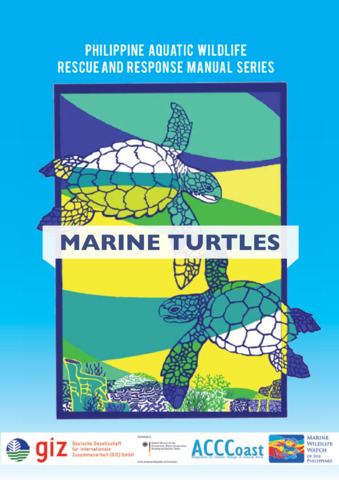
Philippine Aquatic Wildlife Rescue and Response Manual Series: Marine Turtles
(Marine Wild Fauna Watch of the Philippines, Inc., 2014)This manual addresses the lack of information materials on how to deal with marine turtle encounters in the Philippine seas to ensure that the proper treatment and intervention is provided. The manual also responds to the Comprehensive Action Plan for Threatened, Charismatic, and Migratory Species of the Sulu-Sulawesi Marine Ecoregion (SSME), which has been identified as the first priority seascape the Coral Triangle Initiative (CTI). The Tri-National Committee of the SSME developed the Comprehensive Action Plans (CAP) that identified seven Key Result Areas (KRAs) to improve the status of marine turtles in the SSME, as follows: (a) Identify best practices in minimizing threats to marine turtle populations and their habitats; (b) Develop and implement nesting habitats and management programs to maximize hatchling production and survival; (c) Provide recommendations on specific features or criteria in marine protected area (MPA) design and MPA network design in relation to the protection and management of marine turtles in SSME waters; (d) Undertake initiatives to promote reduction of incidental capture and mortality of marine turtles; (e) Conduct turtle population habitat research and monitoring protocols; (f) Develop guidelines for MPA network design for marine turtles; and (g) Publish information to promote best practices and successes for marine turtle conservation. This manual is an important step to address gaps and issues on threatened marine wildlife in the Philippines to better protect and conserve marine biodiversity in the Coral Triangle. -
Fish performance, nutrient digestibilities, and hepatic and intestinal morphologies in grouper Epinephelus fuscoguttatus fed fermented copra meal
Mamauag, Roger Edward; ; (Elsevier, 2019-07)
Protein enhanced copra meal (PECM®) is an alternative, cheap, and sustainable source of plant protein for the aquafeed industry, albeit its use on carnivorous fish species has been very limited. A 70-day feeding trial using grouper Epinephelus fuscoguttatus (initial mean body weight of 1.86 ± 0.19 g) tested fermented copra meal as feed ingredient. Six isonitrogenous (crude protein of 45%) and iso-lipidic (crude fat of 11%) diets consisted of PECM®: a control diet at 0% soybean meal replacement (C); four diets replacing soybean meal at 25% (FC25), 50% (FC50), 75% (FC75), 100% (FC100) – all with methionine and lysine supplementation; and 100% soybean replacement without methionine and lysine supplementation (FCW100). Growth and feed performance were not significantly (P > 0.05) affected by PECM® replacement of soybean meal up to 100%, even without methionine and lysine supplementation. Chemical body composition was likewise not significantly (P > 0.05) altered. PECM® when used as a grouper feed ingredient has protein, lipid, carbohydrate and dry matter digestibilities of 89.28%, 78.63%, 82.57%, and 48%, respectively. Hepatic and intestinal morphologies displayed no apparent pathological changes. PECM® can be efficiently utilized by grouper and can replace soybean meal up to 100% (16% in diet) for normal fish performance and digestive organ functions. -
Reproductive development of the threatened giant grouper Epinephelus lanceolatus
Palma, Peter; ; ; ; ; ; ; ; ; ; ; (Elsevier, 2019-05-02)
The giant grouper is presumed to follow the reproductive pattern of most Epinephelus species, characterized by protogynous hermaphroditism wherein male maturation is attained through sex reversal of a functional female. This hypothesis, however, has not been verified due to lack of biological data. The present study addresses this gap by investigating the reproductive development of giant groupers from juvenile stage through sexual maturity. Gonad histological analysis of hatchery-bred juvenile giant grouper from Queensland, Australia (0.8–5.2 kg, n = 43) have shown earliest occurrence of primary oocytes (i.e. ovarian differentiation) in 47.8 cm and 2.5 kg fish. Monitoring of sexual maturity by gonadal biopsy was performed in a stock of wild-caught giant groupers (2–52 kg) held in sea cages in the Philippines and Vietnam from 2015 to 2017. Onset of female sexual maturity was at 96.9 ± 1.6 cm and 23.5 ± 1.5 kg in the Philippines, and 103.0 ± 4.1 cm and 33.5 ± 2.5 kg in Vietnam. In both locations, development of primary males was observed wherein fish produced milt (or spermiated) without passing through a functional female phase. The ratio of primary males to females in both locations was about 1:2. Size at maturity of primary males is 86.5 ± 4.8 cm and 17.1 ± 2.1 kg in the Philippines, and 97.3 ± 1.3 cm and 34.3 ± 0.9 kg in Vietnam. To aid in the monitoring of female maturation, we developed a non-invasive method based on immunoassay of vitellogenin in skin mucus and this was shown to be effective in detecting female maturation 9 ± 2 months prior to first observation of oocytes through gonadal biopsy. Our findings suggest that giant grouper is a diandric protogynous hermaphrodite. This study provides novel information on the reproductive biology of giant grouper, an economically important and vulnerable species. -
The sea cucumber fishery in Palawan, Philippines
(高知大学大学院黒潮圏海洋科学研究科, 2018)This paper presents the nature of sea cucumber fishery in Palawan, Philippines with information on gathering practices, commonly traded species and secondary accounts on wild populations. Current issues on sea cucumber fishery are also presented here along with recommended doable management measures. -
Series: NOAA technical memorandum; NMFS-F/SPO-168
Development of integrated multi-trophic aquaculture using sea cucumber
; ; ; Lebata-Ramos, Ma. Junemie Hazel (United States Department of Commerce, National Oceanic and Atmospheric Administration, National Marine Fisheries Service, 2017)
In Southeast Asian countries, aquaculture production continues to increase. Environmental deterioration associated with water and sediment eutrophication by aquaculture effluent has been problematic, sometimes resulting in disease outbreaks and fish kills due to hypoxia and hydrogen sulfide poisoning. Integrated multi-trophic aquaculture (IMTA) is one of the promising measures for sustainable aquaculture. In this study, a box model estimation of nitrogen (N) budget based on experimental data and values from literature was made for a system of sandfish (Holothuria scabra) in sea cage IMTA with milkfish (Chanos chanos) and Elkhorn sea moss (Kappaphycus alvarezii). Information on stocking density, stocking size, mortality, growth, feed ration, feed assimilation, NH4-N production and NH4-N absorption of these species was obtained from a series of experiments and existing literature. In the production system 26 g milkfish were cultured in a 5 x 5 x 4 m cage at the stocking density of 36.7 ind/m3 with the initial feeding ration of 10% of body weight which was gradually decreased to 4% over time; 10 g sandfish were cultured in a cage with the same bottom area as milkfish cage hanged under the milkfish cage to trap particulate N waste (i.e. feces and leftover feed) at the stocking density of 35 ind/m2; the stocking weight of Elkhorn sea moss line culture was 10 kg; culturing period was 200 days. It was estimated that milkfish culture cumulatively produced 145 kg of particulate N, and milkfish and sandfish together produced 60 kg of NH4-N in 200 days of culture. Daily assimilation rate of the particulate N by sandfish ranged 3.4 - 12.4%, and 4.3% of the particulate N was estimated to be removed by sandfish in 200 days of culture. Daily absorption rate of NH4-N by Elkhorn sea moss increased exponentially with time and reached 100% after 125 days of culture. Cumulative NH4-N was estimated to be depleted after 162 days of culture. For complete utilization of particulate N by the end of culture, sandfish stocking density should be 805 ind/m2, which is 200 times as high as that in existing sandfish aquaculture operations. -
Artificial substratum consisting of poly-β-hydroxybutyrate-based biodegradable plastic improved the survival and overall performance of postlarval tiger shrimp Penaeus monodon
Ludevese-Pascual, Gladys; Laranja, Joseph Leopoldo ; Amar, Edgar ; ; (Wiley, 2019)
The use of artificial substratum consisting of poly‐β‐hydroxybutyrate (PHB)‐based biodegradable plastic for penaeid shrimp culture was investigated in the present study. The survival of postlarval tiger shrimp Penaeus monodon (30 ± 5 mg) provided with PHB substratum made out of PHB type DP9002 (Metabolix GmbH, Köln, Germany) was 88.7 ± 3.4% and this was significantly higher as compared to postlarvae provided conventional substratum consisting of polyvinylchloride (PVC) pipes (67.3 ± 6.5%). However, no significant weight improvement was observed for the postlarval tiger shrimp indicating that PHB could not be used as growth promoter. Nevertheless, a trend of improved robustness against adverse environmental conditions (lethal ammonium chloride concentration) and increased resistance to pathogenic Vibrio was observed in postlarval tiger shrimp provided with PHB substratum as compared to postlarvae provided with PVC substratum. Results indicate higher preference by postlarvae on PHB substratum over PVC substratum. Overall, this study indicates the potential of artificial substratum consisting of PHB‐based biodegradable plastic as replacement for conventional substratum consisting of PVC pipes in enhancing the survival of postlarval tiger shrimp and improving its performance against adverse environmental conditions and disease resistance. -
Expressions of molt-inhibiting hormone (MIH) and extracellular signal-regulated kinase (ERK) during the molting stages of the giant mud crab, Scylla serrata
; ; Eguia, Maria Rowena; (De La Salle University, 2017)
Survival and growth of mud crabs and any other crustaceans depend on molting. Molting is influenced by several hormones, two of which are Molt-Inhibiting Hormone {MIH} and a molt promoting hormone, the Extracellular Signal-regulated Kinase (ERK). Controlling and synchronizing the molting of the crabs would be a big boost to the mud crab industry, especially in the production of soft shell crabs. The best way to control molting would be to stock juvenile crabs of the same molting stage together. In this study, hormone expressions were analyzed using quantitative Real-Time Polymerase Chain Reaction (1RT-PCR). Molt stages of 36 juvenile S. serrata were established based on MIH and ERK expression levels that was analyzed using Principal Component Analysis (PCA). One group of six individuals had MIH value equal to zero and presumed to be in the PR stage. The rest of the crabs had values for MIH and were presumed to be in the PM-IM stage. The value of ERK for the PM-IM stage was higher at 24.79 than in the PR stage at 21.67. Based on the data gathered, morphological markers may now be identified to standardize hormone expression. This would be the first study concerning the comparison of hormones during molting. -
Colonization of coral rubble by motile cryptic animals: Differences between contiguous versus raised substrates from the bottom
(Elsevier, 2016)Recent studies have demonstrated that interstices of coral rubble harbor rich and diverse assemblages of motile cryptic animals. Habitats of coral rubble are prone to frequent physical disturbances, so colonization is an important process to maintain the assemblages of these cryptic animals. In order to examine the pattern of colonization, field experiments were carried out using mesh traps with defaunated coral rubble: one treatment placed on the bottom and the other raised 15 cm above the bottom (throughout as "raised") to restrict colonizers to only organisms that are able to invade via the water column. Results of nMDS and PERMANOVA showed significant differences between the assemblages of the bottom and raised treatments. Species-specific variations in the rate of colonization, which were estimated by fitting the von Bertalanffy equation, contributed to the variations in the cryptic assemblages. Generally, decapods and gastropods colonized via the benthic pathway with colonizing individuals moving on the surface of the bottom substrate, while copepods and non-shelled gammarids colonized via the planktonic pathway. Variations in cryptic assemblages in coral rubble microhabitats may be partly due to differences in contributions via the two colonization pathways. -
Full-genome sequencing and confirmation of the causative agent of erythrocytic inclusion body syndrome in coho salmon identifies a new type of piscine orthoreovirus
(Public Library of Science, 2016)Erythrocytic inclusion body syndrome (EIBS) causes mass mortality in farmed salmonid fish, including the coho salmon, Onchorhynchus kisutchi, and chinook salmon, O. tshawytscha. The causative agent of the disease is a virus with an icosahedral virion structure, but this virus has not been characterized at the molecular level. In this study, we sequenced the genome of a virus purified from EIBS-affected coho salmon. The virus has 10 dsRNA genomic segments (L1, L2, L3, M1, M2, M3, S1, S2, S3, and S4), which closely resembles the genomic organization of piscine orthoreovirus (PRV), the causative agent of heart and skeletal inflammation (HSMI) in Atlantic salmon and HSMI-like disease in coho salmon. The genomic segments of the novel virus contain at least 10 open reading frames (ORFs): lambda 1 (λ1), λ2, λ3, mu 1 (μ1), μ2, μNS, sigma 1 (σ1), σ2, σ3, and σNS. An additional ORF encoding a 12.6-kDa protein (homologue of PRV p13) occurs in the same genomic segment as σ3. Phylogenetic analyses based on S1 and λ3 suggest that this novel virus is closely related to PRV, but distinctly different. Therefore, we designated the new virus ‘piscine orthoreovirus 2’ (PRV-2). Reverse transcription–quantitative real-time PCR revealed a significant increase in PRV-2 RNA in fish blood after the artificial infection of EIBS-naïve fish but not in that of fish that had recovered from EIBS. The degree of anemia in each fish increased as the PRV-2 RNA increased during an epizootic season of EIBS on an inland coho salmon farm. These results indicate that PRV-2 is the probable causative agent of EIBS in coho salmon, and that the host acquires immunity to reinfection with this virus. Further research is required to determine the host range of PRV species and the relationship between EIBS and HSMI in salmonid fish. -
Poly-beta-hydroxybutyrate (PHB) and infection reduction in farmed aquatic animals
(Springer International Publishing, 2020)There is a continuous effort in finding effective and sustainable strategies to control diseases in farmed animals, and in recent years, the application of the bacterial storage compound poly-β-hydroxybutyrate (PHB) was identified as a new disease control agent for aquaculture. The idea of using PHB as a biocontrol agent was conceived based on the knowledge that this biopolymer can be degraded into short-chain fatty acids (SCFAs), and SCFAs are known compounds with antimicrobial properties. At the beginning of this chapter, an overview about the PHB granule, its detection, quantification, production, and recovery in microorganisms is presented. The main topic focuses on the application and beneficial effects of PHB in farmed aquatic animals. The mechanisms by which PHB provides beneficial effects to the host are discussed. -
Female-specific SNP markers provide insights into a WZ/ZZ sex determination system for mud crabs Scylla paramamosain, S. tranquebarica and S. serrata with a rapid method for genetic sex identification
; ; ; ; ; ; ; ; ; ; ; ; ; Quinitio, Emilia T.; (BMC, 2018-12)
Mud crabs, Scylla spp., are commercially important large-size marine crustaceans in the Indo-West Pacific region. As females have the higher growth rate and economic value, the production of all female stocks is extremely essential in aquaculture. However, the sex determination mechanism is still unclear. Development of sex-specific genetic markers based on next-generation sequencing proved to be an effective tool for discovering sex determination system in various animals. -
Improved survival, prey selectivity and diel feeding cycle of silver therapon Leiopotherapon plumbeus (Perciformes: Terapontidae) larvae reared in tanks with substrate
Aya, Frolan; ; ; Garcia, Luis Maria (Springer Verlag, 2019)
Physical substrates in the rearing environment can influence the early survival and feeding patterns of captive-reared fish. In this study, we determined whether substrates affect the survival and growth of hatchery-reared silver therapon Leiopotherapon plumbeus larvae as well as examined their prey selectivity and diel feeding cycle. Newly hatched larvae [1.92 mm total length (TL)] were reared for 40 days in triplicate 4 m3 tanks with or without tropical almond Terminalia catappa leaves as substrate. Prey selectivity of larvae reared in tanks with substrate for 35 days from the yolk-sac stage was measured by the Chesson’s selectivity index (αi). Diel feeding cycle of 3-4 days post-hatch (dph) silver therapon larvae reared in tanks exposed to natural light cycle and fed wild zooplankton was also studied. Larvae reared in tanks with substrate had significantly higher survivorship (48.44 ± 7.85%) than those reared in tanks without substrate (26.73 ± 1.60%). However, total length, specific growth rate and body weight of silver therapon larvae from tanks with or without substrate were not significantly different. Silver therapon larvae are generalist predator, demonstrating a degree of prey selectivity in some prey items during early ontogeny. Prey selectivity of silver therapon larvae varied during larval ontogeny, with higher Chesson’s selectivity index for copepod nauplii among the smaller fish larvae (2–5 dph; 2.94–5.17 mm TL), cladocerans (Moina micrura and Bosmina coregoni) among intermediate (6–11 dph; 5.72–9.60 mm TL), and ostracod, cladoceran and insect larvae among larger fish (12–35 dph; 10.28–20.96 mm TL). Larvae showed a diel feeding cycle where they actively fed during daylight hours, with a peak in the late afternoon, and reached a minimum at dark. Together, these findings advance our understanding of the feeding predatory behavior and efficiency of silver therapon larvae and preference for tanks with substrate that improve their survival. -
Gonadal response of juvenile protogynous grouper (Epinephelus fuscoguttatus) to long term recombinant follicle-stimulating hormone administration
Palma, Peter; ; ; ; ; ; (Oxford University Press, 2019-03)
The role of follicle stimulating hormone (FSH) in the gonadal development of protogynous hermaphroditic grouper (E. fuscoguttatus) was investigated. Recombinant giant grouper (E. lanceolatus) FSH (rggFSH) was produced in yeast. Its receptor binding capacity and steroidogenic potency were confirmed in vitro. Weekly injections of rggFSH to juvenile tiger grouper for 8 weeks (100 μg/kg body weight, BW) resulted in significantly larger and more advanced oocytes (cortical alveolar stage vs. primary growth stage in control). Sustained treatment with rggFSH (20 to 38 weeks at 200 μg/kg BW) resulted in significant reduction in gonad size, degeneration of oocytes and proliferation of spermatogonial cells, indicative of female to male sex change. Gene expression analysis showed that, while initiating female to male sex change, the rggFSH significantly suppressed the steroidogenic genes cyp11b, cyp19a1a and foxl2 which restrained the endogenous production of sex steroid hormones thus prevented the differentiation of spermatogonial cells. Expression profile of sex markers dmrt1, amh, figla and bmp15 suggests that the observed sex change was restricted at the initiation stage. Based on these results, we propose that the process of female to male sex change in the protogynous grouper is initiated by FSH, rather than sex steroids and likely involves steroid-independent pathway. The cortical alveolar stage in oocyte development is the critical point after which FSH-induced sex change is possible in grouper. -
Application of poly-β-hydroxybutyrate (PHB)-based biodegradable plastic as artificial substratum in Litopenaeus vannamei culture
Ludevese-Pascual, Gladys; Laranja, Joseph Leopoldo ; Amar, Edgar ; ; (Springer, 2019)
The use of artificial substratum made out of poly-β-hydroxybutyrate (PHB) based biodegradable plastic for penaeid shrimp culture was investigated for the first time. Provision of PHB substratum consisting of PHB type P209 (Biomer, Krailling, Germany) to postlarval whiteleg shrimp Litopenaeus vannamei (106 ± 52 mg) resulted in significantly higher survival (P ≤ 0.05) of 83.6 ± 3.4% as compared to 73.9 ± 3.0% for postlarvae provided with conventional substratum consisting of polyvinylchloride (PVC) pipes. Results on final weight showed significantly higher weight (P ≤ 0.05) of 1008.2 ± 4.5 mg in postlarval whiteleg shrimp provided PHB substratum as compared to 893.4 ± 30.0 mg for postlarvae provided with PVC substratum. The trends of higher visit and preference by postlarval whiteleg shrimp on 10-day and 70-day aged PHB substrata over 10-day and 70-day aged PVC substrata suggest the importance of PHB substratum as grazing area rather than as shelter. Test conducted on water quality also showed a trend towards higher total ammonia-nitrogen (TAN) conversion from an initial concentration of 1.75 ± 0.0 mg L−1 to 0.35 mg ± 0.04 mg L−1 after 72 h with PHB substratum while using no substratum and PVC substratum lead to TAN concentrations of 1.28 ± 0.06 mg L−1 and 1.23 ± 0.10 mg L−1, respectively. Overall, this study indicates that artificial substratum consisting of PHB-based biodegradable plastic increases the quality of postlarval whiteleg shrimp and that it contributes to maintaining good water quality. -
The information-seeking behavior of aquaculture researchers at the Southeast Asian Fisheries Development Center
Superio, Daryl; ; ; (SAGE Publications, 2019)
Understanding the information-seeking behavior of library patrons is essential for the library to provide quality resources and services, and to satisfy its patrons’ information needs. A quantitative research was conducted to describe the information searching and using behaviors of the Filipino aquaculture scientists, researchers and research staff at the Aquaculture Department of the Southeast Asian Fisheries Development Center (SEAFDEC/AQD). The study revealed that although the respondents find it useful to go to the library to get assistance from the librarian, and to browse and read current acquisitions related to their research, they visited the library infrequently. However, remote library services, especially email and phone services, were highly utilized. When searching for information, the Internet, mainly via search engines, was highly preferred rather than visiting the Library and using its online public access catalog (OPAC) or its databases. The combination of print and electronic formats was highly preferred when reading, rather than print only or electronic-only. The majority would print and save the retrieved electronic copy. -
Disaster management practices of academic libraries in Panay island, Philippines: Lessons from typhoon Haiyan
Superio, Daryl; Alayon, Stephen ; (SAGE Publications, 2019)
A disaster management plan is essential because it can guide library personnel on what to do in a critical time. Using an eight-part survey instrument, this paper documents the impact of Typhoon Haiyan on 22 academic libraries in Northern Panay, Western Visayas, Philippines and the disaster management practices that were implemented. The results revealed that although the majority of the libraries do not have a disaster management plan, they all had common disaster management practices that enabled them to save parts of their collections. Moreover, the study revealed that librarians lacked knowledge and skills on disaster management. This paper was presented at the 40th International Association of Aquatic and Marine Science Libraries and Information Centers (IAMSLIC) Annual Conference, Noumea, New Caledonia, September 14–18, 2014. -
An overview of agricultural pollution in the Philippines: The fisheries sector
(World Bank, 2016)This report is part of a national overview of agricultural pollution in the Philippines, commissioned by the World Bank. The overview consists of three ‘chapters’ on the crops, livestock, and fisheries sub-sectors, and a summary report. This ‘chapter’ provides a broad national overview of: (a) the magnitude, impacts, and drivers of pollution related to the fisheries sector’s development with a focus on aquaculture; (b) measures that have been taken by the public sector to manage or mitigate this pollution; and (c) existing knowledge gaps and directions for future research. This report was prepared on the basis of existing literature, recent analyses, and national and international statistics, as well as extensive interviews. It did not involve new primary research and did not attempt to cover pollution issues that arise in the broader aquaculture value chain, relating for instance to processing, packaging and transportation, feed processing, or veterinary drug factories.