SEAFDEC/AQD Institutional Repository: Recent submissions
Now showing items 1121-1140 of 4221
-
Series: ACIAR Proceedings; No. 90
Shrimp aquaculture: The Philippine experience
(Australian Centre for International Agricultural Research, 1999)An overview is presented of the shrimp farming industry in the Philippines, noting that it was established as brackish-water aquaculture as early as 1521, although it took until the 1970s to take off, blooming during the 1980s, and then stagnating and even declining during the 1990s. Issues discussed are: a brief status of the shrimp aquaculture industry (farm production and exports; hatcheries, processors and feed mills); current key constraints (technical constraints to fry production; technical constraints to the grow-out operation; environmental constraints; social constraints; economic constraints; and political and administrative constraints); and research activities and priorities for future research. -
Does age matter?: The information-seeking behavior of Filipino aquaculture researchers
Superio, Daryl (Taylor & Francis, 2018)
Findings of previous studies revealed that regardless of the objective, age does affect the information-seeking behavior of an individual. Likewise, this study found the same results. Although all of the younger Filipino aquaculture researchers preferred the Internet to begin their search process, it was found that they were more frequent library users, and more reliant on librarians than their older counterparts. Likewise, they preferred the combination of print and electronic formats when reading. Thus, they would print and save the retrieved electronic copy of information at least very often. The study is a valuable addition to the information-seeking behavior studies on Filipinos, and the first to tackle the effects of age on the information-seeking behavior of Filipino aquaculture researchers.
(Taylor & Francis, 2018)
Findings of previous studies revealed that regardless of the objective, age does affect the information-seeking behavior of an individual. Likewise, this study found the same results. Although all of the younger Filipino aquaculture researchers preferred the Internet to begin their search process, it was found that they were more frequent library users, and more reliant on librarians than their older counterparts. Likewise, they preferred the combination of print and electronic formats when reading. Thus, they would print and save the retrieved electronic copy of information at least very often. The study is a valuable addition to the information-seeking behavior studies on Filipinos, and the first to tackle the effects of age on the information-seeking behavior of Filipino aquaculture researchers. -
Dietary onion or ginger modulates the stress response and susceptibility to Vibrio harveyi JML1 infection in brown-marbled grouper Epinephelus fuscoguttatus juveniles
Amar, Edgar C.; ; Faisan, Joseph P., Jr. (American Fisheries Society, 2018)
Onion Allium cepa and ginger Zingiber officinale have health‐promoting properties that qualify them as functional foods. The effect of repeated acute stressors was examined in juvenile Brown‐marbled Grouper Epinephelus fuscoguttatus that were fed four diets supplemented with onion at 1.8%, ginger at 1.8%, vitamin C at 0.86%, and β‐glucan at 0.8% of the diet. The non‐supplemented diet served as the control. After 12 weeks of feeding, fish were exposed to stressors and were experimentally infected with a fish pathogen, the bacterium Vibrio harveyi JML1. After repeated exposure to hypoxia, cortisol levels rose significantly in the non‐supplemented fish compared to those fed onion, ginger, β‐glucan, or vitamin C. Within groups, postexposure cortisol levels in the onion‐, ginger‐, and vitamin C‐fed fish did not change relative to pre‐stress levels, whereas significant increases in poststress values were observed in the control and β‐glucan groups. The net cortisol increase was also significantly greater in the non‐supplemented group compared to the supplemented groups. The net cortisol increase did not vary among the supplemented groups except that the β‐glucan‐fed group exhibited a higher net increase than the onion‐fed group. Similarly, repeated acute exposure to osmotic stress significantly increased the plasma cortisol level in the non‐supplemented group compared to groups that received supplements; no differences were found in the supplemented groups except the β‐glucan group. Within groups, significant increases in poststress values relative to pre‐stress levels were found only in the control and β‐glucan groups. Repeated acute exposure to hypoxia significantly increased cumulative mortality in the control group compared to the supplemented groups (except the β‐glucan group), whereas repeated exposure to acute osmotic stress significantly increased cumulative mortality only in the control group 10 d after infection with V. harveyi JML1. Based on our collective results, most of the supplemented groups performed better than the control, but the best supplements were onion and ginger in terms of enhancing stress tolerance and increasing survival of Brown‐marbled Grouper upon infection with V. harveyi JML1. -
Paradigm shifts in mangrove rehabilitation in Southeast Asia: Focus on the Philippines
Primavera, Jurgenne; ; ; ; ; (Department of Environment and Natural Resources - Ecosystems Research and Development Bureau (DENR-ERDB), 2014)
Mangrove rehabilitation has a long history in the Philippines dating back to the 1930s. The standard practice is the planting of bakhaw Rhizophora propagules by paid community members (or volunteers) in seafront sites selected during spring low tides. In 2009, the Community-based Mangrove Rehabilitation Project (CMRP) of the Zoological Society of London was established to: (a) rehabilitate abandoned government-leased fi shponds into healthy mangroves; (b) increase coastal protection, food resources, and livelihood income through sustainable management of mangroves; and (c) re-establish the legally mandated mangrove ‘greenbelt’ along the coast. Over four years, the CMRP has planted the following in various partner sites in Panay and Guimaras: (a) 58,000 seeds or wildings bagged in nurseries by 3,000 participants, and (b) 99,000 seedlings/wildings outplanted by 4,000 planters in ~20 ha of greenbelts and abandoned ponds. The species are mainly bungalon/piapi Avicennia marina, pagatpat Sonneratia alba, and to a lesser extent, bakhaw Rhizophora. The planters include high school/college students and teachers, members of people’s organizations, barangay and municipal government employees, BFAR and DENR staff , and civil society organizations. The extensive CMRP trials have yielded signifi cant learnings, many of them paradigm shifts from present protocols, as included in the 20 Golden Rules of Mangrove Rehabilitation. A manual that documents these learnings with concrete examples based on CMRP monitoring of fi xed quadrats and other standardized protocols, is currently in press. Some of these protocols are the following: (a) planting site: shift from seafront sites to abandoned ponds (whenever possible); (b) time of site selection: during (low tide of) Neap Tide rather than Spring Tide; (c) species selection for seafront sites: the ecologically correct bungalon/piapi and pagatpat, rather than the easy-to-plant but unsuitable bakhaw; (d) sources of planting materials: use of available wildings is harvesting nature’s excess (equivalent to withdrawing from ‘seedling banks’), which also saves time; (e) labor: “No Pay” planting is based on the premise that labor contributed by the community provides the basis for ownership, thereby obligating them to nurture the plants to maturity and validating their role as de facto managers of mangrove resources. Similar mangrove initiatives have been observed elsewhere in Southeast Asia, as follows: (a) barriers/breakwater in MaIaysia, Vietnam, and Thailand; (b) use of wildings in Malaysia; and (c) mangrove ecoparks/reserves in Singapore, Thailand, Vietnam and Brunei. -
Utilizing alternative ingredients in aquafeeds for sustainable aquaculture
Aya, Frolan (Secretariat, Southeast Asian Fisheries Development Center, 2017)
Aquaculture is considered as the key to ensuring enough food protein to feed the growing world population (FAO, 2014). It is expected that the global food demand will increase to 70% in 2050. Aquaculture is touted as the fastest growing food-producing sector in the world. The accelerated growth of the aquaculture sector has resulted in the expansion of aquaculture feed production. However, at present, the aquaculture feed industry is confronted with pressing issues such as the limited availability and escalating cost of dietary fishmeal (FM) and fish oil (FO). FM has traditionally been used in aquaculture feed due to its high protein quality and palatability. However, the success of the aquaculture industry will depend in part on the reduction or replacement of FM use in aquaculture feeds using less expensive alternative protein sources. Several alternative feed ingredients, including plant-derived materials, have been tested in aquaculture feeds for several fish species of economic importance. Meanwhile, other non-conventional protein sources such agricultural wastes and by-products have been found to hold enormous potentials in future fish feed formulations. -
Initiating resource enhancement of seahorses: A case study at Sagay marine reserve in central Philippines
(Secretariat, Southeast Asian Fisheries Development Center, 2017)Seahorses (Hippocampus spp.) are commonly found in tropical coral reefs as well as in lagoons and estuaries, and are highly exploited for their high price, resulting in the listing of these seahorses in the International Union for Conservation of Nature (IUCN). In fact, all seahorses are among the first marine fishes of commercial importance to be listed in both the IUCN and Appendix II of the Convention on International Trade of Endangered Species of Wild Fauna and Flora (CITES) to ensure their sustainable utilization. In promoting the protection and sustainability of this resource, efforts have been made worldwide for their conservation through stock enhancement by releasing captive-bred or captive-held seahorses. The SEAFDEC Aquaculture Department (AQD) with support from the Japanese Trust Fund through the project ‘Resource Enhancement of Internationally Threatened and Over-exploited Species in Southeast Asia through Stock Release,’ has been working on the resource enhancement of seahorses primarily by developing appropriate release and monitoring strategies, and enhancing the involvement of concerned communities in the management of the natural as well as the restocked seahorses. -
Advocating preventive measures that inhibit early mortality syndrome in shrimps
Tendencia, Eleonor; (Secretariat, Southeast Asian Fisheries Development Center, 2017)
Early Mortality Syndrome (EMS) is a generic name used to describe the observed mortality occurring within the first 30 days of stocking shrimp (Penaeus sp.) post larvae (PL) in ponds. The aquaculture species reported to be affected by EMS are Penaeus monodon, P. vannamei and P. chinensis, of which P. monodon is the most susceptible. EMS has been reported in China (2009), Viet Nam (2010), Malaysia and Borneo (2011), and Thailand (2012). EMS could have been present in the Philippines as early as 2007 but this was not given attention then. Fish farmers in the Philippines observed that mortalities that occur as early as one week after stocking P. monodon PL in ponds or within two months of stocking were not due to the whitespot syndrome virus (WSSV). Hence, the farmers call it the two-month mortality syndrome (Tendencia et al., 2014). EMS is associated with WSSV, microsporidian infestation, Vibrio infection, and chemical contamination (Flegel, 2016; FAO, 2013). Affected shrimps have pale to whitish hepatopancreas with black spots or streaks, rigid and hard to squash. Histopathology of the hepatopancreas of shrimp samples from EMS cases showed massive necrosis and sloughing or shedding of the epithelial cells. EMS characterised by these specific histopathological changes in the hepatopancreas is called Acute Hepatopancreatic Necrosis Disease (AHPND). Incidence of AHPND has been recently reported in China, India, Malaysia, Mexico, Philippines, Thailand, and Viet Nam. -
Adaptation of integrated fish-duck-pig farming system in Leyte
(Bureau of Agricultural Research, Department of Agriculture, 2007)Adaptation of a fish-duck-pig integrated farming system was conducted at the Busay Freshwater Experimental Farm in Babatngon, Leyte. Genetically improved farmed tilapia (GIFT) and common carp (at a ratio of 4:1) were stocked at densities of 3/m2 and 6/m2 in four earthen ponds; they were not given any commercial feed. Animal houses were built over the ponds and stocked with mallard ducks at a density of 375/ha, and piglets at 30/ha; they were given commercial feeds daily. After 154 days, the farming system produced a net yield of 1,685 kg fish/ha at a stocking density of 3/m2 and 2,808 kg/ha at 6/m2. Since water quality was not adversely affected, the higher stocking density of 6/m2 is a viable option. This farming system can be further improved and refined for better production and higher incomes. -
Grow-out of milkfish in net-walled marine pens in La Union
(Bureau of Agricultural Research, Department of Agriculture, 2007)Grow-out of milkfish in 125 m2 net-walled marine pens was tested in Santo Tomas Cove, La Union at three stocking densities of 6, 9, and 12 fish/m2 and using commercial feed (crumbles and pellets) with 25–30% crude protein. After 115 days, survival of milkfish in marine pens was 92–97%. Fish stocked at 12/m2 or 1,500/pen grew to average weights of 286 g, larger than the fish stocked at lower densities. Feed conversion ratio was 2.3 at the highest density and worse at the lower densities. Costs and returns of milkfish grow-out in marine pens at three densities showed that feeds were the most costly component (55–69%) of production. The milkfish harvest was equivalent to about 33 mt/ha at the stocking of 120,000 fish/ha. Only at this high density was adequate profit made for a 48% return on investment per crop. Two crops are possible in the Ilocos region during the dry season from November to June. Grow-out of milkfish in marine pens can be improved if seed and feeds could be procured at lower cost. -
Transplantation, hatchery, and grow-out of window-pane oyster Placuna placenta in Guimaras and Iloilo
(Bureau of Agricultural Research, Department of Agriculture, 2007)The windowpane oyster Placuna placenta (local name kapis) used to be harvested in large quantities and support a shellcraft industry in the Philippines, particularly in Panay Island. But the fishery and the industry declined markedly by the 1990s. Studies were conducted to transplant kapis and also to develop hatchery techniques for it in an effort to counter the population depletion. Kapis with average shell heights of 7 cm and 10 cm were transplanted from Roxas City in northern Panay Island and from Oton, Iloilo in southern Panay to Taklong Island in Guimaras during the rainy season (July–November) and the dry season (February–June). Survival of the transplants was higher during the dry season (57–60%) than during the rains (35–48%). Sexually mature kapis 10 cm in shell height were induced to spawn by temperature manipulation, water level manipulation, and use of ultravioletirradiated sea water. Spawning was successfully induced by raising the water temperature to 29±0.5oC. Eggs measured 45 μm on average, and fecundity was 5,000–10,000 per female. Kapis larvae were reared on a combination of the microalgae Isochrysis galbana, Tetraselmis sp., and Chaetoceros calcitrans, maintained at a density of 100,000 cells/ml. Three water treatment schemes were tested for larval rearing: chlorination, ultraviolet irradiation, and filtration (control). Larvae survived to the umbo veliger stage (180 μm, day 10) in chlorinated sea water whereas mass mortality occurred at the straight-hinge stage (days 4–) in both UV-treated and filtered sea water. -
Use of soybean meal and rice bran in formulated diets for the grouper Epinephelus coioides
(Bureau of Agricultural Research, Department of Agriculture, 2007)Two diets were formulated to include 8–14% soybean meal and 9–18% rice bran, 34–40% fish meal, 4–5% mussel meal, and 7–8% Acetes shrimp meal, and 11–13% cod liver oil. Soy bean meal and rice bran were included at 4:1 ratio together to replace 12.5% and 25% of the animal protein sources in the two diets. The two diets were prepared in dry D form and moist M form. The four test diets, D12.5, M12.5, D25, and M25 diets had 40–42% protein and 4,000 kcal/g gross energy. The control diet used was a dry diet with 44% crude protein and 4,260 kcal/g, made with 30% Peruvian fish meal, 8% squid meal, 22% Acetes shrimp meal, 8% cod liver oil, 8% soybean oil, but no plant protein sources. The five diets were fed to juvenile grouper (mean weights ranging from 1.63 ± 0.47 to 2.41 ± 0.91 g) in indoor 400 L concrete tanks (10 fish per tank). After 10 weeks, growth, feed intake, feed conversion ratios (1.2–2.2), and survival (60–80%) of juvenile grouper were not significantly different between the test diets and the control. The carcass composition of the harvested grouper was not significantly different among diets. Protein utilization was best among the fish fed the test diet D12.5. This study showed that soybean meal and rice bran at 4:1 ratio can be included in formulated diets for grouper to replace 12.5% to 25% of the animal protein sources. However, the results for the test diets may also have been due to other factors - the high fish meal content, inclusion of mussel meal, and increase in cod liver oil. -
Low ph water impairs the tactile sense of the postlarvae of the giant freshwater prawn Macrobrachium rosenbergii
; Bagarinao, Teodora; ; ; (Penerbit Universiti Sains Malaysia, 2018)
The effect of low pH on the tactile sense of Macrobrachium rosenbergii postlarvae was determined in the laboratory by means of two behavioural assays: shelter (netting) occupancy and jumping response to touch stimuli (taps) by a glass micropipette. The postlarvae were acclimated to pH 4, pH 5, pH 6 and pH 7.5 (control) in 45 L aquaria 5−7 d before the experiments. Shelter occupancy decreased with pH and was significantly lower at pH 4 and pH 5 than at pH 6 and in the control. The jumping response instantly followed a tap 93−98% of the time in the control, pH 6 and pH 5 treatments. However, the postlarvae showed significantly lower jumping response (65%) at pH 4, indicating an impaired tactile sense. Low pH 4−5 probably degrades the chitin of the sensory setae and inhibits the surface mechanoreceptors of the prawn postlarvae. -
Treatment of shrimp pond effluents by sedimentation and by seaweed and mussel biofiltration
(Bureau of Agricultural Research, Department of Agriculture, 2007)Tiger shrimp Penaeus monodon were stocked in three 1,000 m2 ponds at 12,000 juveniles/pond and grown for 141 days. Water quality in the ponds was monitored over the grow-out period, particularly before and after every water change. BOD, chlorophyll a, and total dissolved solids of the effluent increased over the grow-out period due to increased biomass and feed input. Similar trends were observed for inorganic nitrogen, reactive phosphorus, total suspended solids, and hydrogen sulfide. Concentrations decreased after draining and reflooding. Soil samples also showed increases in organic matter available phosphate, carbon, and nitrogen content over the grow-out period. Effluents from semi-intensive shrimp ponds were discharged into eight treatment ponds (each 200 m2): three sedimentation ponds, three with Gracilaria stocked at 20 kg/pond, and two with mussels stocked at 10/m2. Measurements were made of pH, ammonia, nitrite, nitrate, reactive phosphorus, biochemical oxygen demand, chlorophyll a, total suspended solids, and total dissolved solids in the water in the treatment ponds after effluent addition, one week and two weeks later, and before draining. Soil pH, organic matter, and phosphorus were also analyzed every two weeks. The changes in these variables were similar among the three treatments in the eight ponds. In this study, water quality of effluents improved after one week in the treatment ponds. -
Grow-out of the tiger shrimp Penaeus monodon in floating net cages in Batan Bay, northern Panay
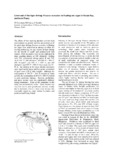
(Bureau of Agricultural Research, Department of Agriculture, 2007)The effects of two stocking densities and two feed combinations on growth, survival and production of the giant tiger shrimp Penaeus monodon in floating net cages were studied in an attempt to refine the existing technology on cage culture of tiger shrimp for the benefit of small- and medium-scale fish farmers. Four treatments were tested, replicated in time: stocking density of 100 shrimp/m2, feeding with 70% commercial shrimp pellets P and 30% 'trash fish' F; 100 shrimp/m2 and 50% P + 50% F; 200 shrimp/m2 and 70% P + 30% F; and 200 shrimp/m2 and 50% P + 50% F. Harvested after 93–95 d, the shrimps at the lower density treatments were significantly larger and had greater proportion of good sizes (>18 g body weight). Although the combination of 70% P + 30% F resulted in better growth, the combination of 50% P + 50% F resulted in more good-size shrimps. Survival, production, and gross income were not significantly different among treatments. None of the treatments in this study was economically viable. Gross income was very low due to poor growth and survival, mostly due to luminous vibriosis, then a new disease that eventually wiped out many shrimp hatcheries and ponds around Panay Island. -
Collection of the mud crab Scylla serrata var paramamosain in Tinagong Dagat and Sapian Bay, northern Panay
(Bureau of Agricultural Research, Department of Agriculture, 2007)Mud crabs were collected by baited traps from the mangroves and estuaries of Tinagong Dagat Bay and Sapian Bay in Capiz, northern Panay monthly over 18 months. Scylla serrata var paramamosain made up 95.4% of the collection and Scylla oceanica, 4.6%. Mean catch rates of S. serrata from Tinagong Dagat was 0.4 crabs/trap in the mangroves and 0.5 crabs/trap in the estuary; in Sapian Bay, 0.9 crabs/trap in both habitats. In both bays, S. serrata occurred year round, but at greater abundance during the rainy season (June–September). Most crabs were 2–10 cm in carapace width, but some were up to 14 cm. Crabs were smaller in the mangroves (modal size 5 cm) than in the estuary (modal size 8 cm). The smallest crabs (2 cm) were collected in the mangroves in January and May, and the 3 cm crabs occurred most months except June, August, September, and November. The presence of smaller crabs in greater numbers in the mangroves indicates affinity for shallow, sediment-laden habitat with plenty of shelters in the form of mangrove roots and leaves. Very few crabs over 8 cm were captured in the mangroves. Crabs of 4–14 cm were captured in the estuaries, the 12–14 cm ones during July–October. The samples at each site formed several size groups every month, and ‗cohorts‘ could be discerned and followed over the next months. It was estimated that the 2–4 cm size group in January–May reached the size of 8–10 cm by October–November. Juvenile mud crabs apparently spent one year in the mangroves or estuaries. There were more males than females (1F:1.2M) in Tinagong Dagat, but the other way around (1M:1.3F) in Sapian Bay. Berried crabs of 14 cm were occasionally caught by filter net in Tinagong Dagat. -
Assessment of grouper resources around Zamboanga City and Basilan, Philippines
(Bureau of Agricultural Research, Department of Agriculture, 2007)A total of 2,643 kg of groupers were collected from six markets (96% of the biomass) and from prescribed fish traps in three fishing grounds (106 kg, 4%) around Zamboanga City and Basilan from November 1993 to October 1994. The collection included 26 species in seven genera: Aethaloperca, Cephalopholis, Cromileptis, Epinephelus, Niphon, Plectropomus, and Variola. The three species of highest biomass were Epinephelus fasciatus (26%), Cephalopholis sonnerati (14%) and Cromileptis altivelis (13%). The least biomass was contributed by Epinephelus sexfasciatus (0.1%), Plectropomus areolatus (0.1%), and Cephalopholis sexmaculatus (0.3%). Grouper biomass was lower from November to April and greater from May to October. Groupers caught by the prescribed fish traps were mostly Epinephelus merra (50% of the total). The highest catch of grouper was 0.8 kg/fish trap around Sta. Cruz Island in July, and the highest catch of all demersal fishes was 7 kg/trap around Malamawi Island in September. On average, groupers made up less than 10% of the monthly catch of fish traps. The groupers collected from the markets and from the fish traps averaged 28 cm in total length— all young juveniles. Cromileptes altivelis (average 38 cm) were the largest individuals and Plectropomus spp. (36 cm) similarly so. The largest C. altivelis (1.5 kg) was caught in December and the smallest (0.8 kg) in April and August. The various Cephalopholis species averaged 31 cm, and the various Epinephelus species were smallest at 26 cm. Groupers were largest in December and smallest between January and May. Length-weight equations were derived for seven grouper species. Of the 78 grouper stomachs that were dissected, 52 were empty and 26 contained food, mainly crabs, anchovies, hermit crabs, soldierfish, squids, and shrimps. Groupers with mature and ripe varies had from 3,000 to 11,000 eggs per gram ovary. -
Viral diseases of shrimp in the Philippines
(Research Signpost, 2015)Shrimp is a high-value commodity and one of the major aquaculture species in the world, including the Philippines. The shrimp farming industry is dominated by the black tiger shrimp Penaeus monodon and the Pacific white shrimp, Penaeus vannamei. Intensification in shrimp aquaculture to meet the global demand resulted to several socio-economic and biophysical production bottlenecks. Consequently, the issues besetting the industry had raised several questions on its sustainability. In particular, viral diseases remain a constant threat and a significant concern in many shrimp producing countries especially in the developing world. In this chapter, current knowledge on major viral pathogens affecting shrimp aquaculture in the Philippines is presented and discussed. The discussion is focused on white spot syndrome virus (WSSV), monodon baculovirus (MBV), infectious hypodermal and hematopoietic necrosis virus (IHHNV), hepatopancreatic parvovirus (HPV). yellow head virus (YHV), and taura syndrome virus (TSV). Updates on their clinical signs, transmission and distribution are presented. Records of incidence in the Philippines are provided as well. The second half of the chapter discusses some of the methods how to control viral diseases in shrimp farming with a particular focus on vaccination, biosecurity and diagnostics. -
Collection of the orange-spotted grouper Epinephelus coioides from Tinagong Dagat and Sapian Bay in northern Panay
(Bureau of Agricultural Research, Department of Agriculture, 2007)In Capiz, northern Panay, grouper catches by hand picking, hook and line, shelters, and fish corral were low throughout the year, on average 1-3 fish from each fishing operation, but higher in Tinagong Dagat than in Sapian Bay. Epinephelus coioides was the most common of the three grouper species collected; E. quoyanus and E. malabaricus were not numerous. The 882 specimens of E. coioides from Tinagong Dagat measured from 3.6 to 39 cm in standard length; the 250 E. coioides from Sapian Bay were between 1.7 and 31.2 cm SL. The size distribution showed a modal length of about 17 cm SL (21% of the fish) in Tinagong Dagat, and 11 cm (26%) in Sapian Bay. Small juveniles 2–8 cm were collected from Tinagong Dagat in January-April 1993, but not in Jan-Apr 1994. Such small juveniles were also collected from Sapian Bay in January and in April–August 1993. Groupers 9–23 cm occurred year round, but the 9–15 cm group was more abundant from January to June. At both sites, groupers >30 cm could hardly be found. Both grouper habitats experienced wide ranges of water temperature, salinity, and dissolved oxygen during the year. -
Bacterial loads in hatcheries and virulence of Vibrio spp. to larvae of the tiger shrimp Penaeus monodon
(Bureau of Agricultural Research, Department of Agriculture, 2007)Shrimp hatcheries are high-density systems and are prone to diseases. A small-scale and a large-scale hatchery for the tiger shrimp Penaeus monodon in Iloilo, Philippines were monitored over two months for water quality and shrimp survival. Water quality (water temperature, pH, salinity, dissolved oxygen, and specific gravity) was not significantly different between the two hatcheries. However, the small hatchery seemed to favor survival of eggs to early postlarval stages, whereas the large hatchery favored the survival of late postlarvae. The normal microflora and bacterial loads of tiger shrimp eggs, larvae, postlarvae, and rearing water were determined to identify the dominant bacteria and potential pathogens. Shrimp eggs harbored the lowest heterotrophic bacterial counts. The counts increased from the nauplii to the mysis stages, decreased during the mysis stage, and then gradually increased in the older larvae. Bacterial loads in the rearing water reflected those in raw sea water and reservoir-aged sea water. Vibrio, Pseudomonas, and Aeromonas were not detected in eggs but were found in postlarvae. Ubiquitous in sea water, these bacteria increased with the build-up of organic matter. The bacterial load in the water adversely affected larval survival. Forty bacterial strains were isolated from tiger shrimp eggs, larvae, postlarvae, from the feeds, and from the rearing water. These were tested for biochemical characteristics and segregated into eight groups or genera. Six genera were found in the mysis and five genera in the postlarvae. The Vibrio species were dominant. Only Escherichia spp. were present in feeds, whereas five genera were present in the rearing water. Only Vibrio and Pseudomonas were present in both larvae and water. Moraxella, Aeromonas, and Klebsiella were found in larvae but not in rearing water. Micrococcus and coryneforms were found only in rearing water. Four Vibrio isolates were tested for virulence against shrimp postlarvae at inoculation densities of 102 and 107 cfu/ml. The four Vibrio species caused mortality of postlarvae, and more at the higher inoculation density. The most virulent was Vibrio anguillarum—30% of postlarvae died after 24 h exposure to a bacterial density of 102 cfu/ml, and all larvae died after 48 h at 107 cfu/ml. Shrimp hatcheries must have protocols for hygiene and sanitation and for disease prevention and control. -
Households, agriculture, industry, fishing, and fish farming along Imbang River, Negros Occidental
(Bureau of Agricultural Research, Department of Agriculture, 2007)Interviews were conducted among respondents identified from the households, agriculture farms, sugar mills, and fish farms along the whole stretch of Imbang River, Malisbog River, and Muyao Creek, down to Barangay Balaring at the coast of Silay City in Negros Occidental. Among the 1,073 households, 11% used river water for washing clothes, but 20% also used the rivers for disposal of waste waters, 11% for human wastes, and 13% for animal wastes. Among the 30 respondents from the agriculture sector, 70% discharged water into the river. The two sugar mills in the area treated waste waters partially before release into the rivers; one sugar mill also released wastes in a nearby rice field. Milling wastes such as bagasse, molasses, and mud press were reused and not dumped into the river. Imbang River was both the water source and wastewater sink for seven fish farms.