Books: Recent submissions
81-100 / 142
-
Nutrient requirements of tropical aquaculture species
(Aquaculture Department, Southeast Asian Fisheries Development Center, 2009) -
Nursery culture of high-value fish species in brackishwater ponds
(Aquaculture Department, Southeast Asian Fisheries Development Center, 2009) -
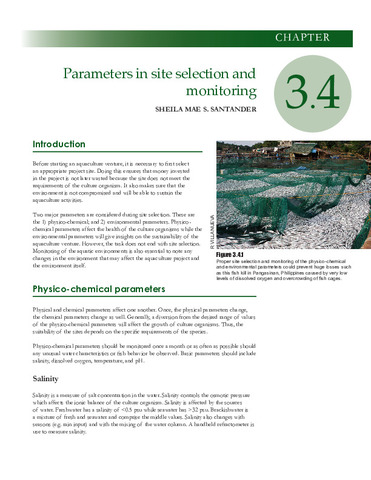
Parameters in site selection and monitoring
(Aquaculture Department, Southeast Asian Fisheries Development Center, 2009)Before starting an aquaculture venture, it is necessary to first select an appropriate project site. Doing this ensures that money invested in the project is not later wasted because the site does not meet the requirements of the culture organism. It also makes sure that the environment is not compromised and will be able to sustain the aquaculture activities. Two major parameters are considered during site selection. These are the 1) physico-chemical; and 2) environmental parameters. Physico-chemical parameters affect the health of the culture organisms while the environmental parameters will give insights on the sustainability of the aquaculture venture. However, the task does not end with site selection. Monitoring of the aquatic environments is also essential to note any changes in the environment that may affect the aquaculture project and the environment itself. -
Coral reefs
(Aquaculture Department, Southeast Asian Fisheries Development Center, 2009) -
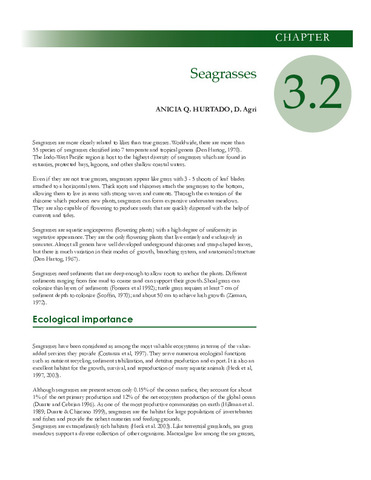
Seagrasses
(Aquaculture Department, Southeast Asian Fisheries Development Center, 2009) -
Mangroves
Lebata-Ramos, Ma. Junemie Hazel L. (Aquaculture Department, Southeast Asian Fisheries Development Center, 2009)
-
Sustainable rural aquaculture: concepts and approaches
(Aquaculture Department, Southeast Asian Fisheries Development Center, 2009)This introductory chapter will discuss principles and concepts on community-based aquaculture. The Regional code of conduct for responsible aquaculture will be part of it. -
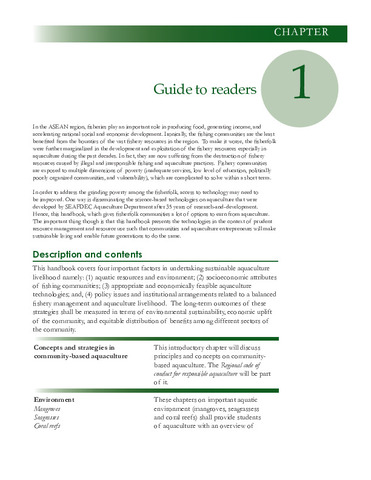
Guide to readers
(Aquaculture Department, Southeast Asian Fisheries Development Center, 2009)In the ASEAN region, fisheries play an important role in producing food, generating income, and accelerating national social and economic development. Ironically, the fishing communities are the least benefited from the bounties of the vast fishery resources in the region. To make it worse, the fisherfolk were further marginalized in the development and exploitation of the fishery resources especially in aquaculture during the past decades. In fact, they are now suffering from the destruction of fishery resources caused by illegal and irresponsible fishing and aquaculture practices. Fishery communities are exposed to multiple dimensions of poverty (inadequate services, low level of education, politically poorly organized communities, and vulnerability), which are complicated to solve within a short term. In order to address the grinding poverty among the fisherfolk, access to technology may need to be improved. One way is disseminating the science-based technologies on aquaculture that were developed by SEAFDEC Aquaculture Department after 35 years of research-and-development. Hence, this handbook, which gives fisherfolk communities a lot of options to earn from aquaculture. The important thing though is that this handbook presents the technologies in the context of prudent resource management and resource use such that communities and aquaculture entrepreneurs will make sustainable living and enable future generations to do the same. -
The Malalison experience: empowering an island community in west central Philippines
; ; ; Amar, Edgar C.; (Aquaculture Department, Southeast Asian Fisheries Development Center, 2009)
A 64-page booklet that describes SEAFDEC/AQD’s community fishery resources management project from 1991 to 1998 with a post project assessment in 2009. -
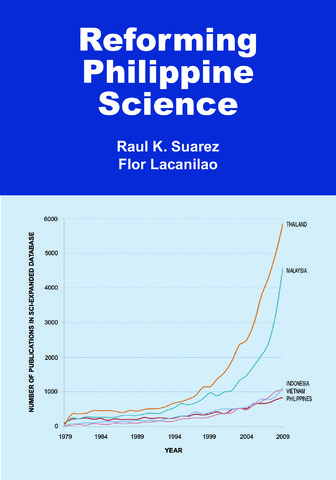
Reforming Philippine science
(Aquaculture Department, Southeast Asian Fisheries Development Center, 2010)This book discusses the importance of science as the foundation of technological development and economic progress. It also describes the past and current situation of scientific research in the Philippines. The book also illustrates the usefulness of a properly published scientific research to the entire country. -
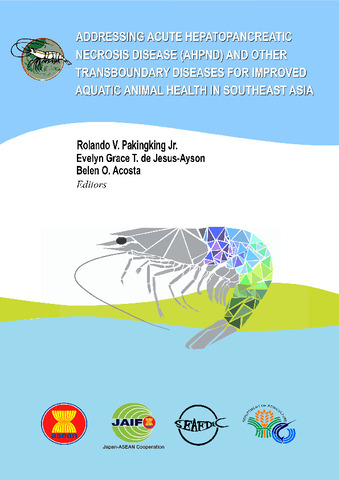
Addressing acute hepatopancreatic necrosis disease (AHPND) and other transboundary diseases for improved aquatic animal health in Southeast Asia: Proceedings of the ASEAN Regional Technical Consultation on EMS/AHPND and Other Transboundary Diseases for Improved Aquatic Animal Health in Southeast Asia, 22-24 February 2016, Makati City, Philippines
(Aquaculture Department, Southeast Asian Fisheries Development Center, 2016) -
Field guide to mangrove identification and community structure analysis
Lebata-Ramos, Ma. Junemie Hazel (Aquaculture Department, Southeast Asian Fisheries Development Center, 2013)
The mangrove field guide is a 32-page field guide with a one page introduction on mangroves, followed by a key to mangrove genera and species (with colored pictures of the whole plant and plant parts), then a definition of important terms used in the key, species code for use during mangrove community structure, instructions on how to conduct mangrove community structure analysis plus the formulas for the different indices (relative density, dominance, frequency; importance value and species diversity) and a sample data sheet. The guide, measuring 9 cm x 14 cm, is printed on PVC material hence it can get wet, soaked or be left in the water for days. -
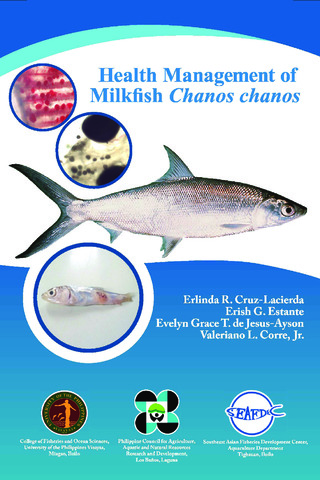
Health management of milkfish Chanos chanos
(Aquaculture Department, Southeast Asian Fisheries Development Center, 2015-06)This monograph provides updated information on diseases of marine and brackishwater cultured milkfish in the Philippines. The information presented here is largely based on the results of a three-year research project on milkfish at the University of the Philippines Visayas funded by the Department of Science and Technology (DOST). The project involved surveillance and monitoring of hatchery, nursery and grow-out operations for occurrence of diseases as well as on disease diagnosis, prevention and control. Previously documented reports in the Philippines and in other documents, both published and unpublished, are also included in this monograph. The diseases are discussed on a culture phase basis, that is, disease problems encountered in hatchery-reared larvae and fry are listed first, followed by diseases observed in fingerlings and juveniles grown in nursery and grow-out culture areas, and adult stages maintained in broodstock facilities. Information regarding the causative agent, diagnostic procedures, and methods of prevention and control for each disease are provided, if available. -
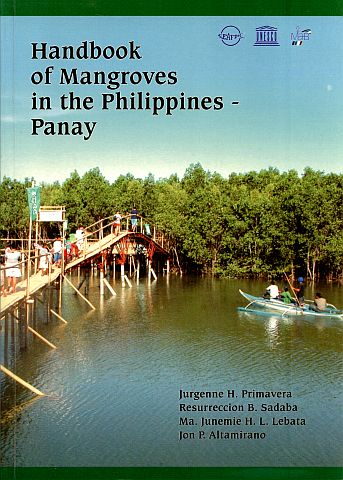
Handbook of mangroves in the Philippines - Panay
Primavera, Jurgenne; Sadaba, Resurreccion ; Lebata, Ma. Junemie Hazel L. ; Altamirano, Jon (Aquaculture Department, Southeast Asian Fisheries Development Center, 2004)
A 106-page guide is a user-friendly presentation of technical botanical description and illustrations of Philippine mangrove species in Panay Island, Guimaras and Aurora Province. Vegetative and reproductive structures of 34 mangrove species that are readily observed in the field are emphasized and presented in color photographs and as graphic icons. Also discussed: importance of mangroves; mangrove decline and legislation; conservation and rehabilitation; and mangrove-friendly aquaculture. -
Ecology and farming of milkfish
Bagarinao, Teodora (Aquaculture Department, Southeast Asian Fisheries Development Center, 1999)
This book is a reader-friendly illustrated account of the life history of milkfish (Chanos chanos) in nature and in aquaculture. It describes the different farming systems and status of the milkfish industry, and recommends means to ensure sustainability. -
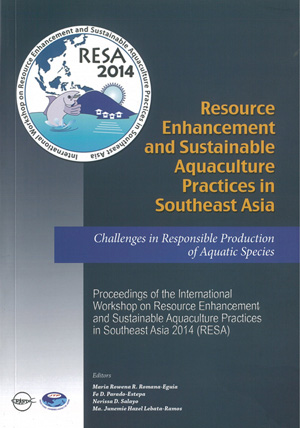
Resource enhancement and sustainable aquaculture practices in Southeast Asia: challenges in responsible production of aquatic species : proceedings of the international workshop on resource enhancement and sustainable aquaculture practices in Southeast Asia 2014 (RESA)
(Aquaculture Department, Southeast Asian Fisheries Development Center, 2015-08)The conference was held in order to promote and augment regional initiatives on resource enhancement and sustainable aquaculture practices, and to contribute to poverty alleviation, livelihood and food security in Southeast Asia. The contributions of the selected participants during the conference which are contained in this volume are cited individually. -
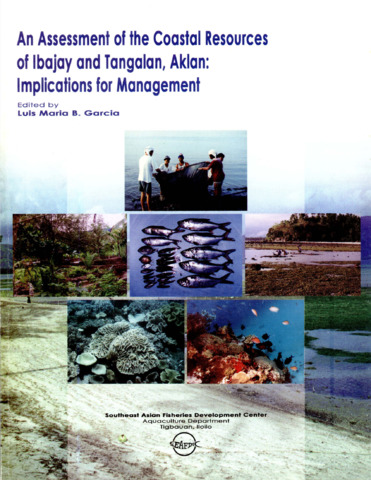
An assessment of the coastal resources of Ibajay and Tangalan, Aklan: Implications for management
(Aquaculture Department, Southeast Asian Fisheries Development Center, 2001)This report describes the present state of marine resources in several coastal barangays of Ibajay and Tangalan, Aklan (Philippines). Field data were obtained from rapid surveys conducted from July to September 1998. Recommendations based on analyses of the data will guide fisherfolk and other stakeholders, particularly the local government units, in their development plans for these neighboring municipalities. Both land and marine products in the area are mainly harvested for the local market. All coastal barangays are dependent on fishing for their livelihood. The medium-scale municipal fishery of Tangalan employs several passive (encircling gill net, bag net, fish corral) and active gears (baby purse seine) compared with the traditional fishing methods employed by Ibajay fishers. Pond aquaculture in mangrove areas is well-developed in Ibajay West (barangays Aquino and Ondoy) and in Tangalan. However, ownership of these ponds is limited to a few individuals and families, unlike in Barangay Bugtong Bato where informal ownership distributed among families has been the traditional rule. Nonetheless, the introduction of so-called environment-friendly methods of utilizing mangroves (e.g., aquasilviculture) and other shared coastal resources may seriously undermine the informal rights-based social structures in the barangays. Without proper rules and enforcement, the application of these methods may be misused, aggravating the already poor overall state of their coastal resources. Major problems affecting their fishing livelihood include siltation of nearshore waters due to illegal deforestation upland, encroachment of municipal fishing grounds by commercial and other fishers elsewhere, and the lack of capital to finance the fishery. Weak inter-organizational links among government and non-government organizations have hampered the implementation of solutions to these common problems in coastal barangays. For instance, a conflict between fishers from these neighboring municipalities over territorial boundaries of common fishing grounds in Pangayawan and Pungtod reefs has not been resolved over the years. Likewise, the introduction of aquasilviculture in mangrove areas may become a potent source of conflict among resource-users who maintain informal rights over the mangrove resource. The overall state of coastal resources in these municipalities is in immediate need of a unified plan to promote both their preservation and conservation. To achieve this end, a joint resource management council representing all resource-users from both municipalities must be organized and convened. To address the presently weak inter-organizational links among existing organizations, this joint council may provide a legitimate forum to identify, resolve, integrate, implement, and enforce guidelines on the common use of resources, both marine and inland. Low estimated yields from the reef fishery, conversion of mangroves for aquaculture beyond the allowable limit, a persistent conflict over fishing rights in several reefs offshore, the limited resources for seaweed and fish mariculture, and threats on existing traditional social structures by progressive resource-users are several issues that require thorough discussions to formulate popularly approved and acceptable management strategies. These strategies include community-based approaches of co-managing resources such as "no-take zones" (sanctuaries), ecotourism development, and livelihood schemes to mitigate, in part, the pressure of over-exploitation of fishery resources. -
Towards sustainable aquaculture in Southeast Asia and Japan : proceedings of the Seminar-Workshop on Aquaculture Development in Southeast Asia, Iloilo City, Philippines, 26-28 July 1994
(Aquaculture Department, Southeast Asian Fisheries Development Center, 1995)Documents the presentations at ADSEA '94, the 3rd Seminar-Workshop on Aquaculture Development in Southeast Asia. ADSEA '94 includes reviews of the status of aquaculture development in Southeast Asia and Japan and of the researches conducted by Southeast Asian Fisheries Development Center, Aquaculture Department (SEAFDEC/AQD) to contribute to this development. Topics on responsible aquaculture, mollusc and seaweed culture, integrated farming, shrimp culture, diseases, and health management, and transgenic fish were also discussed. It also lists the research areas of 20 or so commodities prioritized for research at AQD for 1995-1997. -
Proceedings of the Seminar-Workshop on Aquaculture Development in Southeast Asia and Prospects for Seafarming and Searanching, 19-23 August 1991, Iloilo City, Philippines
(Aquaculture Department, Southeast Asian Fisheries Development Center, 1994)Documents the presentations at ADSEA '91, the 2nd Seminar-Workshop on Aquaculture Development in Southeast Asia. ADSEA '91 includes reviews of the status of the researches conducted by Southeast Asian Fisheries Development Center, Aquaculture Department (SEAFDEC/AQD) on the following cultured species sea bass, groupers, snappers, milkfish, rabbitfish, mullet, tilapia, carp, catfish, bivalves and the seaweed Gracilaria. Topics on aquaculture development in Southeast Asia and Japan were also discussed. The status and development of seafarming and searanching in different SEAFDEC member countries and their ecological, social and economic implications were also presented. The contributions of the selected participants during the meeting which are contained in this volume are cited individually. -
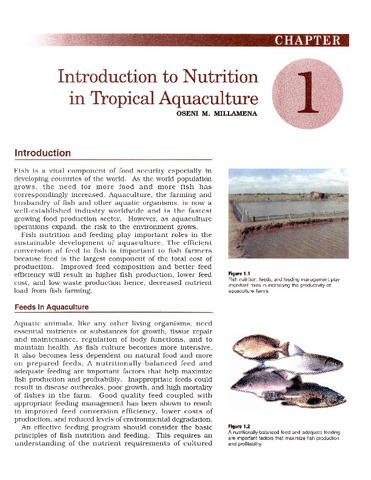
Introduction to nutrition in tropical aquaculture
(Aquaculture Department, Southeast Asian Fisheries Development Center, 2002)Fish is a vital component of food security especially in developing countries of the world. As the world population grows, the need for more food and more fish has correspondingly increased. Aquaculture, the farming and husbandry of fish and other aquatic organisms, is now a well-established industry worldwide and is the fastest growing food production sector. However, as aquaculture operations expand, the risk to the environment grows. Fish nutrition and feeding play important roles in the sustainable development of aquaculture. The efficient conversion of feed to fish is important to fish farmers because feed is the largest component of the total cost of production. Improved feed composition and better feed efficiency will result in higher fish production, lower feed cost, and low waste production hence, decreased nutrient load from fish farming.