SEAFDEC/AQD Institutional Repository: Recent submissions
Now showing items 2181-2200 of 4221
-
DNA amplicons using arbitrary primers distinguish polymorphic loci among mangrove thraustochytrid genomes
(Institute of Electrical and Electronics Engineers, 2007)Thraustochytrids - lightly-pigmented estuarine and marine microheterotrophs, taxonomically aligned with heterokont algae - are of great biotechnological interest because they produce substantial amounts of polyunsaturated fatty acids (PUFAs) especially docosahexaenoic acid (DHA:6n3). In this study, twenty-seven strains, isolated from twenty mangrove areas in the Philippine archipelago, were mass-produced in axenic flask cultures using high-glucose medium with continuous agitation. Polymorphic loci of thraustochytrid genomes, determined using four arbitrary primers (OPC02, OPC05, OPC07 and OPC08) in PCR analysis, were randomly amplified as molecular markers for genetic fingerprinting. Electrophoretic banding patterns of DNA amplicons, recognized based on nucleic acid size, were scored on data matrix and analyzed using Jaccard's coefficient and single-linkage hierarchical clustering to characterize degree of genetic relatedness among thraustochytrids. Conclusively, nearest-neighbor dendrogram of randomly amplified polymorphic DNAs (RAPDs) markers classify the strains into two monophenetic clades, representing the two major genera: Schizochytrium and Thraustochytrium. -
Development of transgenic fish: scientific background
; ; ; ; Eguia, Maria Rowena R. (CABI, 2007)
This chapter highlights some of the important examples of transgenic fish development. An overview of important steps in fish transgenesis is given. The status of development in the case of transgenic carp, tilapias, Atlantic salmon and mud loach is discussed. Other future applications of transgenic fish are presented. The key research and capacity needs for further development of transgenic fish are also discussed.
(CABI, 2007)
This chapter highlights some of the important examples of transgenic fish development. An overview of important steps in fish transgenesis is given. The status of development in the case of transgenic carp, tilapias, Atlantic salmon and mud loach is discussed. Other future applications of transgenic fish are presented. The key research and capacity needs for further development of transgenic fish are also discussed. -
Philippine thraustochytrids from mangroves: A rich new source of essential fatty acids for human nutrition
(Marine Science Institute, University of the Philippines, 2007) -
Microbial diseases in aquaculture: issues and challenges
(Marine Science Institute, University of the Philippines, 2007)Aquaculture is the farming of aquatic organisms including fish, molluscs, crustaceans and aquatic plants where farming implies some intervention in the rearing process to enhance production, such as regular stocking, feeding, protection from predators, etc. (FAO, 1997). The contribution of aquaculture to global supplies of fish, crustaceans, mollusks and other aquatic animals continues to grow, increasing from 3.9 percent of total production by weight in 1970 to 32.4 percent in 2004 growing more rapidly than all other animal food-producing sectors. Worldwide, aquaculture production has grown at an average rate of 8.8 percent per year since 1970, compared with only 1.2 percent for capture fisheries and 2.8 percent for terrestrial framed meat production systems over the same period (FAO 2006). -
Series: PIDS Discussion Paper Series; No. 2007-20
The current state of aquaculture in Laguna de Bay
(Philippine Institute for Development Studies, 2007)This paper presents some of the preliminary results and findings of an ongoing study, jointly conducted by the Southeast Asian Fisheries Development Center (SEAFDEC AQD) and Philippine Institute for Development Studies (PIDS), which assesses the current state of aquaculture in Laguna de Bay. The study uses primary and secondary data. The primary data were gathered through interviews with key informants and a cross-section survey of fishpen and fishcage operators and their operations in Laguna de Bay conducted in 2007. The secondary data were gathered from the published statistical indices of institutional sources and other relevant literature. The results of the study indicate that aquaculture in Laguna de Bay is a vibrant industry that includes not only fishpen and fishcage operators but also various participants in its input and product markets. Furthermore, they show that aquaculture contributes significantly to fish production in the lake as well as to national aquaculture and fisheries production. The results of the study also indicate that while aquaculture in Laguna de Bay has been an important economic contributor locally and nationally, it has been facing numerous problems over time that constrain its development. Of these, environment-related problems, lack of access to cheap capital, obstruction of navigational lanes by fishpens, existence of illegal fishpens, poaching and overall limited support from the government were considered very serious by aquaculture operators. These problems, therefore, may be the ones needing the most attention. -
Analysis of small-scale coastal aquaculture in the Philippines
(Japan International Research Center for Agricultural Sciences, 2007)We studied the influence of the development of aquaculture in the Philippines on the local economy, focusing on coastal fishers in two towns in Capiz and Iloilo, Panay Island, Philippines. Coastal residents in the two towns closely depend on fishing and aquaculture for both their primary and secondary incomes. The small-scale aquaculture business commenced by coastal fishermen has been expanding particularly after the 1990s. The planting of mangrove trees is promoted and small-scale aquafarming is done by coastal fishermen who exert only small environmental loads. Small-scale aquaculture, including the aquaculture of shellfish, net cage culture, pen culture, and seaweed culture, requires low initial investment and imposes minimal workload on operators in terms of breeding management up to shipment, which is why most coastal fishing people want to continue in the business. On the other hand, pond culture, practiced before the 1990s, promises no further rise in production for several reasons that include overproduction of milkfish and the outbreak of diseases in shrimp and prawn. Under these conditions, small-scale aquaculturists in two towns have established a sustainable aquaculture production system that allows them to maintain mangrove forests, utilize natural recirculation functions and help local residents obtain income. -
Series: JIRCAS Working Report; No. 56
Development of farming schemes following disease occurrences in monodon shrimp farming using intensive method in three Southeast Asian countries
(Japan International Research Center for Agricultural Sciences, 2007)All three countries experienced major progress in intensive shrimp farming at different ties. Intensive farming of monodon shrimp (Penaeus monodon, an indigenous species) was first launched by the Philippines, followed by Thailand, then by Peninsular Malaysia. The survey was conducted from 2000-2005. The disease-causing bacterial that seiously damaged monodon culture were luminous bacteria in the Philippines and white spot virus in Thailand and Malaysia. Production decreased because of these diseases in the mid-1990s in the Philippines and after 2000 in Thailand and Malaysia. In 1998, the Green Water System (hereinafter referred to as GWS) was developed, and a proportion of culture ponds introduced it and resumed monodon culture using the intensive method. In Thailand, the vannamei shrimp (Penaeus vannamei, an exotic species from South America) has now replaced monodon previously raised using the extensive method. In Malaysia, monodon is cultured using only the intensive method, and some culture pond enterprises started to culture vannamei instead of monodon in 2004. In the Philippines, companies engaging in monodon culture have many ponds and lower stocking density because they culture large-size shrimp, but are exposed to high running costs such as fuels and probiotics. On the other hand, in Thailand, individuals engaging in monodon culture have few ponds and higher stocking density since they culture small-scale shrimp. Labor costs are low because most of the work is done by family member. -
Arachidonic acid distribution in seaweed, seagrass, invertebrates and dugong in coral reef areas in the Philippines
(Japan International Research Center for Agricultural Sciences, 2007)Arachidonic acid (ArA) was not a minor component, and ArA distributes widely in coral reef organisms. Seagrass had high linoleic acid and linolenic acid levels with low Ara, EPA and DHA levels, while some species of seaweed had intermediate or high ArA levels (5% to 12%). In starfish, sea cucumber and some species of corals, ArA was the first major fatty acid (20% to 30%), but DHA levels were very low. Bivalves, abalone and shrimps had intermediate ArA levels. Total lipids of abdominal muscle and liver of dugong had respectively ArA levels of 7.8% and 11.0%, which were higher than EPA levels (2.4% and 1.6%), but DHA levels (0.4% and 2.3%) were low. It is clear that ArA is a major fatty acid in coral reef animals. The present results suggest that the existence of an ArA-rich food chain may be widespread in coral reef areas, and that the widespread existence of ArA-rich food chain may lead to intermediate or high ArA contents in tropical species. -
Viral nervous necrosis (VNN) as a critical infectious disease of orange-spotted grouper, Epinephelus coioides, in the Philippines
(Japan International Research Center for Agricultural Sciences, 2007)Orange-spotted grouper, Epinephelus coioides, is a valuable commodity in the Philippines. In 2001, mass mortality occurred in the grouper larvae at Aquaculture Department, Southeast Asian Fisheries Development Center (SEAFDEC/AQD) and the disease was identified as viral nervous necrosis (VNN). Since then, the disease has been observed every year and the grouper hatcheries have been devastated. In this paper, recent studies of VNN which were conducted at the SEAFDEC/AQD from 2001 to 2006 are reviewed. 1) Susceptibility to the VNN virus was tested among fish species that were cultured in mangrove brackish are. Five representative cultured fish species including orange-spotted grouper, Asian sea bass (Lates calcarifer), mangrove red snapper (Lutjanus argentimaculatus), milkfish (Chanos chanos) and rabbitfish (Siganus guttatus) were used in the test where the virus was intraperitoneally injected into the juveniles. Although low or no mortality occurred in the challenge test, histopathological changes were observed in the brain and retina where the virus was re-isolated. The results were the same among the species except for rabbitfish which had no evidence for the infection. It was verified that the virus has a wide host range. 2) To estimate the possible risk of viral spread by vertical transmission, virus distribution was determined in asymptomatic groupers including 7 broodstock and 17 juveniles with body weights ranging from 4 to 12 kg and 2 to 9 respectively. The virus was detected by PCR method. The highest detection rate was in the brain, and the virus was also detectable in other organs such as the gills, heart, spleen, kidney, blood, esophagus, stomach, intestine, liver, gonad, swim bladder and/or skin. 3) As a possible VNN vaccine, a DNA p;asmid encoding the capsid protein of the virus was evaluated. After the challenge, the mortalities between the native and DNA-injected fish appeared significantly different (P<0.05). -
Series: JIRCAS Working Report No. 56
Effects of arachidonic acid supplementation on larval and survival and reproductive performance in rabbitfish, Siganus guttatus
(Japan International Research Center for Agricultural Sciences, 2007)Fry of tropical marine fish needed for aquaculture still comes mostly from the wild. Thus, fry availability is a major constraint in the development and extension of aquaculture, especially in rural areas of developing regions. Although the mission of hatcheries is to provide a stable fry production and supply for farmers, fry production remains variable due to poor fecundity and low survival. For the last four years (2002-2005), SEAFDEC/AQD and JIRCAS have conducted the collaborative project that was aimed at developing advanced diets for improving egg production/quality (2002-2005) and larvae/fry quality (2004-2005) through dietary manipulation. Larval rearing tests: In 2005, larval rearing tests (4 trials with rotifers) were conducted to investigate the effects of enriched-live food (4treatments: low (CS) and high (DHAPS) HUFA with or without arachidonic acid supplementation) on survival and growth in rabbitfish Sigunus guttatus fry. Fry fed the rotifers enriched with a combination of DHAPS+5% ArA showed the best survival (44.4±4.5% for D17 fry in the 4th trial).Growth was not different among the treatments (CS, CS+5% ArA, DHAPS, DHPS+5% ArA). Broodstock tests: From March, 2005 to January,2006, a feeding test has been conducted to investigate the effects of dietary ArA supplementation (0% for diet 1, 0.3% for diet 2 and 0.6% for diet 3) on egg production and quality of wild-caught and hatchery-bled rabbitfish broodstock. The broodstock spawned 13 times for diet1 (six pairs), 14 times for diet 2 (five pairs) and 17 times for diet 3 (six pairs) during the period of May 2005 to January, 2006. The total numbers ofhatched-larvae were 3,818 x 103 for diet 1, 4,391 x 103 for diet 2 and 4,597 x 103 for diet 3. The % of normal larvae did not differ among the dietary treatments. Considering together with the results of mangrove red snapper (2003) and rabbitfish (2004), the optimum level of ArA incorporation appears to be between 0.5% and 0.7%. Judging from the results of fatty acid analysis, DHA and arachidonic acid should be supplemented to diets at the same time as to make DHA/arachidonic acid ratio appropriate. Thus, the present study clearly shows that dietary arachidonic acid supplementation is very promising for the development of fry production technologies in tropical areas. -
Series: JIRCAS Working Report; No. 75
Co-culture trials of sandfish Holothuria scabra and black tiger shrimp Penaeus monodon in mangroves
Lebata-Ramos, Ma. Junemie Hazel; ; Sibonga, Rema ; (Japan International Research Center for Agricultural Sciences, 2012)
To address its mandate to develop environment-friendly culture techniques, the Southeast Asian Fisheries Development Center, Aquaculture Department (SEAFDEC/AQD) is trying to establish a culture system in mangroves for commercially important aquaculture species. Recently, SEAFDEC/AQD has successfully produced sandfish, Holothuria scabra, in the hatchery. Using hatchery-bred juveniles, monoculture and co-culture trials are being conducted in ponds, pens and cages. This study investigated the feasibility of the co-culture of black tiger shrimp, Penaeus monodon, and H. scabra in the mangroves by comparing growth and survival in monoculture and co-culture conditions. Water and sediment quality were compared between treatments. Results showed that growth and survival of P. monodon (P. monodon only = 48.8±4.9%; P. monodon + H. scabra = 46.1±7.4%) and H. scabra (H. scabra only = 13.1±6.1%; P. monodon + H. scabra = 12.3±6.2%) grown together or separately did not significantly differ. P. monodon survivial was positively correlated while growth negatiely correlated with temperature. Feed input significantly increased sulfide levels in both treatments (P. monodon; P. monodon + H. scabra) and sulfide significantly differed between treatments with the highest concentration in P. monodon only, then P. monodon + H. scabra and H. scabra only. Ammonia concentrations followed the same trend as sulfide but did not significantly differ among treatments. P. monodon cultured in mangroves were not affected by the white spot syndrome virus which affected neighboring culture ponds. Results of these initial trials may not be conclusive yet but show a promising culture system for P. monodon that may be integrated with the mangroves. -
Level of L-ascorbyl-2-monophosphate-Mg as a vitamin C source in practical diets for the Asian sea bass, Lates calcarifer
(Society of Israeli Aquaculture and Marine Biotechnology (SIAMB), 2012)The stable vitamin C derivative, L-ascorbyl-2-monophosphate-Mg (AMP), was used as a supplement in practical diets for Asian sea bass, Lates calcarifer. Optimum growth, liver ascorbic acid (AA) saturation, and wound healing were determined. Sea bass (78.9±0.4 g) were fed a maintenance diet without vitamin C supplement for 25 days, then distributed into fifteen 1500-l oval fiberglass tanks at 30 fish each and fed one of five practical diets containing 0, 50, 100, 200, or 400 AMP mg/kg diet for 14 weeks. Fish fed the AMP-free diet exhibited clinical signs of vitamin C deficiency and significantly poorer final average weight, specific growth rate, protein efficiency ratio, feed conversion ratio, and hematocrit level (p<0.05). The level of AA in the sea bass brain increased as the level of dietary AMP increased. The AA concentration in the liver was similar at all AMP dietary levels. Body calcium of sea bass fed the AMP-free or 50 mg diets was significantly lower (p<0.05) than in fish fed the other diets. AMP enhanced wound healing regardless of supplement level, but fish fed the highest dietary AMP (400 mg/kg diet) exhibited histopathological changes in the liver. The dietary level of 50 mg AMP/kg diet was adequate for optimum growth, liver AA saturation, and prevention of clinical signs of vitamin C deficiency in 80-220 g sea bass. However, 100 mg AMP per kg diet was necessary for optimum body calcium. -
Induction of immunity and resistance to white spot syndrome virus (WSSV) in shrimp Penaeus monodon (Fabricius) by synthetic oligodeoxynucleotide and bacterial DNA
Amar, Edgar C.; Faisan, Joseph P., Jr. (University of the Philippines Los Baños, 2012)
Shrimps like all invertebrates are believed to lack true adaptive immunity but recent evidence indicate that they can be protected against pathogenic organisms by priming their immune system with immunostimulatory substances. Here, we describe results of investigation aimed to strengthen shrimp immunity as a preventive strategy against white spot syndrome virus (WSSV) infection. Oligodeoxynucleotides (ODNs) with and without Cytosine-Guanine (CpG) motifs, and Vibrio harveyi genomic DNA (VHD) were administered by intramuscular injection and shrimp responses were assessed by ex vivo assays and experimental infection trials. Results showed that CpG ODN significantly increased ex-vivo immunity indices such as total hemocyte count (THC), plasma agglutination titer (PAT) and hemocyte lysate agglutination titer (HLAT). VHD significantly increased immune indices such as THC, plasma total protein (PTP) and HLAT. Reverse (GpC) motifs increased THC only. At a lower viral challenge dose, both CpG and GpC motifs, and VHD, were able to reduce shrimp mortality significantly but only CpG and VHD did so at a higher challenge dose. Strengthening shrimp immunity by the use of immunostimulatory nucleotides and bacterial genomic DNA could be a feasible preventive approach in the management of WSSV infections in shrimp. -
Screening of vibriosis in Asian seabass, Lates calcarifer using loop-mediated isothermal amplification (LAMP) assay
; Pakingking, Rolando V., Jr.; (Bioflux Society, 2012)
The aim of this study was to standardize a loop-mediated isothermal amplification (LAMP) assay for the detection of Vibrio harveyi , the causative agent of vibriosis in Asian seabass, Lates calcarifer. The dnaJ gene of the bacterial pathogen was used as the target gene for the LAMP assay. It was optimized at an incubation time of 1 h at 63°C. The assay was highly specific for V. harveyi and did not cross-react with other bacterial pathogens offish. However, the assay was able to detect V. harveyi that was isolated from infected shrimps. The limit of detection of the LAMP assay was 40 pg of DNA mL-1 or 40 fg of the genomic DNA per LAMP reaction and was 10 times more sensitive than conventional PCR in detecting the bacterial pathogen from infected samples. The LAMP products can be quantified spectrophotometrically using hydroxynaphthol blue (HNB) dye and showed positive correlation with the amount of the pathogen. These results demonstrated that LAMP is a simple and sensitive detection technique that has potential application for routine diagnosis of vibrosis caused by V. harveyi in Asian seabass and other aquatic species. -
Fish habitats in a small, human-impacted Sibunag mangrove creek (Guimaras, Philippines): a basis for mangrove resource enhancement
; Bagarinao, Teodora; (Elsevier, 2012)
The fish assemblage of a small, open access mangrove creek highly influenced by aquaculture farms, was studied for the first time in the Philippines as a baseline of such system as well as examining the degree of ecological disturbance among fish habitats, as basis for the necessity to rehabilitate mangrove resources aiming to balance human activities and mangrove functioning. In total, 475 fishes (total weight = 3875 g) were captured and 50 species representing 32 families were identified. Thirty two species were represented by small numbers (< 5 individuals). Commercial species was considerably high (~23 species) but majority were low grade commercial species. Total species, species diversity and fish abundance consistently showed a decreasing pattern from outside creek to inner creek. Fish habitats exhibited substantial differences following a distinct spatial segregation of fish communities, a dominance of non-shared species and a minimal species overlapping inside the creek, which is attributable to the existing mangrove fragmentation associated with aquaculture ponds in the area. Increasing levels of disturbances were observed within the creek indicating ‘stress’ as a result of overutilization of mangroves by aquaculture farms. Our results confirmed the need to rehabilitate mangrove resources in this area. The development of mangrove resources through reforestation, coupled by strict regulation of fishing activities and aquaculture ponds will reduce ecological stress in the area and regain gradually a robust mangrove functioning that will improve fish diversity, fisheries and productivity of adjacent coastal systems by creating a suitable fish nursery, feeding ground and refuge habitat. -
Financial feasibility of green-water shrimp farming associated with mangrove compared to extensive shrimp culture in the Mahakam Delta, Indonesia
; Tendencia, Eleonor; (Asian Fisheries Society, 2012)
This paper presents a post-hoc assessment of the introduction of intensive shrimp farming strategies, with and without green-water (GW) technology, in the Mahakam Delta where extensive systems (ES) dominate. The study also assesses the potential of integrated mangrove GW shrimp production (MGW). The method section describes the systems considered, the cost-benefit analysis applied and the assumptions for different scenarios. The data for the GW and non-GW systems were based on a survey in the Philippines. Assessing cultured shrimp yields from the total farm area showed that production from non-GW was 10% higher than from GW farms. Compared to these two systems, the MGW system produces about 20% of the total shrimp, but provides complementary livelihood options and ecosystem services. Per unit area covered, MGW system produces 20 times more shrimp than ES, while income for farmers doubles and opportunities for livelihoods enhancement associated with the mangrove area increase. Low operating costs make the ES interesting for resource poor farmers, but risks to producers and societal cost are underrated. Transferring from ES to MGW system will increase the contribution to the national economy whilst maintaining ecosystem services, that would otherwise be lost, were intensive culture systems to predominate. -
Characteristics of dehalogenase from bacteria isolated from the gut of pond-reared rohu (Labeo rohita) juveniles in Myanmar
; Pakingking, Rolando V., Jr.; ; ; (Scientific Research Publishing, 2012)
Unwarranted accumulation of halogenated compounds in the rivers and streams has in recent years emerged due to the widespread use agricultural pesticides. The presence of these halogenated compounds in the water does not only suppress the immune system of fish but adversely induce serious morbidity and mortality among cultured stocks. Importantly, gradual accumulation of these compounds in the system of cultured and wild freshwater fish species cultured in ponds and floating net-cages in dams and rivers, respectively, poses some risks to humans, the end users. In this study, we attempted to isolate bacteria from the gut of pond-reared rohu (Labeo rohita) in Myanmar, screened the isolated bacteria for dehalogenase gene using molecular technique and tested the ability of these bacteria to degrade halogenated compounds in vitro. The eight bacterial strains studied were identified as Enterobacter mori strain MK-121001, Enterobacter cloacae strains MK121003, MK-121004, MK121010, Ralstonia solanacearum strain 121002, Acinetobacter baumannii strain MK121007, Chromobacterium violaceum strain MK121009 and Pantoea vagans strain 121011. Only three bacterial strains (MK121002, MK121007 and MK121009) were capable of degrading 2,2-dichloropropionic acid (2,2-DCP) as the sole carbon source up to a final substrate concentration of 20 mM. Their mean growth doubling time ranging from 6 - 23 hours with the maximum of chloride ion released of 85%. PCR amplification with oligonucleotide primers designed from group I dehalogenase revealed the presence of dehalogenase genes in all isolates suggesting dehalogenase gene in strains 121001, 121003, 121004, 121010 and 121011 were silenced. In contrast, group II dehalogenase primers did not show any PCR amplification. These results suggest that MK121002, MK121007 and MK121009 only encode a group I dehalogenase and its non-stereoselectivity is in agreement with previoulsly described group I haloacid dehalogenase. The partial gene sequences were blasted but no significant sequence identity was observed. Therefore, it suggests the 2-haloacid dehalogenase of MK121002, MK12-1007 and MK- 121009 might be a novel group I 2-haloacid dehalogenase. The results indicated a broad distribution of dehalogenation genes in many microbial genomes that harbor dehalogenase(s) due to the exposure of the microorganisms to the naturally occurring or man-made halogenated compounds in the environmental systems. So far, microorganisms capable of producing dehalogenases were mainly isolated from soil and scarcely from aquatic animals and their environments. To the authors’ knowledge, this is the first report on the isolation of dehalogenase-producing bacteria from the gut of pond-reared freshwater fish, Labeo rohita, in Myanmar. -
Improved reproductive performance of tiger tail seahorse, Hippocampus comes, by mysid shrimp fed singly or in combination with other natural food
(Springer Verlag, 2015)The brood size, parturition frequency and parturition occurrence of tiger tail seahorse, Hippocampus comes were evaluated for 180 days using single and combined diets comprising Artemia salina, mysid shrimp Mesopodopsis orientalis and frozen Acetes sp. The daily food intake of seahorse was determined with the following treatments: T1-Artemia; T2-mysid; T3-Acetes; T4-Artemia + mysid; T5-Artemia + Acetes ; T6-mysid + Acetes; and T7-Artemia + mysid + Acetes. Percent body weight (% BW) of daily food intake until satiation was similar in Artemia, mysid and Artemia + Acetes (20-22 %), but significantly higher in mysid + Acetes, Artemia + mysid, and Artemia + mysid + Acetes with 25, 31 and 33 %, respectively (p < 0.05). Single diet of frozen Acetes was least consumed at 6 %. Thus, mysid was the preferred food of adult seahorses as a single or combined diet with Artemia and Acetes. Diet treatments with single mysid or combined with Artemia and Acetes have significantly higher brood size (223-292) than the other treatments (107-152) (p < 0.05). Significantly longer parturition interval (60 days) was observed in seahorses fed with Artemia than those fed with mysid or in combination with other natural food (13-26 days), but not significantly different to seahorses fed with Acetes and Artemia + Acetes (42-45 days). Parturition occurrence in seahorse fed with Artemia, Acetes and Artemia + Acetes (2.7-4.3) were the lowest, while Artemia + mysid and Artemia + mysid + Acetes have significantly higher occurrence followed by mysids + Acetes and mysid only (p < 0.05). Thus, the reproductive performance was improved when seahorses were fed with single or combined foods including mysid. Total lipid was positively correlated to brood size and parturition occurrence, while DHA:EPA ratio was negatively correlated to brood size and parturition occurrence. -
Euryhaline rotifer Proales similis as initial live food for rearing fish with small mouth
(Elsevier, 2014)The SS-type rotifer Brachionus rotundiformis is a common initial food for rearing fish larvae with a small mouth. However, there are commercially important fish species whose mouth sizes are too small to feed on SS-type rotifers. In 2004, we isolated a small (body length = 82.7 ± 10.9 μm; body width 40.5 ± 6.4 μm), flexible, and iloricate rotifer, Proales similis from an estuary in Okinawa, Japan. Under laboratory conditions (25 °C, 2–25 ppt) P. similis produced its first offspring on 2.5 to 2.8 days after hatching, and produced 4.3 to 7.8 offspring within 4.0 to 4.7 days life span. Batch cultured P. similis fed Nannochloropsis oculata suspension at 28.8 μg dry weight ml− 1 and cultured at 25 °C, 25 ppt filtered seawater, increased exponentially from 25 to 2400 ind ml− 1 after 11 days of culture with an overall intrinsic rate of natural increase (r) of 0.42 day− 1. The growth rate of P. similis was not significantly different when fed fresh N. oculata and super fresh Chlorella vulgaris-V12®. Total lipid per wet weight of P. similis fed by N. oculata and C. vulgaris were 2.4 and 2.6%, respectively. The compositions of eicosapentaenoic acid (EPA), docosahexaenoic acid (DHA), and arachidonic acid (ARA) of P. similis fed N. oculata were 23.2, 0.0 and 5.3%, respectively, while these were 11.0, 17.5 and 0.5% respectively, when fed C. vulgaris. The use of P. similis to feed small mouth fish including seven-band grouper Epinephelus septemfasciatus, rusty angelfish Centropyge ferrugata, and humphead wrasse Cheilinus undulatus showed that it is an excellent starter food for these species because of their high selectivity index and improved survival. In addition, P. similis was ingested by Japanese eel Anguilla japonica larvae with a complicated digestive system. The use of P. similis as starter feed for small mouth fish larvae is highly recommended. -
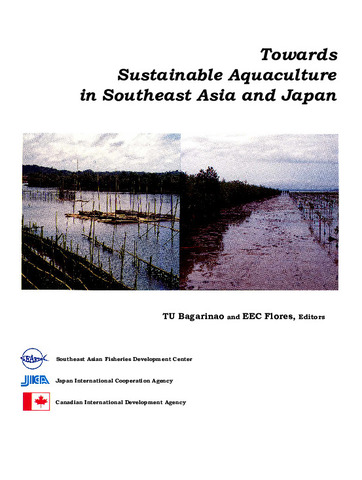
Towards sustainable aquaculture in Southeast Asia and Japan : proceedings of the Seminar-Workshop on Aquaculture Development in Southeast Asia, Iloilo City, Philippines, 26-28 July 1994
(Aquaculture Department, Southeast Asian Fisheries Development Center, 1995)Documents the presentations at ADSEA '94, the 3rd Seminar-Workshop on Aquaculture Development in Southeast Asia. ADSEA '94 includes reviews of the status of aquaculture development in Southeast Asia and Japan and of the researches conducted by Southeast Asian Fisheries Development Center, Aquaculture Department (SEAFDEC/AQD) to contribute to this development. Topics on responsible aquaculture, mollusc and seaweed culture, integrated farming, shrimp culture, diseases, and health management, and transgenic fish were also discussed. It also lists the research areas of 20 or so commodities prioritized for research at AQD for 1995-1997.