SEAFDEC/AQD Institutional Repository: Recent submissions
Now showing items 641-660 of 4221
-
Aeromonas load and species composition in tilapia (Oreochromis niloticus) cultured in earthen ponds in the Philippines
Pakingking, Rolando V., Jr. ; Palma, Peter ; (Wiley, 2020-04-14)
Aeromonas load and species composition in the rearing water, sediment, gills and intestines of healthy tilapia Oreochromis niloticus collected every 2 weeks from Days 30 to 120 after stocking in six earthen ponds in the Philippines were determined. Presumptive Aeromonas counts (PACs) in the water and sediment ranged from 101–103 c.f.u./ml and 101–103 c.f.u./g while in the gills and intestines, PACs ranged from 104–107 c.f.u./g and 102–105 c.f.u./g, respectively. Presumptive Aeromonas counts in the water, sediment, and gills of tilapia varied among days of culture while in the intestines of tilapia, PACs markedly dropped by approximately 2 logs at Day 75 and either remained in the same level or decreased by another 1 log at Day 120 of grow‐out culture. Aeromonas hydrophila predominantly constituted 94% of all presumptive Aeromonas spp. examined (n = 343), followed by A. sobria (4%) and A. salmonicida (2%). Taken together, current data provide some putative threshold levels of tilapia reared in earthen ponds to Aeromonas spp. The dominance of A. hydrophila together with negligible population of A. salmonicida and A. sobria indicate that Aeromonas are common commensal bacteria in tilapia and their environment which under conditions of stress could instigate disease epizootics.
; Palma, Peter ; (Wiley, 2020-04-14)
Aeromonas load and species composition in the rearing water, sediment, gills and intestines of healthy tilapia Oreochromis niloticus collected every 2 weeks from Days 30 to 120 after stocking in six earthen ponds in the Philippines were determined. Presumptive Aeromonas counts (PACs) in the water and sediment ranged from 101–103 c.f.u./ml and 101–103 c.f.u./g while in the gills and intestines, PACs ranged from 104–107 c.f.u./g and 102–105 c.f.u./g, respectively. Presumptive Aeromonas counts in the water, sediment, and gills of tilapia varied among days of culture while in the intestines of tilapia, PACs markedly dropped by approximately 2 logs at Day 75 and either remained in the same level or decreased by another 1 log at Day 120 of grow‐out culture. Aeromonas hydrophila predominantly constituted 94% of all presumptive Aeromonas spp. examined (n = 343), followed by A. sobria (4%) and A. salmonicida (2%). Taken together, current data provide some putative threshold levels of tilapia reared in earthen ponds to Aeromonas spp. The dominance of A. hydrophila together with negligible population of A. salmonicida and A. sobria indicate that Aeromonas are common commensal bacteria in tilapia and their environment which under conditions of stress could instigate disease epizootics. -
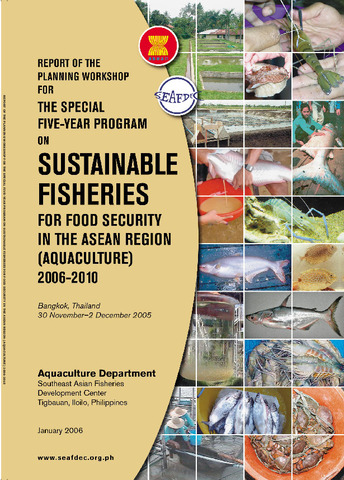
Report of the planning workshop for the special five-year program on sustainable fisheries for food security in the ASEAN region (aquaculture) 2006-2010: Bangkok, Thailand, 30 November-2 December 2005
(Aquaculture Department, Southeast Asian Fisheries Development Center, 2006-01) -
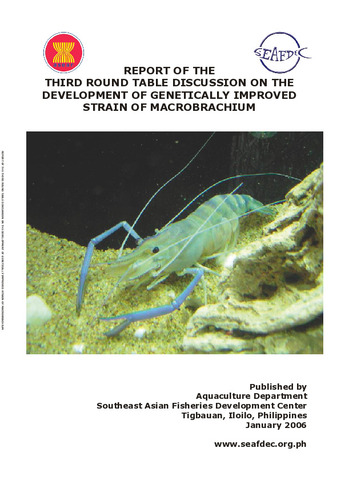
Report of the third round table discussion on the development of genetically improved strain of Macrobrachium, Bangkok, Thailand 3-4 December 2005
(Aquaculture Department, Southeast Asian Fisheries Development Center, 2006-01)In order to continue assessing the progress and status of the activities in the participating countries, the Third Roundtable Discussion was held in Bangkok, Thailand from 3 to 4 December 2005 in order to: 1) assess the ... -
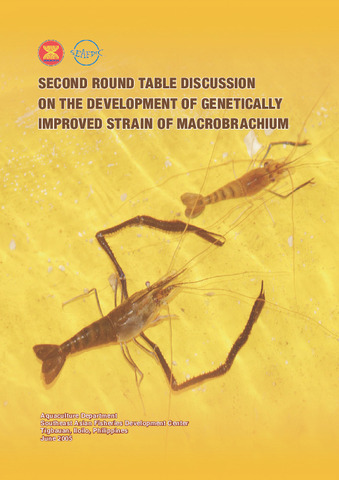
Second round table discussion on the development of genetically improved strain of Macrobrachium: A collaborative research under the Aquaculture Component of the ASEAN-SEAFDEC Special Five-Year Program on Sustainable Fisheries for Food Security in the ASEAN Region
(Aquaculture Department, Southeast Asian Fisheries Development Center, 2005-06)The Second Round Table Discussion on the Development of Genetically Improved Strain of Macrobrachium was held in the Philippines in September 2004 to evaluate the progress of activities of the collaborative research and ... -
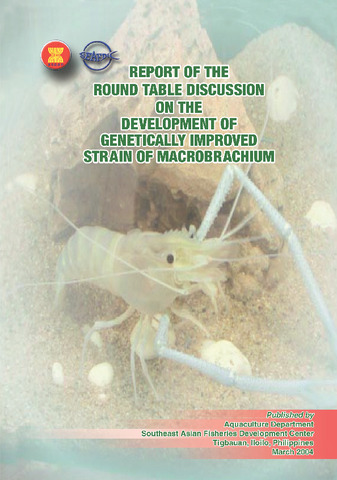
Report of the Round Table Discussion on the Development of Genetically Improved Strain of Macrobrachium: Freshwater Aquaculture Development Center, Sukabumi, West Java, Indonesia, 16-19 November 2003
(Aquaculture Department, Southeast Asian Fisheries Development Center, 2004-03)This publication documents the outcome of the Round Table Discussion including the proposals submitted by the participating countries for implementation under the Collaborative Research. "Part of the Collaborative Research ... -
Series: Aquaculture extension manual; No. 32
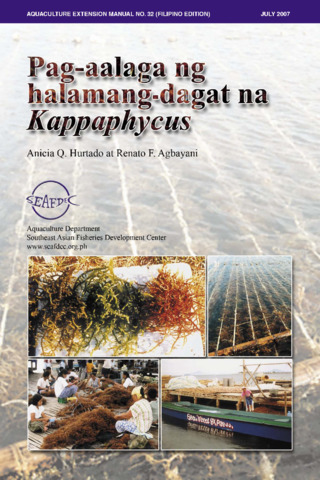
Pag-aalaga ng halamang-dagat na Kappaphycus
(Aquaculture Department, Southeast Asian Fisheries Development Center, 2007-07)A 24-page manual that introduces the carrageenan-producing seaweed Kappaphycus whose culture has spread from Jolo in Mindanao to at least 14 sites in the Visayas and Luzon. Four culture methods are presented: fixed off-bottom, raft long-line (single or multiple), hanging long line, and polyculture of seaweeds with carnivorous fishes. -
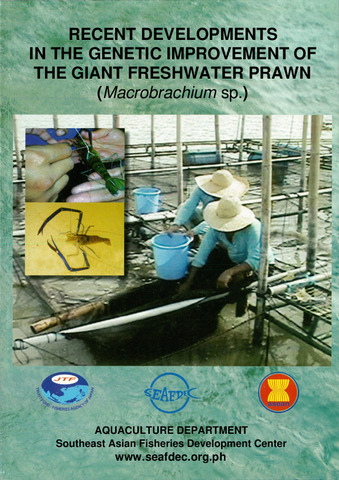
Recent developments in the genetic improvement of the giant freshwater prawn (Macrobrachium sp.)
(Aquaculture Department, Southeast Asian Fisheries Development Center, 2007)This publication contains results from the research project “Development of Genetically Improved Strain of Macrobrachium” covered by the Program on the Promotion of Sustainable Aquaculture in the ASEAN Region (previously known as Integrated Rural Aquaculture Program). It specifically includes activities from the inception of the project in 2002 up to 2005 under the Special Five-year Program on Sustainable Fisheries for Food Security in the ASEAN Region as well as research updates from 2006 to date. Project activities from 2006 to 2010 have been placed under the ASEAN-SEAFDEC Fisheries Consultative Group (FCG) collaborative mechanism with financial support from the Government of Japan Trust Fund. Dr. Koichi Okuzawa, AQD's Deputy Chief from 2005-2007, was project leader at the time the studies started until early 2007. -
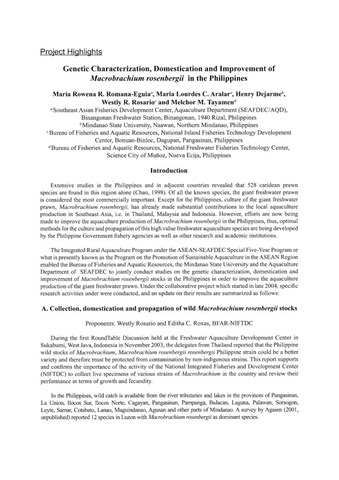
Genetic characterization, domestication and improvement of Macrobrachium rosenbergii in the Philippines
Romana-Eguia, Maria Rowena R.; ; ; ; (Aquaculture Department, Southeast Asian Fisheries Development Center, 2007)
Extensive studies in the Philippines and in adjacent countries revealed that 528 caridean prawn species are found in this region alone (Chan, 1998). Of all the known species, the giant freshwater prawn is considered the most commercially important. Except for the Philippines, culture of the giant freshwater prawn, Macrobrachium rosenbergii, has already made substantial contributions to the local aquaculture production in Southeast Asia, i.e. in Thailand, Malaysia and Indonesia. However, efforts are now being made to improve the aquaculture production of Macrobrachium rosenbergii in the Philippines, thus, optimal methods for the culture and propagation of this high value freshwater aquaculture species are being developed by the Philippine Government fishery agencies as well as other research and academic institutions. The Integrated Rural Aquaculture Program under the ASEAN-SEAFDEC Special Five-Year Program or what is presently known as the Program on the Promotion of Sustainable Aquaculture in the ASEAN Region enabled the Bureau of Fisheries and Aquatic Resources, the Mindanao State University and the Aquaculture Department of SEAFDEC to jointly conduct studies on the genetic characterization, domestication and improvement of Macrobrachium rosenbergii stocks in the Philippines in order to improve the aquaculture production of the giant freshwater prawn. Under the collaborative project which started in late 2004, specific research activities under were conducted, and an update on their results are summarized. -
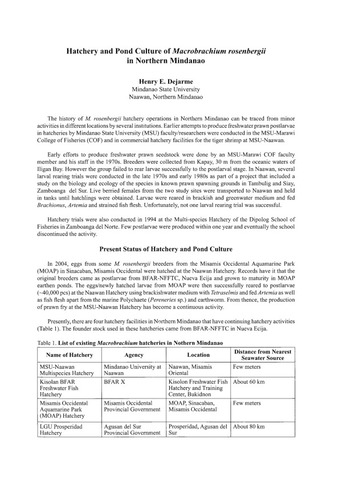
Hatchery and pond culture of Macrobrachium rosenbergii in northern Mindanao
(Aquaculture Department, Southeast Asian Fisheries Development Center, 2007)The history of M. rosenbergii hatchery operations in Northern Mindanao can be traced from minor activities in different locations by several institutions. Earlier attempts to produce freshwater prawn postlarvae in hatcheries by Mindanao State University (MSU) faculty/researchers were conducted in the MSU-Marawi College of Fisheries (COF) and in commercial hatchery facilities for the tiger shrimp at MSU-Naawan. Early efforts to produce freshwater prawn seedstock were done by an MSU-Marawi COF faculty member and his staff in the 1970s. Breeders were collected from Kapay, 30 m from the oceanic waters of Iligan Bay. However the group failed to rear larvae successfully to the postlarval stage. In Naawan, several larval rearing trials were conducted in the late 1970s and early 1980s as part of a project that included a study on the biology and ecology of the species in known prawn spawning grounds in Tambulig and Siay, Zamboanga del Sur. Live berried females from the two study sites were transported to Naawan and held in tanks until hatchlings were obtained. Larvae were reared in brackish and greenwater medium and fed Brachionus, Artemia and strained fish flesh. Unfortunately, not one larval rearing trial was successful. Hatchery trials were also conducted in 1994 at the Multi-species Hatchery of the Dipolog School of Fisheries in Zamboanga del Norte. Few postlarvae were produced within one year and eventually the school discontinued the activity. -
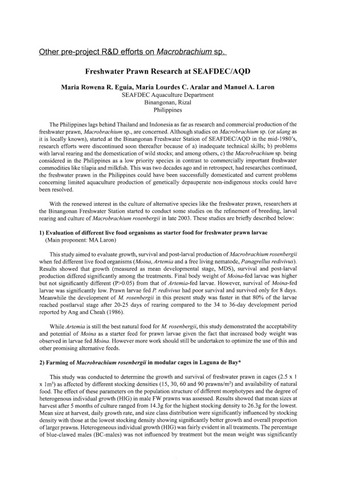
Freshwater prawn research at SEAFDEC/AQD
Romana-Eguia, Maria Rowena R.; ; (Aquaculture Department, Southeast Asian Fisheries Development Center, 2007)
The Philippines lags behind Thailand and Indonesia as far as research and commercial production of the freshwater prawn, Macrobrachium sp., are concerned. Although studies on Macrobrachium sp. (or ulang as it is locally known), started at the Binangonan Freshwater Station of SEAFDEC/AQD in the mid-1980’s, research efforts were discontinued soon thereafter because of a) inadequate technical skills; b) problems with larval rearing and the domestication of wild stocks; and among others, c) the Macrobrachium sp. being considered in the Philippines as a low priority species in contrast to commercially important freshwater commodities like tilapia and milkfish. This was two decades ago and in retrospect, had researches continued, the freshwater prawn in the Philippines could have been successfully domesticated and current problems concerning limited aquaculture production of genetically depauperate non-indigenous stocks could have been resolved. With the renewed interest in the culture of alternative species like the freshwater prawn, researchers at the Binangonan Freshwater Station started to conduct some studies on the refinement of breeding, larval rearing and culture of Macrobrachium rosenbergii in late 2003. These studies are briefly described here. -
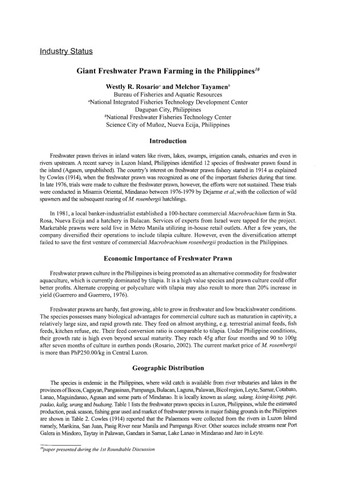
Giant freshwater prawn farming in the Philippines
(Aquaculture Department, Southeast Asian Fisheries Development Center, 2007)Freshwater prawn thrives in inland waters like rivers, lakes, swamps, irrigation canals, estuaries and even in rivers upstream. A recent survey in Luzon Island, Philippines identified 12 species of freshwater prawn found in the island (Agasen, unpublished). The country’s interest on freshwater prawn fishery started in 1914 as explained by Cowles (1914), when the freshwater prawn was recognized as one of the important fisheries during that time. In late 1976, trials were made to culture the freshwater prawn, however, the efforts were not sustained. These trials were conducted in Misamis Oriental, Mindanao between 1976-1979 by Dejarme et al., with the collection of wild spawners and the subsequent rearing of M. rosenbergii hatchlings. In 1981, a local banker-industrialist established a 100-hectare commercial Macrobrachium farm in Sta. Rosa, Nueva Ecija and a hatchery in Bulacan. Services of experts from Israel were tapped for the project. Marketable prawns were sold live in Metro Manila utilizing in-house retail outlets. After a few years, the company diversified their operations to include tilapia culture. However, even the diversification attempt failed to save the first venture of commercial Macrobrachium rosenbergii production in the Philippines. -
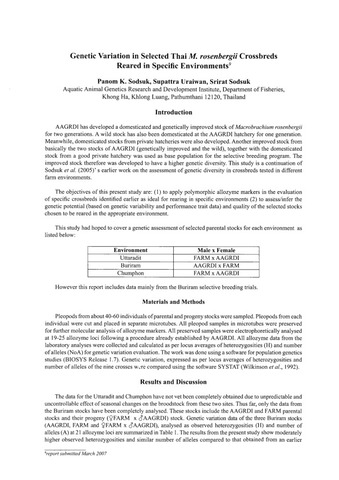
Genetic variation in selected Thai M. rosenbergii crossbreds reared in specific environments
(Aquaculture Department, Southeast Asian Fisheries Development Center, 2007)AAGRDI has developed a domesticated and genetically improved stock of Macrobrachium rosenbergii for two generations. A wild stock has also been domesticated at the AAGRDI hatchery for one generation. Meanwhile, domesticated stocks from private hatcheries were also developed. Another improved stock from basically the two stocks of AAGRDI (genetically improved and the wild), together with the domesticated stock from a good private hatchery was used as base population for the selective breeding program. The improved stock therefore was developed to have a higher genetic diversity. This study is a continuation of Sodsuk et al. (2005)’ s earlier work on the assessment of genetic diversity in crossbreds tested in different farm environments. The objectives of this present study are: (1) to apply polymorphic allozyme markers in the evaluation of specific crossbreds identified earlier as ideal for rearing in specific environments (2) to assess/infer the genetic potential (based on genetic variability and performance trait data) and quality of the selected stocks chosen to be reared in the appropriate environment. -
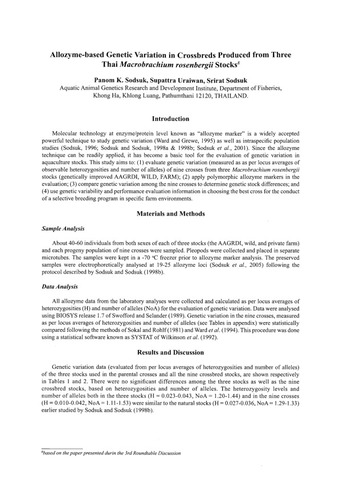
Allozyme-based genetic variation in crossbreds produced from three Thai Macrobrachium rosenbergii stocks
(Aquaculture Department, Southeast Asian Fisheries Development Center, 2007)Molecular technology at enzyme/protein level known as “allozyme marker” is a widely accepted powerful technique to study genetic variation (Ward and Grewe, 1995) as well as intraspecific population studies (Sodsuk, 1996; Sodsuk and Sodsuk, 1998a & 1998b; Sodsuk et al., 2001). Since the allozyme technique can be readily applied, it has become a basic tool for the evaluation of genetic variation in aquaculture stocks. This study aims to: (1) evaluate genetic variation (measured as as per locus averages of observable heterozygosities and number of alleles) of nine crosses from three Macrobrachium rosenbergii stocks (genetically improved AAGRDI, WILD, FARM); (2) apply polymorphic allozyme markers in the evaluation; (3) compare genetic variation among the nine crosses to determine genetic stock differences; and (4) use genetic variability and performance evaluation information in choosing the best cross for the conduct of a selective breeding program in specific farm environments. -
Recent updates on the selective breeding program for the genetic improvement of Macrobrachium rosenbergii in Thailand
(Aquaculture Department, Southeast Asian Fisheries Development Center, 2007)Although the giant freshwater prawn (Macrobrachium rosenbergii) has been domesticated in Thailand for decades, a suitable selective breeding program has yet to be applied. Good quality seeds for the Macrobrachium industry are therefore not regularly produced. One of the selective breeding programs on the improvement of growth performance of the domesticated strain has been carried out at the Aquatic Animal Genetics Research and Development Institute (AAGRDI), Department of Fisheries of Thailand. AAGRDI has developed improved and domesticated stock of Macrobrachium rosenbergii for two generations. Meanwhile, domesticated stocks from private hatcheries have also been acquired. There is therefore a need to develop another improved stock of this species basically from these two domesticated stocks together with a wild stock in order to improve the genetic diversity of the base population for further selective breeding. -
Preliminary growth comparison of three Macrobrachium rosenbergii stocks and their reciprocal crosses in four environments
(Aquaculture Department, Southeast Asian Fisheries Development Center, 2007)Three stocks of Macrobrachium rosenbergii namely, “AAGRDI” (Aquatic Animal Genetic Research and Development Institute), “FARM” (Petchaburi Farm) and “WILD” stocks were used for the selective breeding program. Generally, a good base population for genetic improvement should have high genetic variability and the stock should have traits that make them adaptable in each local environment. Therefore, all possible crosses of these three stocks should be evaluated on both performance traits and genetic diversity before selective breeding takes place. Hence, the proposed genetic improvement program was divided into two parts: (1) evaluation of growth performance of the three stocks and their reciprocal crosses in four environments; and (2) the establishment of improved economic traits in the best cross using a suitable selection procedure. The four environments used were: 20 m2 concrete pond located at the Aquatic Genetic Research and Development Research Center (AAGRDI), Pathumtani Province; and in 5 x 5 x 1.5 m2 net cages at the three Fisheries Test and Research Centers in Chumphon, Buriram and Uttaradit Provinces. The “AAGRDI” stock was the M. rosenbergii selected for improved growth rate for two generations in the AAGRDI environment (Uraiwan et al., 2003). The “FARM” stock originally came from a private hatchery in Petchaburi Province in 2002, which was also reared at the AAGRDI for one generation. The “WILD” stock was collected from the river in Chantaburi Province in 2002. This “WILD” stock has been domesticated under hatchery conditions at the AAGRDI for one generation. This experiment deals with the growth performance comparison and the genetic variations of these stocks conducted simultaneously by Sodsuk et al. (2005). -
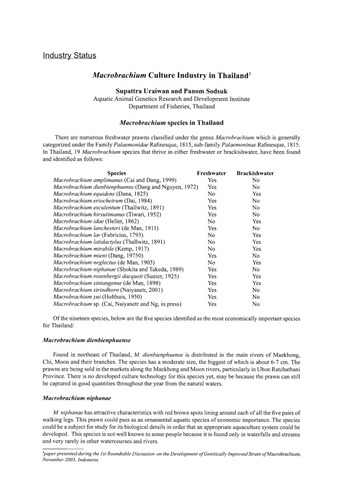
Macrobrachium culture industry in Thailand
(Aquaculture Department, Southeast Asian Fisheries Development Center, 2007)There are numerous freshwater prawns classified under the genus Macrobrachium which is generally categorized under the Family Palaemonidae Rafinesque, 1815, sub-family Palaemoninae Rafinesque, 1815. In Thailand, 19 Macrobrachium species that thrive in either freshwater or brackishwater, have been found and identified. Of the nineteen species, below are the five species identified as the most economically important species for Thailand: Macrobrachium dienbienphuense, Macrobrachium niphanae, Macrobrachium lanchesteri, Macrobrachium sintangense, and Macrobrachium rosenbergii dacqueti. -
Genetic characterization of GI Macro and freshwater prawns from Makassar-Sulawesi, Pangkalanbun-Kalimantan, Jambi-Sumatera, Sukabumi-Java using mtDNA CO-I markers
(Aquaculture Department, Southeast Asian Fisheries Development Center, 2007)The giant freshwater prawn (Macrobrachium rosenbergii) is a widely distributed indigenous species in Indonesia. The giant freshwater prawn from Pangkalanbun-Kalimantan has a big head, long claws and is yellow-green in color. On the other hand, those from Kuala Tungkal-Jambi has a small head, short claws and is gold in color (Sabar and Ali, 2001). The giant freshwater prawn is an important commodity that has been successfully fanned in Indonesia. It has been produced in several areas in West Java, i.e. Ciamis (Tambaksari, Parigi, Rancah and Pasir Nagara) and Tasikmalaya. Some commercial hatcheries (a local government hatchery, and seven private hatcheries) are found in Jogjakarta in East Java, freshwater prawns are cultured in brackishwater ponds. Freshwater prawn culture has also spread to some areas in the island of Bali, e.g. Gianyar, Klungkung, Buleleng and Tabanan, and in Riau, South Sulawesi and South Sumatera. Several natural populations of freshwater prawns are unique to Indonesia. To date, about 19 species are found in almost all of the islands in the archipelago (Holthuis, 1980). However, this potential genetic resource has not yet been fully used in freshwater aquaculture. Moreover, inspite the fact that the freshwater prawn culture technology has been developed and adopted in Indonesia, some problems are still plaguing the industry. To solve the problems of poor growth rate, disease susceptibility and small meat yield or edible portion, the Research Institute for Freshwater Aquaculture (formerly RIFF) started numerous research programs since 1996 to improve growth rate and the size of the edible portion of cultured prawns. The GI Macro, a selected strain of the giant freshwater prawn was developed by RIFA and has been distributed to farmers in Java. Varying results were obtained from growth trials conducted in different locations, hence another phase of selection is necessary to construct a wider and more improved base population using additional wild stocks. An assessment of the genetic background of the wild stocks is an important pre-requisite before the new selection program is initiated. Genetic variation is an important parameter to consider to enable the evaluation of individual fitness of the stock in the short term and their survival in the long term (Ferguson et al., 1995). In this study, genetic variation of giant freshwater prawns collected from Sulawesi, Kalimantan, Sumatera and Java were analyzed using molecular markers. -
Collection and evaluation of wild and farmed stocks of giant freshwater prawn in Indonesia
(Aquaculture Department, Southeast Asian Fisheries Development Center, 2007)Giant freshwater prawn is an important commodity that has been cultured successfully in Indonesia. Freshwater prawn farming has been adopted in several areas of West Java, i.e. Ciamis (Tambaksari, Parigi, Rancah and Pasir Nagara) and Tasikmalaya. Some commercial hatcheries are found in Jogjakarta, a local government hatchery, and seven private hatcheries. In East Java, freshwater prawns are farmed in brackishwater ponds. Freshwater prawn culture has also spread to some areas in Bali, e.g. Gianyar, Klungkung, Buleleng and Tabanan, as well as in Riau, South Sulawesi and South Sumatera. Inspite the development of freshwater prawn culture in Indonesia, some problems like slow growth rate, diseases and low carcass yield (small edible portion) remain unsolved. To address these problems, the Research Institute for Freshwater Aquaculture (formerly RIFF) started numerous genetic improvement programs since 1996 to improve growth rate and increase the animal’s edible portion. The genetically improved giant freshwater prawn stock named GI Macro (or Genetically Improved Macrobrachium), has been distributed to farmers particularly in Java. As reported in Nugroho and Emmawati (2004) and Nugroho et al. (2005), the performance of this stock in the different culture sites varied hence the development of a more suitable genetic base population with the use of other wild-sourced stocks in the continuous selection program was deemed necessary. An assessment of the genetic background of the wild stocks showed genetic divergence between giant freshwater prawns from western and eastern part of Indonesia (Nugroho et al., 2007). A performance evaluation of giant fresh water prawn stocks will be conducted to complement the above results in order to produce high quality giant freshwater prawn seedstock. -
Growth of GI Macro II strain in different locations
(Aquaculture Department, Southeast Asian Fisheries Development Center, 2007)A selective breeding program was conducted to improve freshwater prawns with the use of a synthetic population formed from numerous breeders collected from Tanjung Air (Bekasi), Kalipucang (Ciamis) and Musi (Palembang). The stock from Tanjung Air was collected in February 1995 with an average body weight of 70 g/pc. Individual selection was applied to this stock to increase its edible portion. The stock from Kalipucang was collected in June 1996 with an average weight of 72g. Index selection was used in this stock to improve growth rate and edible portion. After two steps of selection, the synthetic population was constructed from these two stocks and incorporated to the stock from Musi (ABW=75g, collected in May 1997). Family selection was then applied to the synthetic population. Thus, in 2001, a new breed of freshwater prawn has been developed and released to the farmers. This strain was the GI Macro or the Genetically Improved Macrobrachium rosenbergii (Emmawati et al., 2001). This study was conducted to evaluate the capability or performance of GI Macro in different locations/environments. Growth of the GI Macro was evaluated in three different locations : low (<10 m), moderate (150-250 m) and higher (>250 m) than the sea surface level. -
Giant freshwater prawn culture in Indonesia
(Aquaculture Department, Southeast Asian Fisheries Development Center, 2007)Indonesia is one of the countries in Asia with rich biodiversity, particularly in terms of the number of endemic freshwater aquatic organisms. Numerous indigenous freshwater fish species are found in Sumatera (30 spp.), Kalimantan (149 spp.), Java (12 spp.), and in Sulawesi (52 spp.) (Anonymous, 1994; Kottelat et al., 1993). These fauna are distributed in a total of 55 million hectares of freshwater resources consisting of lakes, dams, swamps, etc. The potential area for freshwater fish pond culture is estimated at 233,124 ha with a production of 334,085 mt/year (DGF, Indonesia. 2001), of which about 5,140 metric tons come from giant freshwater prawn culture. Freshwater prawns are farmed in West Java, i.e., in Ciamis (Tambaksari, Pamarican and Kalipucang) and Tasikmalaya. Government- and privately-owned commercial hatcheries are mostly found in Jogjakarta. In East Java, Macrobrachium culture is done in brackishwater ponds. Freshwater prawn culture has also spread to Bali Island, e.g., Gianyar, Klungkung, Buleleng and Tabanan. Indonesia is recognized as the center of origin of freshwater prawns and to date, there are about 19 species found in its natural waters (Holthuis, 1980). Despite the advanced development of freshwater prawn culture and the availability of natural prawn populations in Indonesia, slow prawn growth rate, diseases and small edible portion remain unsolved. In recent years, the Indonesian Government through its fisheries research agency, has focused on improving the commercial production of the freshwater prawn through genetic means. Thus in 2001, a genetically improved stock of freshwater prawn has been developed and released for culture to local prawn farmers. This stock or strain has been referred to as the GI Macro or the Genetically Improved Macrobrachium rosenbergii.