Journal Articles, Conference Papers and Book Chapters by SEAFDEC Staff: Recent submissions
Now showing items 1161-1180 of 1693
-
Arginine and threonine requirements of milkfish (Chanos chanos Forsskal) juveniles
(Elsevier, 1991)Growth studies were conducted with milkfish (Chanos chanos Forsskal) juveniles to determine the quantitative requirements for arginine and threonine. The amino-acid test diets (40% crude protein) contained casein and gelatin supplemented with crystalline L-amino acids to provide an amino-acid profile similar to milkfish protein except for the test amino acid. Each set of experimental diets consisted of six isonitrogenous and isocaloric diets containing graded levels of the essential amino acid to be tested. Break-points in the growth curves which represent the optimum dietary concentration of arginine and threonine for fish growth were determined by the broken-line regression method. Based on dry diet, the requirement of milkfish juveniles for arginine is 2.10% and for threonine, 1.80%. These values correspond to 5.25% arginine and 4.50% threonine when expressed as a percentage of dietary protein. -
Effect of tagging on maturation and survival of ablated Penaeus monodon in painted and unpainted tanks
Primavera, Jurgenne ; (San Carlos Publications, University of San Carlos, 1989)
A study was conducted to determine the effects of tags and tank color on reproductive performance and survival of pond-reared Penaeus monodon after eyestalk ablation. In 1986, the best over-all reproductive performance was frm eyestalk-tagged females in black tanks. Because of varying water flow through rates and loss of carepeace tags, statistical analysis was not possible. The 1987 study showed that tagging and tank color had no effect on maturation but survival rates of tagged (83.5%) in black and unpainted tanks. The 1986 results also showed lower survival rates of eyestalk-tagged females (31.2-59.0%) compared to untagged ones (90.0%). Monitoring of rematurations (by means of eyestalk tags) showed that among ablated females, 64% spawned once, 35% a second time, and 12% a third time with a maximum of seven spawns from a single female. Uniform spawn sizes characterized first and repeat spawns but hatch rate decreased with each consecutive spawns.
; (San Carlos Publications, University of San Carlos, 1989)
A study was conducted to determine the effects of tags and tank color on reproductive performance and survival of pond-reared Penaeus monodon after eyestalk ablation. In 1986, the best over-all reproductive performance was frm eyestalk-tagged females in black tanks. Because of varying water flow through rates and loss of carepeace tags, statistical analysis was not possible. The 1987 study showed that tagging and tank color had no effect on maturation but survival rates of tagged (83.5%) in black and unpainted tanks. The 1986 results also showed lower survival rates of eyestalk-tagged females (31.2-59.0%) compared to untagged ones (90.0%). Monitoring of rematurations (by means of eyestalk tags) showed that among ablated females, 64% spawned once, 35% a second time, and 12% a third time with a maximum of seven spawns from a single female. Uniform spawn sizes characterized first and repeat spawns but hatch rate decreased with each consecutive spawns. -
Large scale hatchery production of Penaeus monodon using natural food and artificial diets
(Society of Israeli Aquaculture and Marine Biotechnology, 1991)Natural food in combination with either SEAFDEC formulated or other commercial larvae diets was tested for large scale production of Penaeus monodon postlarvae. Two trials of 3 treatments each, 2 replications of each treatment, were conducted in 10 m3 circular concrete tanks. Shrimps were reared from nauplii to postlarvae. Dietary treatments for trial I included:(a) natural food (NF) alone, (b) NF+ commercial plankton substitute (PS) and (c) NF+ SEAFDEC diet (SD).For trial II, commercial powder diets SP or SMP were added:(a) NF + SP, (b) NF + PS + SP + SMP and (c) NF + SD + SP + SMP. Larvae survival was significantly higher in treatments containing the SEAFDEC diets than in the treatments receiving natural food alone (trial I) or natural food in combination with SP (trial II). Larval development was faster in the group fed the SEAFDEC diet; larvae in these groups metamorphosed into postlarvae an average of 1-2 days earlier than groups fed other diets. The presence of either SP or SMP did not improve the efficiency of the feeds. Results showed that larvae performance was affected by the nutrient composition of the diets and that by using proper feeding techniques and management of water quality, large scale hatchery production of P. monodon using natural food in combination with the SEAFDEC diet or plankton substitute is possible. -
Increasing milkfish (Chanos chanos) yields in brackishwater ponds through increased stocking rates and supplementary feeding
(Asian Fisheries Society, 1990)Brackishwater milkfish culture in the Philippines is normally practiced at fish stocking rates of 2,000-3,000 ha-1 with fertilizers as the sole nutrient input. Supplementary feeding is not common. We stocked two 1-ha ponds with 6,000 fish and another two 1-ha ponds with 9,000 fish with an average weight of 2 g. The fish at each stocking rate were given diets with two different energy levels (2,950 and 3,265 kcal•kg-1) at 3% body weight, on the second and third month of culture. An average of 0.69 and 1.04 t were produced at 6,000 and 9,000 ha-1, respectively. Low temperature and dissolved oxygen levels appeared to limit the growth of milkfish masking the effect of dietary energy. The results suggest that supplementary feeding can have a marked effect on milkfish yield when stocking rates are 6,000 ha-1 or above. -
Acute toxicity of potassium permanganate to milkfish fingerlings, Chanos chanos
(Springer Verlag, 1989)Potassium permanganate (KMnO4) is a strong oxidizing agent and is commonly used in aquatic systems to improve available oxygen, treat infectious diseases and parasites, detoxify fish poisons, and control algae. The following study was undertaken to determine the 24- and 96-h median lethal concentration (LC50) of milk fish (Chanos chanos)) fingerlings to KMnO4. The study was also designed to evaluate the histopathological response of fish tissues to KMnO4 but was reported in another paper (Cruz and Tamse 1986). -
Lipid and fatty acid composition of brackishwater- and freshwater-reared milkfish (Chanos chanos Forskal)
(Elsevier, 1991)Lipid and fatty acid composition of the various sections of brackishwater- and freshwater-reared milkfish were determined by chromatographic methods. Lipids consisted mainly of the neutral type, which in turn was composed primarily of triglycerides and cholesterol esters. Palmitic and stearic acids were the predominant saturated fatty acids in both types of fish, although the brackishwaterreared milkfish contained more palmitic acid and the freshwater-reared milkfish more stearic acid. Unsaturated fatty acids of C16 and C18 were more characteristic of the freshwater-reared milkfish lipid, while those of C20 and C22 were the major acids of the brackishwater-reared milkfish lipid. Saturation and unsaturation in the fatty acid composition characterized both types of fish although the brackishwater-reared milkfish lipids had fatty acids of higher unsaturations (C20 and C22). -
Occurrence and pathology of Penaeus monodon baculovirus infection in hatcheries and ponds in the Philippines
; ; ; ; Tendencia, Eleonor (Society of Israeli Aquaculture and Marine Biotechnology, 1991)
Samples from Penaeus monodon hatcheries (2-3 day old larvae or Zoea 1 to 34 day old post larvae or PL34) and ponds (15 to 159 days old in the pond) were histologically examined for the presence of eosinophilic occlusion bodies in hypertrophied nuclei of the hepatopancreas which is indicative of P. monodon baculovirus infection. The earliest stage found infected in the hatcheries was PL3. Infected shrimp from ponds had slow growth rates and generally pale yellow to reddish brown hepatopancreata. The infection was also characterized by the necrosis and degeneration of the hepatopancreatic tubules with secondary bacterial invasion. -
Induced spawning of rabbitfish, Siganus guttatus (Bloch) using human chorionic gonadotropin (HCG)
(Elsevier, 1991)A positive spawning response of rabbitfish females to two injections of HCG at 2 I.U./g BW given 24 h apart was observed. The latency period after hormone injection was inversely related to the initial oocyte size. Minimum initial oocyte size required for spawning without hormone injection was 0.46 mm. HCG induction of spawning was necessary for females with initial oocyte size of ≤0.45 mm. Number of eggs spawned (424000), fertilization rate (96%), and hatching rate (59%) did not differ from those of naturally spawned fish. -
Economic analysis of an integrated milkfish broodstock and hatchery operation as a public enterprise
(Elsevier, 1991)The National Bangus (Milkfish) Breeding Program of the Philippines, which was launched by the Philippine government in 1981, had succeeded in spawning milkfish in captivity and in rearing the eggs to fry that were stockable in ponds. The physical productivity and economic viability of an integrated milkfish broodstock and hatchery as a public enterprise is analyzed, using SEAFDEC research findings as bases for analysis. Discounted cash flow computations show the repayment schedule for investments in structures and equipment, and operations and maintenance expenses for both broodstock and hatchery operations covering a period of 15 years. Revenues came from the sales of fry. The analysis was based on an annual stocking of 100 milkfish (200–250 g/piece) per cage with a diameter of 10 m. Egg production started during the fifth year. Investment in the hatchery facilities started during the fourth year and expansion occurred in the subsequent years to accommodate the eggs produced for rearing to the fry stage. Economic indicators, net present value (NPV) and internal rate of return (IRR), showed negative figures. The trend, however, was upward, starting during the sixth year of operation. Sensitivity analysis was done to determine the effects of changes in operational efficiencies, such as survival rates and stocking densities to the return on investment (ROI) in private hatcheries. -
Isolation and characterization of vitellin from the ovary of Penaeus monodon
Quinitio, Emilia T.; ; ; (International Society of Invertebrate Reproduction and Development, 1990)
Female-specific protein (FSP, vitellogenin) in Penaeus monodon hemolymph and its related ovarian protein (vitellin, lipovitellin) were identified and characterized using electrophoretical and immunological procedures. The purification of vitellin from mature ovaries was carried out using hydroxylapatite and Sepharose 6B columns. Results indicated that there are two proteins specifically existing in the hemolymph of the mature female which are immunologically identical to ovarian protein. These are absent in the male. The isolated vitellin has a molecular weight of approximately 540 kDa and is composed of 4 major (polypeptide) subunits, 74, 83, 104 and 168 kDa and 1 minor (polypeptide) subunit, 90 kDa. The purified protein stained positively with periodic acid-Schiff and Sudan black B and thus is a glycolipoprotein. Results of double immunodiffusion demonstrate the cross-reactivity of P. monodon vitellin antiserum with the ovarian extract from mature females of Penaeus indicus, Penaeus merguiensis and Penaeus semisulcatus, but not with Pandalus kessleri, indicating that there is no antigenic difference at species level in Penaeidae. -
Ovarian maturation stages of the wild giant tiger prawn, Penaeus monodon Fabricius
(Elsevier, 1989)A qualitative and quantitative study of the ovarian maturation stages of wild-caught Penaeus monodon was conducted to refine the existing method of staging. For industrial purpose, measuring the ovarian width at the first abdominal region can minimize arbitrariness in staging. A width of 20 mm indicates readiness for spawning while reproductive performance is improved when ovarian width is 30 mm or more. Based on histology, the usual 6 to 8 stages of development can be reduced to four stages: previtellogenic, vitellogenic, cortical rod, and spent. The previtellogenic stage (P) is characterized by the predominance of oogonia and primary oocytes in the chromatin nucleolus and/or perinucleolus stage. The vitellogenic stage (V) is marked by the presence of yolky oocytes. The cortical rod stage (C) is distinguished by the appearance of yolky oocytes with spherical or rod-like bodies at the peripheral cytoplasm. The spent stage (S) can be distinguished by the presence of few oocytes with yolky substance and/or cortical rods, thicker layers of follicle cells, and few darkly-stained, irregularly shaped primary oocytes. Individuals classified as stages II+ and III+ showed similarity in size and shape of all lobes in the posterior thoracic region, and histologically, corresponded to the revised stages V and C, respectively. Histochemical staining shows that glycoproteins and lipids are absent in the primary oocytes and present in yolky oocytes. Glycoproteins but not lipids occur in the cortical rods. Analysis of variance showed significant differences in mean gonad weight and gonadosomatic index values but not in the mean body length and body weight values in stages P to C. Uniformity in the number, stage and composition of oocytes in the four regions of the ovary at each stage showed that stage of ovarian maturity in wildprawns can be represented by any region of the ovary. Differences in the oocyte size frequency and mean values of average and maximum oocyte diameter in the four stages showed that these are good indicators of stage of maturation in wild P. monodon. -
Supplemental feeding of Penaeus monodon juveniles with diets containing various levels of defatted soybean meal
(Elsevier, 1990)Varying levels of defattedsoybeanmeal DSM (15, 25, 35, 45 and 55%) in supplementaldiets with approximately 40% crude protein and 10% crude fat were fed to tiger prawn juveniles in 1 m×1 m×1 m net cages set on the bottom of a 1-ha earthen pond. Prawns were stocked at 10 or 20 per m2 and fed the various diets for 3 months. Prawns were also stocked outside the cages at a stocking density of 0.5/m2. Weight gains were significantly affected by supplementalfeeding and stocking rate. Prawns that were stocked outside the cages weighed 13.2 g upon termination whereas those stocked at 10/m2 and 20/m2 were twice as heavy. Higher weight gains were recorded for prawns stocked at 10/m2 compared to those stocked at 20/m2. There were no significant differences in weight gains of prawns fed varying levels of soybeanmeal at stocking densities of 10 or 20/m2, indicating that soybeanmeal can be incorporated into the ration at high levels. At both stocking rates, survival rates were relatively high and were not significantly different. Although no significant differences in growth were observed due to the different levels of defatted soybean meal in the diets, the diet with 35% DSM and 16% Peruvian fish meal gave the best yield. -
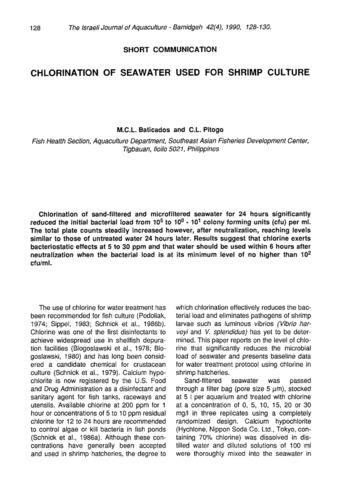
Chlorination of seawater used for shrimp culture
(SIAMB, 1990)Chlorination of sand-filtered and microfiltered seawater for 24 hours significantly reduced the initial bacterial load from 105 to 100 - 101 colony forming units (cfu) per ml. The total plate counts steadily increased however, after neutralization, reaching levels similar to those of untreated water 24 hours later. Results suggest that chlorine exerts bacteriostatic effects at 5 to 30 ppm and that water should be used within 6 hours after neutralization when the bacterial load is at its minimum level of no higher than 102 cfu/ml. -
The effect of stunting on growth, survival, and net production of milkfish (Chanos chanos Forsskal)
(Elsevier, 1988)The seasonal abundance of milkfish fry in the Philippines has led to the practice of buying a sufficient supply during the peak season to compensate for the shortage during slack periods. Fry that are not immediately grown out are crowded and stunted in transition ponds until they are transferred to rearing ponds. Milkfish farmers believe that stunted fingerlings grow faster than newly grown ones and therefore yield extra croppings. To assess the efficiency of production schemes, stunted and non-stunted milkfish fingerlings were cultured in twelve 144-m2 ponds for a 3-month period. The treatments employed were: Treatment I, 2-month-old fingerlings; Treatment II, 3-month-old fingerlings; and Treatment III, 6-month-old fingerlings, with the initial weights of 3.3 g, 7.8 g, and 43.1 g, respectively. Survival, netproduction, cumulative and monthly weight gains did not differ significantly (P > 0.05) among the three treatments. The results indicate that stunting did not illicit a significant increase, nor did it adversely affect the growth, survival, and netproduction of milkfish in a straight culture system. Stunting can therefore be practised by farmers to provide an adequate supply of fingerlings for year-round operation. -
Growth and mid-gut cells profile of Penaeus monodon juveniles fed water-soluble-vitamin deficient diets
(Elsevier, 1989)Growth and changes in the mid-gut cell morphology of Penaeus monodon juveniles were evaluated after feeding for 35 days with semi-purified diets deficient in water-soluble vitamins. Diets were prepared by deleting one vitamin at a time from the vitamin supplement consisting of cyanocobalamine, folic acid, thiamine, riboflavin, pyridoxine, niacin, choline, inositol and ascorbic acid. Controls were the complete vitamin diet (control diet 1) and the no vitamin diet (control diet 2). Growth rate was poorest for treatment without vitamin supplement and the inositol and choline-deficient diets. Enhanced growth was observed in prawns fed with the riboflavin-deficient diet. All treatments except control diet 1 showed histopathological changes in the mid-gut cells. Detachment or destruction of the epithelial cells were observed in most cases but more severely in treatments without vitamin supplement followed by inositol, choline and vitamin C. -
Linoleic (ω6) and linolenic (ω3) acids in the diet of fingerling milkfish (Chanos chanos Forsskal)
(Elsevier, 1988)Feeding trials were conducted to determine the effects of linoleic acids on growth, survival, fatty acid composition and liver histology of milkfish. Five isocaloric semi-purified diets were formulated, either lipid-free or containing the following lipids: 7% lauric acid (LA), 6% LA + 1% linoleic, 6% LA + 1% linolenic acid, and 6% LA + 0.5% linoleic + 0.05% linolenic acids, and fed to milkfish with an average weight of 1.55 ± 0.25 g. there were no significant differences in growth or survival between fish fed the lipid-free and the LA diets in the five treatments tested. However, growth of fish fed with linoleic and linolenic acids was significantly higher (P<0.05) than that obtained in fish fed lipid-free and LA diets. The best growth response (233%) was attained with fish fed linolenic acid alone. Fatty acid analyses of the total lipid showed that lipid-free and LA diets increased the levels of monoenoic acids in the fish. The addition of linoleic and linolenic acids, alone or in combination, suppressed the levels of these monoenes and increased the levels of polyunsaturated fatty acids (PUFA). Histological analyses using light microscopy revealed slight abnormalities in the hepatocytes of fish fed lipid-free and LA diets. Both linoleic and linolenic acids are effective for good growth and survival of fingerling milkfish; however, the effect of linolenic acid on the growth of this species is better than that of linoleic acid. -
Hatchery production of Oreochromis niloticus L. at different sex ratios and stocking densities
(Elsevier, 1988)The influence of various sex ratios and stocking densities on hatchery production of Nile tilapia, Oreochromis niloticus L., was studied in land-based (concrete tanks) and lake-based (hapa nets) systems. In both hatchery systems, egg and fry production was maximum at a sex ratio of 4:1 females to males and a density of 4 females per m2. Seed production varied significantly among treatments at different periods of the year. In concrete tanks, significantly high seed production of 12.98 and 11.77 eggs and fry per spawner per day was obtained in March and August, respectively. In hapa nets, irrespective of sex ratios, 10.18 seeds per spawner were collected daily in March. In relation to the broodstock density in concrete tanks, significantly bigger daily harvests of 13.41 and 13.00 eggs and fry per spawner were produced in late February and March, respectively. In hapa nets, daily harvests of 8.95 and 7.74 eggs and fry per spawner were the highest seed production levels which occurred in April and March, respectively. Seed production was significantly higher in concrete tanks than in hapa nets while insignificant differences (P>0.05) were found among sex ratio and broodstock density treatments. -
Evaluation of organic and inorganic fertilizers in brackishwater milkfish ponds
(Elsevier, 1989)The study was conducted in twelve 144-m2 ponds to evaluate the effect of different organic and inorganic fertilizers on the growth, survival, gross production, and profitability of marketable milkfish. The following treatments were used: Treatment I, SEAFDEC traditional fertilization practice (16-20-0 at 50 kg/ha and 45-0-0 at 15 kg/ha); Treatment II, half-dosage of Treatment I; Treatment III, chicken manure at 0.5 ton/ha; and Treatment IV, MASA (processed from agricultural and industrial wastes) fertilizer at 0.5 ton/ha. All treatments were applied once in every 2 weeks. No significant difference (P > 0.05) existed in the harvest and production of milkfish among the treatments. However, economic indicators such as return-on-investment (ROI), payback period, and marginal analysis ranked the performance of the fertilizer treatments in the order of I, II, III and IV. Fish kills occurred in three ponds applied with chicken manure and MASA fertilizer. This could have been due to a heavy build-up of organic matter in the pond bottom which led to the collapse of the benthic algal community, depletion of dissolved oxygen and the presence of hydrogen sulfide. It is therefore suggested that a lower dosage of organic fertilizer should be applied in ponds especially during the rainy season. -
Studies on the chemical control of luminous bacteria Vibrio harveyi and V. splendidus isolated from diseased Penaeus monodon larvae and rearing water
(Inter Research, 1990)The minimum inhibitory concentrations (MICs) and minimum bactericidal concentrations (MBCs) of 24 drugs for luminous bacteria Vibrio harveyi and V. splendidus were determined. Only chloramphenicol, sodium nifurstyrenate and the nitrofurans (furazolidone, nitrofurazone, nitrofurantoin and Prefuran) showed relatively low MICs and MBCs (<25 µg/ml-1). The bacteria showed varied responses to chloramphenicol and Prefuran and low sensitivity to oxytetracycline. Chloramphenicol, oxytetracycline and Prefuran are commonly used in shrimp hatcheries. Shrimp larvae showed high survival rates and active swimming movement after 24 h exposure to in vivo bactericidal doses of chloramphenicol, Furacin, nitrofurantoin (protozoa only), oxytetracycline (nauplius only), Prefuran (mysis only) and sodium nifurstyrenate, but the drugs caused deformities in the carapace, rostrum, and setae. Chemical control of luminous vibriosis among shrimp larvae appears limited, based on the efficacy of existing and readily available drugs, because of the possible development of resistant strains of bacteria and the limited tolerance of the shrimp larvae to the drugs. -
Comparison of various water replenishment and fertilization schemes in brackishwater milkfish ponds
(Blackwell Publishing, 1989)The study was undertaken to determine the optimum combination of the frequency of water replenishment and fertilization that can yield the highest growth, survival, and gross production of milkfish. Results indicated that mean body weight and survival were not significantly different (P > 0.05) among the treatments. Gross fish production was higher in biweekly fertilization if considered as a single factor. However, when this was in combination with the weekly or biweekly water replenishment, similar gross fish production was attained. In any case, because biweekly fertilization has a better effect than a weekly schedule, the former should be used in combination with any other level of replenishment. A weekly water replenishment, however, is impractical in big pond areas of 5–10 ha compartments which are still common in some milkfish ponds in the Philippines. Therefore, biweekly water replenishment and fertilization with 16–20–0 at 50 kg ha-1 would be reasonable.