
Monographs
Browse by
Recent Submissions
-
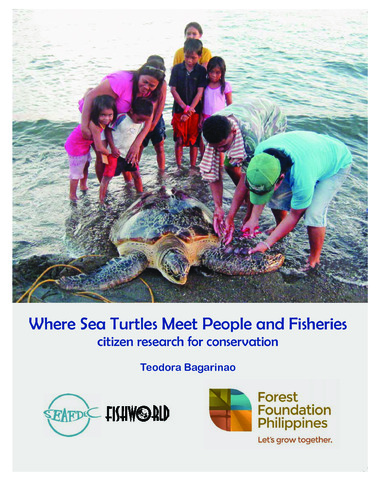
Where sea turtles meet people and fisheries: Citizen research for conservation
Bagarinao, Teodora (Aquaculture Department, Southeast Asian Fisheries Development Center; Forest Foundation Philippines, 2025)
Since 2000, SEAFDEC FishWorld has served as a focal point for community engagement in marine biodiversity conservation, with a particular emphasis on sea turtle protection in the waters surrounding Panay and Guimaras Islands. This book presents the outcomes of a long-term initiative involving the documentation, tagging, release, and care of sea turtles incidentally captured in local fisheries. It provides a permanent record of 335 sea turtles, including documentary photographs of 214 individuals, and offers extensive data and new insights into the status and ecology of these endangered species in Philippine waters. The volume details the interactions between sea turtles, fishing gear, and coastal communities, highlighting collaborative efforts among FishWorld, fishers, and government agencies to promote conservation and reduce turtle capture. Written for fishers, conservation practitioners, government officers, educators, and the general public, the book combines scientific information with accessible, pictorial presentation. It contributes significantly to national efforts to raise awareness, foster community participation, and strengthen the protection of sea turtles and the marine ecosystems that sustain them.
(Aquaculture Department, Southeast Asian Fisheries Development Center; Forest Foundation Philippines, 2025)
Since 2000, SEAFDEC FishWorld has served as a focal point for community engagement in marine biodiversity conservation, with a particular emphasis on sea turtle protection in the waters surrounding Panay and Guimaras Islands. This book presents the outcomes of a long-term initiative involving the documentation, tagging, release, and care of sea turtles incidentally captured in local fisheries. It provides a permanent record of 335 sea turtles, including documentary photographs of 214 individuals, and offers extensive data and new insights into the status and ecology of these endangered species in Philippine waters. The volume details the interactions between sea turtles, fishing gear, and coastal communities, highlighting collaborative efforts among FishWorld, fishers, and government agencies to promote conservation and reduce turtle capture. Written for fishers, conservation practitioners, government officers, educators, and the general public, the book combines scientific information with accessible, pictorial presentation. It contributes significantly to national efforts to raise awareness, foster community participation, and strengthen the protection of sea turtles and the marine ecosystems that sustain them. -
The pawikan album: The sea turtles captured around Panay and Guimaras Islands, Philippines
Bagarinao, Teodora; ; (Aquaculture Department, Southeast Asian Fisheries Development Center, 2010)
SEAFDEC FishWorld worked with fishers and government officers to document 93 sea turtles captured by fishing gears along the coasts of Panay and Guimaras Islands, Philippines in 2000-2009: three leatherbacks Dermochelys coriacea (128-150 cm curved carapace length), two loggerheads Caretta caretta (77 cm), 18 olive ridleys Lepidochelys olivacea (47-69 cm), 18 hawksbills Eretmochelys imbricata (20-89 cm), and 52 green turtles Chelonia mydas (30-108 cm). Most green turtles were caught in near shore fish corrals, and most olive ridleys by gill nets and long lines. Of the 18 hawksbills, 2 adults were caught in fish corrals, 3 juveniles were entangled in nets in Iloilo Strait, 6 were pets off our people,and 7 were captives at a turtle feeding station near a known hawksbill nesting site in Lawi, Guimaras. Sixty documented turtles were released, 47 of them with monel or inconel tags of the Pawikan Conservation Project, Department of Environment and Natural Resources. The others died from entanglement, serious injuries, slaughter for market, and diseases. Six female green turtles had multiple fibropapillomas; two died, three were released, and the latest one healed well after the surgical removal of several large tumors and was released. One green turtle brought to FishWorld has advanced shell rot, is unable to submerge, but is doing well on a diet of red seaweed Gracilaria. Three pet hawksbills were retrained for life at sea; one was released after 17 months, another after 57 months, but one is still at FishWorld as Conservation Ambassador. The most important result of FishWorld's work in the past 10 years is that many captured sea turtles were checked for health condition, treated where necessary or possible, tagged, and released back to sea. In addition, data on 93 sea turtles were gathered that can be used in the continuing effort to monitor the locations, risks and threats, health and diseases, and movements of these endangered species. -
Beach forest species and mangrove associates in the Philippines
Primavera, Jurgenne; (Aquaculture Department, Southeast Asian Fisheries Development Center, 2012)
This new publication supported by UNESCO’s Man and Biosphere Programme introduces researchers and the general public to beach forest species and mangroves associates and describes their medicinal, traditional and commercial uses based on recent research and the older, hard-to-access literature. The shorelines and riverbanks of the Philippines were among the first sites opened for human settlement. Not surprisingly, vegetation in the coastal forest was the first to disappear, followed by mangroves and other forest types. Due to their early loss, beach forests are not well studied as other flora and therefore not familiar to the average Filipino. The 2004 Indian Ocean tsunami, and sea-level rise associated with global warming, have highlighted the role of beach forest-mangrove greenbelts in conferring protection on coastal communities. The publication is a collection of 140 species both familiar and poorly known, with around 100 treated exhaustively including scientific names, English names, local/regional names, botanical descriptions and folk uses. -
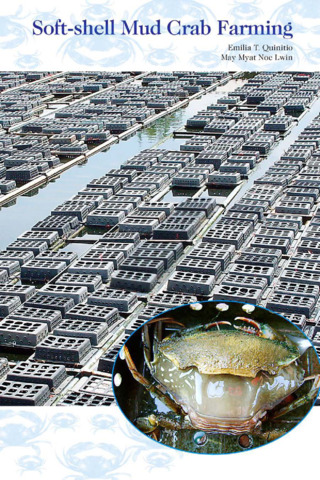
Soft-shell mud crab farming
Quinitio, Emilia T.; (Aquaculture Department, Southeast Asian Fisheries Development Center, 2009)
Farming of soft-shell mud crab (Scylla serrata) has been practiced for some time now in a number of Asian countries. Because of its profitability, there is an increasing interest to engage in this aquaculture business venture. Crabs collected from the wild are the major source of stocks for farming. However, the use of hatchery reared crabs is encouraged so as not to deplete the wild population. Although communal rearing of crabs for soft-shell crab production in cages or in tanks is also practiced, this manual describes the individual rearing of crabs in boxes based on experience in Ranong, Thailand. The techniques can be modified depending on the site. This manual provides a section on the biology of mud crab that includes species identification, molting, and autotomy and regeneration which discloses important information related to the management of soft-shell crab farming. This is followed by a detailed discussion on the setting up and management of the farm for soft-shell crabs. The basis for the computation of cost and return analysis is included under the section on profitability. Cost of materials and labor varies in each country hence only the materials needed and other technical assumptions are listed as basis for computation. -
Series: ICLARM technical reports; 1 | SEAFDEC Aquaculture Department contribution; No. 93
The economics of the milkfish fry and fingerling industry of the Philippines
(International Center for Living Aquatic Resources Management; Aquaculture Department, Southeast Asian Fisheries Development Center, 1981)The fry and fingerling industry of the milkfish (Chanos chanos Forskal) in the Philippines is alleged to suffer from certain imperfections. Primary among these are an annual shortage of catch necessary to meet the stocking requirements of the 176,000 ha of fishponds; high fry mortality rates during transp0rt;failure of the pricing system to perform its spatial and form allocative functions; and exploitation of fry gatherers and pond operators by middlemen and nursery pond operators who form the core around which the whole fry and fingerling industry has developed. These alleged imperfections provide the rationale for various government policies affecting the fry and fingerling industry. This study indicates a higher level of industry performance than hitherto supposed. In 1974, an estimated 1.35 billion fry were caught, adequate to meet annual stocking requirements. Allegations of fry shortage were based on simultaneous underestimation of catch and overestimation of stocking requirements, and were traced to temporary price increases resulting from expanded fishpen area, which subsequently declined. Fry storage and transport mortality rates of 8.7% and 6.6%, respectively, compared with a mortality rate of 54% during rearing, indicated that major technical inefficiencies arise in fishponds rather than in the distribution system. Of every 100 fry caught, 38 are harvested at marketable size. Monthly average fry prices among 17 major trading regions were significantly correlated, indicating a high level of information flow in the industry. An examination of the concession system which restricts first sale opportunities of gatherers indicated that concessionaires are unable to capture their full monopsony advantage due to the "competitive fringe" of smugglers. Rather than exploitation, the concession system is a form of indirect municipal tax on fry gatherers. Since the fry industry is a 57-million-peso-per-year industry upon which approximately 170,000 people directly and indirectly depend, it is suggested that the location of future milkfish hatcheries and timing of production be planned such that they complement rather than displace the natural fry fishery and distribution system. -
Nutrition in tropical aquaculture: Essentials of fish nutrition, feeds, and feeding of tropical aquatic species
(Aquaculture Department, Southeast Asian Fisheries Development Center, 2002)This book is intended to teach undergraduate students the essentials of aquaculture nutrition, feed formulation, and feeding management. It serves as a reference book for researchers in aquaculture, aquaculturists, fish farmers, and aquaculture nutritionists. For the basic understanding of the materials presented, it is essential that the students, teachers, and researchers have a good background in chemistry, fish biology, or fisheries. The book covers the subject areas of known nutrient requirements, effects of nutrient deficiencies on various aquatic species, nutrient sources, digestibility, and digestive physiology. Feed formulation, processing and storage, evaluation and quality control, feeding management, as well as the economics of feeding are included. Aspects on feeds and feeding related to the conservation of the aquatic environment are also dealt with. Each chapter of this book has common features such as an introduction, basic concepts, and a summary. Both the basic and practical aspects of fish nutrition are included to give the students and allow the readers who are unfamiliar with the topics a clear understanding and knowledge of these concepts. Study questions at the end of each chapter serve as a guide to summarize and impress on the students the salient points of the subject matter in each chapter. To easily comprehend the subject matter, there is an appendix containing the analytical methods and a glossary of technical terms. The users particularly the students are encouraged to broaden their knowledge by referring to the list of references and suggested readings at the end of each chapter. -
Seaweeds of Panay
(Aquaculture Department, Southeast Asian Fisheries Development Center, 2006)This practical book on the seaweeds of Panay, Philippines, acquaints and provides information to members of the academe and research institutions, policy makers, fishermen and businessmen regarding the taxonomy, distribution, ecology and economic importance of these resources. It consists of 4 major parts: (1) Introduction, which reviews the literature, habitat, distribution, morphological structure and reproduction; 2) Classification, which describes the classes to which the seaweeds generally belong; 3) Collection and preservation, which explains the procedure used in treatment of specimens; and, 4) Taxonomic list. A glossary is included, covering technical terms used. All species listed and described in this book are macrobenthic and were collected in Panay and Guimaras Islands. -
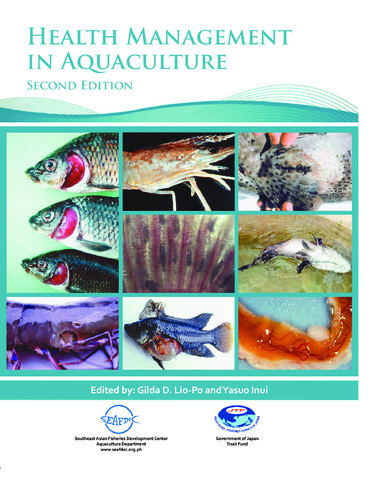
Health management in aquaculture
(Aquaculture Department, Southeast Asian Fisheries Development Center, 2010-07)A textbook on diseases of cultured warmwater fish and shrimps in the Philippines. Eleven chapters cover essential information on the basic principles of disease causation, major diseases of cultured fish and crustaceans, particularly shrimps, and methods of prevention and control. Emphasis is made on major diseases that occur in the Philippines and other countries in the Asian region. Included also are topics on harmful algae, immunology and molecular biological diagnostic techniques. -
Health management in aquaculture
(Aquaculture Department, Southeast Asian Fisheries Development Center, 2001)A textbook on diseases of cultured warmwater fish and shrimps in the Philippines. Eleven chapters cover essential information on the basic principles of disease causation, major diseases of cultured fish and crustaceans, particularly shrimps, and methods of prevention and control. Emphasis is made on major diseases that occur in the Philippines and other countries in the Asian region. Included also are topics on harmful algae, immunology and molecular biological diagnostic techniques. -
Training handbook on rural aquaculture
(Aquaculture Department, Southeast Asian Fisheries Development Center, 2009)This handbook covers four important factors in undertaking sustainable aquaculture livelihood namely: (1) aquatic resources and environment; (2) socioeconomic attributes of fishing communities; (3) appropriate and economically feasible aquaculture technologies; and, (4) policy issues and institutional arrangements related to a balanced fishery management and aquaculture livelihood. The long-term outcomes of these strategies shall be measured in terms of environmental sustainability, economic uplift of the community, and equitable distribution of benefits among different sectors of the community. -
The Malalison experience: empowering an island community in west central Philippines
; ; ; Amar, Edgar C.; (Aquaculture Department, Southeast Asian Fisheries Development Center, 2009)
A 64-page booklet that describes SEAFDEC/AQD’s community fishery resources management project from 1991 to 1998 with a post project assessment in 2009. -
Reforming Philippine science
(Aquaculture Department, Southeast Asian Fisheries Development Center, 2010)This book discusses the importance of science as the foundation of technological development and economic progress. It also describes the past and current situation of scientific research in the Philippines. The book also illustrates the usefulness of a properly published scientific research to the entire country. -
Addressing acute hepatopancreatic necrosis disease (AHPND) and other transboundary diseases for improved aquatic animal health in Southeast Asia: Proceedings of the ASEAN Regional Technical Consultation on EMS/AHPND and Other Transboundary Diseases for Improved Aquatic Animal Health in Southeast Asia, 22-24 February 2016, Makati City, Philippines
(Aquaculture Department, Southeast Asian Fisheries Development Center, 2016) -
Health management of milkfish Chanos chanos
(Aquaculture Department, Southeast Asian Fisheries Development Center, 2015-06)This monograph provides updated information on diseases of marine and brackishwater cultured milkfish in the Philippines. The information presented here is largely based on the results of a three-year research project on milkfish at the University of the Philippines Visayas funded by the Department of Science and Technology (DOST). The project involved surveillance and monitoring of hatchery, nursery and grow-out operations for occurrence of diseases as well as on disease diagnosis, prevention and control. Previously documented reports in the Philippines and in other documents, both published and unpublished, are also included in this monograph. The diseases are discussed on a culture phase basis, that is, disease problems encountered in hatchery-reared larvae and fry are listed first, followed by diseases observed in fingerlings and juveniles grown in nursery and grow-out culture areas, and adult stages maintained in broodstock facilities. Information regarding the causative agent, diagnostic procedures, and methods of prevention and control for each disease are provided, if available. -
Ecology and farming of milkfish
Bagarinao, Teodora (Aquaculture Department, Southeast Asian Fisheries Development Center, 1999)
This book is a reader-friendly illustrated account of the life history of milkfish (Chanos chanos) in nature and in aquaculture. It describes the different farming systems and status of the milkfish industry, and recommends means to ensure sustainability. -
Resource enhancement and sustainable aquaculture practices in Southeast Asia: challenges in responsible production of aquatic species : proceedings of the international workshop on resource enhancement and sustainable aquaculture practices in Southeast Asia 2014 (RESA)
(Aquaculture Department, Southeast Asian Fisheries Development Center, 2015-08)The conference was held in order to promote and augment regional initiatives on resource enhancement and sustainable aquaculture practices, and to contribute to poverty alleviation, livelihood and food security in Southeast Asia. The contributions of the selected participants during the conference which are contained in this volume are cited individually. -
An assessment of the coastal resources of Ibajay and Tangalan, Aklan: Implications for management
(Aquaculture Department, Southeast Asian Fisheries Development Center, 2001)This report describes the present state of marine resources in several coastal barangays of Ibajay and Tangalan, Aklan (Philippines). Field data were obtained from rapid surveys conducted from July to September 1998. Recommendations based on analyses of the data will guide fisherfolk and other stakeholders, particularly the local government units, in their development plans for these neighboring municipalities. Both land and marine products in the area are mainly harvested for the local market. All coastal barangays are dependent on fishing for their livelihood. The medium-scale municipal fishery of Tangalan employs several passive (encircling gill net, bag net, fish corral) and active gears (baby purse seine) compared with the traditional fishing methods employed by Ibajay fishers. Pond aquaculture in mangrove areas is well-developed in Ibajay West (barangays Aquino and Ondoy) and in Tangalan. However, ownership of these ponds is limited to a few individuals and families, unlike in Barangay Bugtong Bato where informal ownership distributed among families has been the traditional rule. Nonetheless, the introduction of so-called environment-friendly methods of utilizing mangroves (e.g., aquasilviculture) and other shared coastal resources may seriously undermine the informal rights-based social structures in the barangays. Without proper rules and enforcement, the application of these methods may be misused, aggravating the already poor overall state of their coastal resources. Major problems affecting their fishing livelihood include siltation of nearshore waters due to illegal deforestation upland, encroachment of municipal fishing grounds by commercial and other fishers elsewhere, and the lack of capital to finance the fishery. Weak inter-organizational links among government and non-government organizations have hampered the implementation of solutions to these common problems in coastal barangays. For instance, a conflict between fishers from these neighboring municipalities over territorial boundaries of common fishing grounds in Pangayawan and Pungtod reefs has not been resolved over the years. Likewise, the introduction of aquasilviculture in mangrove areas may become a potent source of conflict among resource-users who maintain informal rights over the mangrove resource. The overall state of coastal resources in these municipalities is in immediate need of a unified plan to promote both their preservation and conservation. To achieve this end, a joint resource management council representing all resource-users from both municipalities must be organized and convened. To address the presently weak inter-organizational links among existing organizations, this joint council may provide a legitimate forum to identify, resolve, integrate, implement, and enforce guidelines on the common use of resources, both marine and inland. Low estimated yields from the reef fishery, conversion of mangroves for aquaculture beyond the allowable limit, a persistent conflict over fishing rights in several reefs offshore, the limited resources for seaweed and fish mariculture, and threats on existing traditional social structures by progressive resource-users are several issues that require thorough discussions to formulate popularly approved and acceptable management strategies. These strategies include community-based approaches of co-managing resources such as "no-take zones" (sanctuaries), ecotourism development, and livelihood schemes to mitigate, in part, the pressure of over-exploitation of fishery resources. -
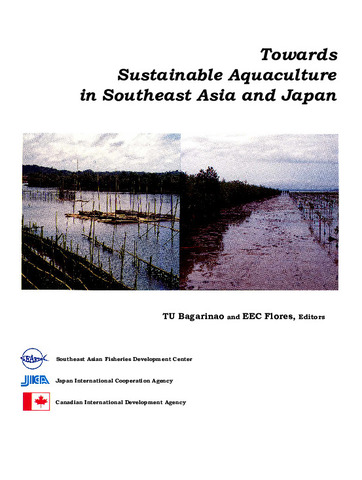
Towards sustainable aquaculture in Southeast Asia and Japan : proceedings of the Seminar-Workshop on Aquaculture Development in Southeast Asia, Iloilo City, Philippines, 26-28 July 1994
(Aquaculture Department, Southeast Asian Fisheries Development Center, 1995)Documents the presentations at ADSEA '94, the 3rd Seminar-Workshop on Aquaculture Development in Southeast Asia. ADSEA '94 includes reviews of the status of aquaculture development in Southeast Asia and Japan and of the researches conducted by Southeast Asian Fisheries Development Center, Aquaculture Department (SEAFDEC/AQD) to contribute to this development. Topics on responsible aquaculture, mollusc and seaweed culture, integrated farming, shrimp culture, diseases, and health management, and transgenic fish were also discussed. It also lists the research areas of 20 or so commodities prioritized for research at AQD for 1995-1997. -
Proceedings of the Seminar-Workshop on Aquaculture Development in Southeast Asia and Prospects for Seafarming and Searanching, 19-23 August 1991, Iloilo City, Philippines
(Aquaculture Department, Southeast Asian Fisheries Development Center, 1994)Documents the presentations at ADSEA '91, the 2nd Seminar-Workshop on Aquaculture Development in Southeast Asia. ADSEA '91 includes reviews of the status of the researches conducted by Southeast Asian Fisheries Development Center, Aquaculture Department (SEAFDEC/AQD) on the following cultured species sea bass, groupers, snappers, milkfish, rabbitfish, mullet, tilapia, carp, catfish, bivalves and the seaweed Gracilaria. Topics on aquaculture development in Southeast Asia and Japan were also discussed. The status and development of seafarming and searanching in different SEAFDEC member countries and their ecological, social and economic implications were also presented. The contributions of the selected participants during the meeting which are contained in this volume are cited individually. -
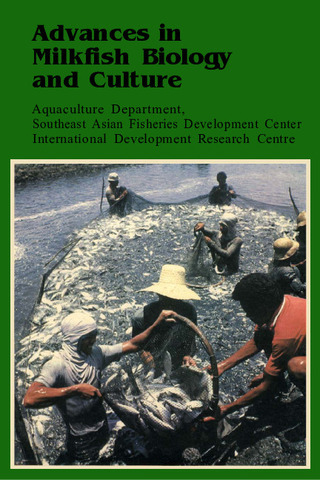
Advances in milkfish biology and culture: proceedings of the Second International Milkfish Aquaculture Conference, 4-8 October 1983, Iloilo City, Philippines
(Aquaculture Department, Southeast Asian Fisheries Development Center; International Development Research Centre; Island Publishing House, Inc., 1984)Abstracts of the 17 papers presented at the conference are cited individually in this issue.





 RSS 1.0