Browsing Books by Issue Date
Now showing items 1-20 of 142
-
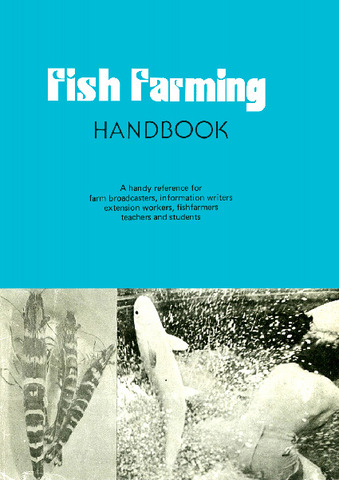
Fish farming handbook
(Aquaculture Department, Southeast Asian Fisheries Development Center, 1980)A handy reference for farm broadcasters, information writers, extension workers, fishfarmers, teachers, and students. -
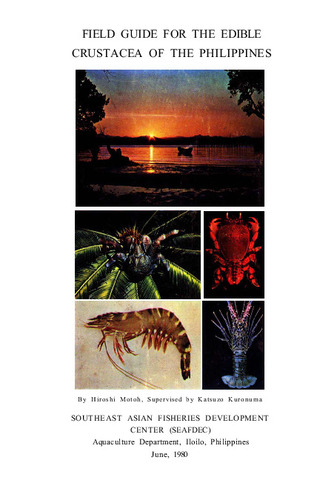
Field guide for the edible crustacea of the Philippines
(Aquaculture Department, Southeast Asian Fisheries Development Center, 1980)Information on each species includes: 1) taxonomy (scientific, English and Philippine names) and diagnostic characters: 2) ecology; 3) distribution; 4) fisheries data; 5) economics (potential, price). -
Series: ICLARM technical reports; 1 | SEAFDEC Aquaculture Department contribution; No. 93
The economics of the milkfish fry and fingerling industry of the Philippines
(International Center for Living Aquatic Resources Management; Aquaculture Department, Southeast Asian Fisheries Development Center, 1981)The fry and fingerling industry of the milkfish (Chanos chanos Forskal) in the Philippines is alleged to suffer from certain imperfections. Primary among these are an annual shortage of catch necessary to meet the stocking requirements of the 176,000 ha of fishponds; high fry mortality rates during transp0rt;failure of the pricing system to perform its spatial and form allocative functions; and exploitation of fry gatherers and pond operators by middlemen and nursery pond operators who form the core around which the whole fry and fingerling industry has developed. These alleged imperfections provide the rationale for various government policies affecting the fry and fingerling industry. This study indicates a higher level of industry performance than hitherto supposed. In 1974, an estimated 1.35 billion fry were caught, adequate to meet annual stocking requirements. Allegations of fry shortage were based on simultaneous underestimation of catch and overestimation of stocking requirements, and were traced to temporary price increases resulting from expanded fishpen area, which subsequently declined. Fry storage and transport mortality rates of 8.7% and 6.6%, respectively, compared with a mortality rate of 54% during rearing, indicated that major technical inefficiencies arise in fishponds rather than in the distribution system. Of every 100 fry caught, 38 are harvested at marketable size. Monthly average fry prices among 17 major trading regions were significantly correlated, indicating a high level of information flow in the industry. An examination of the concession system which restricts first sale opportunities of gatherers indicated that concessionaires are unable to capture their full monopsony advantage due to the "competitive fringe" of smugglers. Rather than exploitation, the concession system is a form of indirect municipal tax on fry gatherers. Since the fry industry is a 57-million-peso-per-year industry upon which approximately 170,000 people directly and indirectly depend, it is suggested that the location of future milkfish hatcheries and timing of production be planned such that they complement rather than displace the natural fry fishery and distribution system. -
Common edible molluscs of the Philippines: A field guide
(Aquaculture Department, Southeast Asian Fisheries Development Center, 1981)The Molluscs comprise the largest phylum of marine invertebrates, with over 80,000 species described (Barnes, 1974). They are soft-bodied animals, which, in most cases, secrete a protective outer "shell." Two major classes ... -
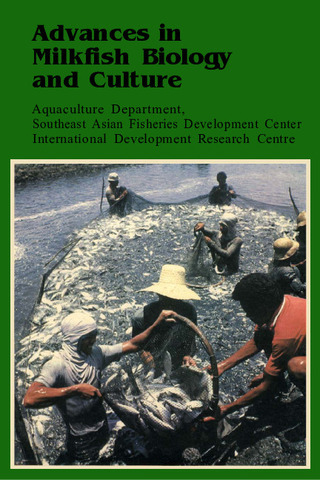
Advances in milkfish biology and culture: proceedings of the Second International Milkfish Aquaculture Conference, 4-8 October 1983, Iloilo City, Philippines
(Aquaculture Department, Southeast Asian Fisheries Development Center; International Development Research Centre; Island Publishing House, Inc., 1984)Abstracts of the 17 papers presented at the conference are cited individually in this issue. -
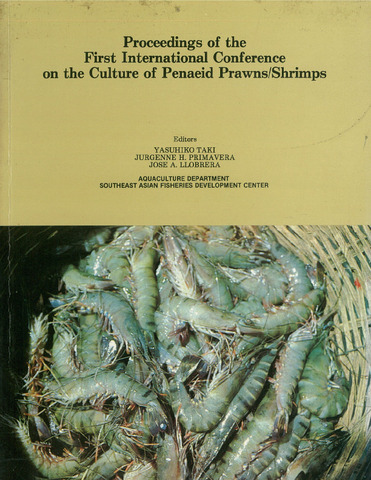
Proceedings of the First International Conference on the Culture of Penaeid Prawns/Shrimps, Iloilo City, Philippines, 4-7 December 1984
(Aquaculture Department, Southeast Asian Fisheries Development Center, 1985)Abstracts of the 78 papers presented at the conference are cited individually. -
Series: SAFIS manual; No. 22
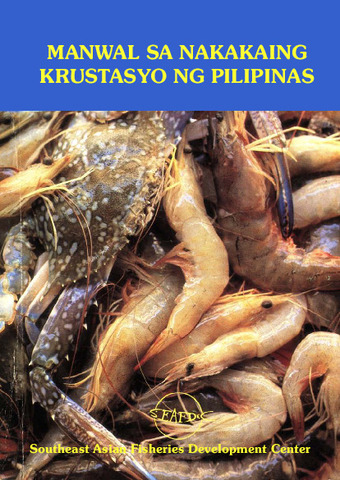
Manwal sa nakakaing krustasyo ng Pilipinas
(Aquaculture Department, Southeast Asian Fisheries Development Center, 1986)Text in Filipino. -
Series: BRAIS state-of-the-art series; no. 2
Biology and culture of Penaeus monodon
(Aquaculture Department, Southeast Asian Fisheries Development Center, 1988)Abstracts of the 6 chapters included in this publication are cited individually. -
Perspectives in aquaculture development in Southeast Asia and Japan: Proceedings of the Seminar on Aquaculture Development in Southeast Asia, Iloilo City, Philippines, 8-12 September 1987
(Aquaculture Department, Southeast Asian Fisheries Development Center, 1988)This proceedings is a comprehensive account of the seminar and contains the papers read and discussed at the sessions, and the recommendations reached and formulated. -
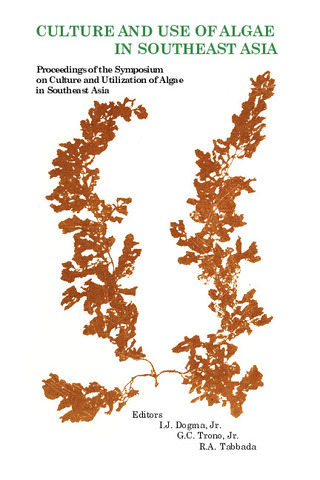
Culture and use of algae in Southeast Asia. Proceedings of the Symposium on Culture and Utilization of Algae in Southeast Asia, 8-11 December 1981, Tigbauan, Iloilo, Philippines
(Aquaculture Department, Southeast Asian Fisheries Development Center, 1990)Abstracts of the 13 papers presented at the symposium are cited individually. A variety of topics were covered, including the culture of micro and macroalgae, the processing of algal products and their utilization in industry as natural feed for aquaculture animals, the status of seaweed resources and their production, and the biology and use of algal populations as an indicator of the state of the aquatic environment. -
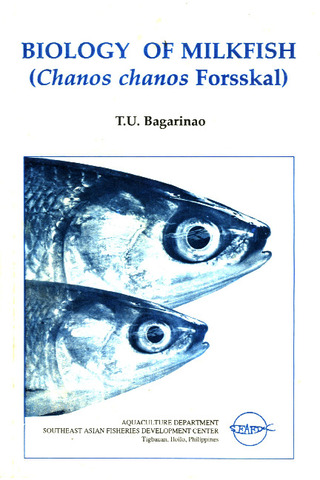
Biology of milkfish (Chanos chanos Forsskal)
Bagarinao, Teodora (Aquaculture Department, Southeast Asian Fisheries Development Center, 1991)
An up-to-date account is given of the biology of milkfish (Chanos chanos) under the following chapter headings: Species identity and history; geographic distribution and variation; life history and habitat; food and feeding habits; age, growth and mortality; reproduction; behavior; environmental physiology; and, community relationships.
(Aquaculture Department, Southeast Asian Fisheries Development Center, 1991)
An up-to-date account is given of the biology of milkfish (Chanos chanos) under the following chapter headings: Species identity and history; geographic distribution and variation; life history and habitat; food and feeding habits; age, growth and mortality; reproduction; behavior; environmental physiology; and, community relationships. -
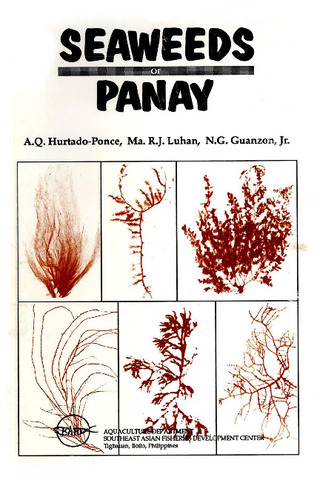
Seaweeds of Panay
(Aquaculture Department, Southeast Asian Fisheries Development Center, 1992)This practical book on the seaweeds of Panay, Philippines, acquaints and provides information to members of the academe and research institutions, policy makers, fishermen and businessmen regarding the taxonomy, distribution, ecology and economic importance of these resources. It consists of 4 major parts: (1) Introduction, which reviews the literature, habitat, distribution, morphological structure and reproduction; 2) Classification, which describes the classes to which the seaweeds generally belong; 3) Collection and preservation, which explains the procedure used in treatment of specimens; and, 4) Taxonomic list. A glossary is included, covering technical terms used. All species listed and described in this book are macrobenthic and were collected in Panay and Guimaras Islands. -
Proceedings of the Seminar-Workshop on Aquaculture Development in Southeast Asia and Prospects for Seafarming and Searanching, 19-23 August 1991, Iloilo City, Philippines
(Aquaculture Department, Southeast Asian Fisheries Development Center, 1994)Documents the presentations at ADSEA '91, the 2nd Seminar-Workshop on Aquaculture Development in Southeast Asia. ADSEA '91 includes reviews of the status of the researches conducted by Southeast Asian Fisheries Development Center, Aquaculture Department (SEAFDEC/AQD) on the following cultured species sea bass, groupers, snappers, milkfish, rabbitfish, mullet, tilapia, carp, catfish, bivalves and the seaweed Gracilaria. Topics on aquaculture development in Southeast Asia and Japan were also discussed. The status and development of seafarming and searanching in different SEAFDEC member countries and their ecological, social and economic implications were also presented. The contributions of the selected participants during the meeting which are contained in this volume are cited individually. -
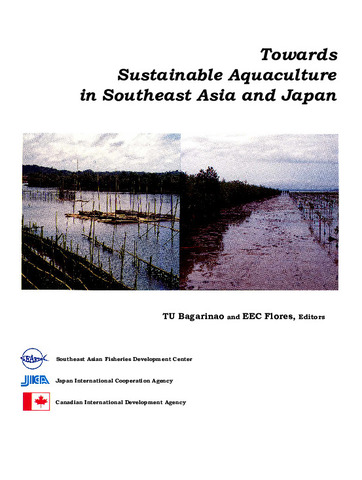
Towards sustainable aquaculture in Southeast Asia and Japan : proceedings of the Seminar-Workshop on Aquaculture Development in Southeast Asia, Iloilo City, Philippines, 26-28 July 1994
(Aquaculture Department, Southeast Asian Fisheries Development Center, 1995)Documents the presentations at ADSEA '94, the 3rd Seminar-Workshop on Aquaculture Development in Southeast Asia. ADSEA '94 includes reviews of the status of aquaculture development in Southeast Asia and Japan and of the researches conducted by Southeast Asian Fisheries Development Center, Aquaculture Department (SEAFDEC/AQD) to contribute to this development. Topics on responsible aquaculture, mollusc and seaweed culture, integrated farming, shrimp culture, diseases, and health management, and transgenic fish were also discussed. It also lists the research areas of 20 or so commodities prioritized for research at AQD for 1995-1997. -
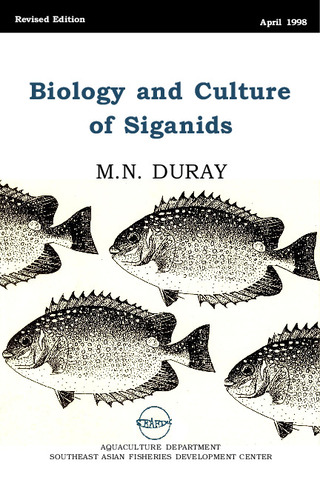
Biology and culture of siganids
(Aquaculture Department, Southeast Asian Fisheries Development Center, 1998)A 53-page monograph updating AQD's 1990 publication of the same title. The book includes siganid morphology, distribution and ecology; reproduction; fisheries; diseases and parasites; genetics. It also covers larval culture; fry and fingerling production; nutrition and feeds; and problem areas in aquaculture. -
Ecology and farming of milkfish
Bagarinao, Teodora (Aquaculture Department, Southeast Asian Fisheries Development Center, 1999)
This book is a reader-friendly illustrated account of the life history of milkfish (Chanos chanos) in nature and in aquaculture. It describes the different farming systems and status of the milkfish industry, and recommends means to ensure sustainability. -
Use of Chemicals in Aquaculture in Asia: Proceedings of the Meeting on the Use of Chemicals in Aquaculture in Asia, 20-22 May 1996, Tigbauan, Iloilo, Philippines
(Aquaculture Department, Southeast Asian Fisheries Development Center, 2000)The use of chemicals is common in various aquaculture systems, as it is in many agricultural practices. However, with growing worldwide awareness of the need for responsible practices in aquaculture, governments and aquaculturists are increasingly concerned with the effects of the use of chemicals in aquaculture, especially those which appear likely to be hazardous to man, cultured stock and/or the environment. The need to synthesize and disseminate information on the use and management of double prime aquachemicals double prime was recognized by the Fishery Resources Division of the Food and Agriculture Organization of the United Nations (FAO) and the Southeast Asian Fisheries Development Center (SEAFDEC) Aquaculture Department, who convened double prime The Expert Meeting on the Use of Chemicals in Aquaculture in Asia, double prime which was held 20-22 May 1996 at the SEAFDEC facilities in Tigbauan, Iloilo, the Philippines. Support was provided by FAO, SEAFDEC and the Canadian International Development Agency s (CIDA) ASEAN Fund. The World Health Organization (WHO) supported the participation of a human health expert. The meeting was attended by 27 participants and more than 70 observers from the public and private sectors of 20 countries. Among the attendees were representatives from the Network of Aquaculture Centres in Asia-Pacific (NACA), the Fish Health Section of the Asian Fisheries Society (FHS/AFS), the Japan International Research Center for Agricultural Sciences (JIRCAS), the GESAMP Working Group on Environmental Impacts of Coastal Aquaculture, and the ICES Working Group on Environmental Interactions of Mariculture. The results of this expert workshop are presented in this volume. They include the texts of presentations on a wide range of topics (thematic reviews) related to the use of chemicals in aquaculture, with emphasis on the Asian Region, as well as country overview papers summarizing the use of aquachemicals in Asian countries. The contributions of the selected participants during the meeting are contained in this volume. -
Physical, environmental, and chemical methods of disease prevention and control
(Aquaculture Department, Southeast Asian Fisheries Development Center, 2001)Disease prevention is primary and cost-effective method in fish health management. It is more effective and economical than attempting to stop a disease that has already set in the recommendations given above will greatly reduce the possibility of disease outbreak. -
Health Management in Aquaculture: Glossary
(Aquaculture Department, Southeast Asian Fisheries Development Center, 2001) -
Immunological and molecular biology techniques in disease diagnosis
(Aquaculture Department, Southeast Asian Fisheries Development Center, 2001)The improvement of existing immunoassay techniques, development of monoclonal antibody technology and the development of new immunoassay approaches are all working together to provide new tools for the detection of disease-causing organisms in fish and crustaceans. Following the introduction of nucleic acid hybridization technique and PCR, it was recognized that the methods offered a sensitive approach to the detection and identification of specific microorganisms as in the case of a bacterial or viral infection in a variety of sample types. Potentially, a characteristic DNA sequence from a single virus particle or cell of a particular organism can be amplified to detectable levels within a short period of time. Conventional diagnostic methods that involve the culture of microorganisms can take days or weeks to complete or very tedious to perform. PCR offers a rapid, very sensitive, very specific and simple alternative. Further developments in immunodiagnostics and emerging technologies such as DNA-based tests will revolutionize the detection and identification of infectious disease agents.