Browsing Conference Proceedings by Title
Now showing items 1-20 of 767
-
2010 and beyond: better seeds for sustainable aquatic food production in Asia.
Romana-Eguia, Maria Rowena R. ; (Aquaculture Department, Southeast Asian Fisheries Development Center, 2011)
Asia is a major contributor to world aquaculture production. Most Asian countries have maintained their rank in the ten top aquatic food producing nations after developing refined techniques for major commercially important aquaculture species and promoting an increased awareness on the merits of using quality seeds (genetically enhanced or otherwise) as supplied in sufficient quantities. Quality seedstock simply means fit, clean , uniformly-sized seeds which could be eggs, fry, fingerling, juveniles and/or plantlets (for seaweeds) that subsequently express good performance attributes during culture. Beneficial traits refer to good color, shape, growth, efficient feed conversion, high reproduction, tolerance and survival when exposed to stressors (e.g. diseases, poor and/or extreme environmental conditions). Such traits are mostly heritable, hence, quality seeds are usually assumed as produced only by mating stocks perceived or proven to be genetically superior. Some bloodstocks may be genetically mediocre but if bred and manage properly through efficient farm protocols (suitable hatchery, nursery feeding and water management methods), may also produce good quality seeds. Success in the sustainable production of aquatic species for human consumption depends primarily on the availability of seedstock and adoption of optimal husbandry techniques among others. With the intensification of aquaculture systems and the environmental challenges such as those resulting from climate change, it is wise to continue considering both factors -- genetic quality and culture management as equally important in ensuring a steady production of good quality seeds and later, marketable products from aquaculture. Views on what, how and why better quality aquaculture seeds should be produced evolve as times change. To understand these concerns, this paper will cover: (a) the present state of fish seed production in Asia, (b) recent and current seedstock production issues that require attention, and (c) recommendations on how to further enhance aquaculture production in the region in the next decade through better quality seedstock.
; (Aquaculture Department, Southeast Asian Fisheries Development Center, 2011)
Asia is a major contributor to world aquaculture production. Most Asian countries have maintained their rank in the ten top aquatic food producing nations after developing refined techniques for major commercially important aquaculture species and promoting an increased awareness on the merits of using quality seeds (genetically enhanced or otherwise) as supplied in sufficient quantities. Quality seedstock simply means fit, clean , uniformly-sized seeds which could be eggs, fry, fingerling, juveniles and/or plantlets (for seaweeds) that subsequently express good performance attributes during culture. Beneficial traits refer to good color, shape, growth, efficient feed conversion, high reproduction, tolerance and survival when exposed to stressors (e.g. diseases, poor and/or extreme environmental conditions). Such traits are mostly heritable, hence, quality seeds are usually assumed as produced only by mating stocks perceived or proven to be genetically superior. Some bloodstocks may be genetically mediocre but if bred and manage properly through efficient farm protocols (suitable hatchery, nursery feeding and water management methods), may also produce good quality seeds. Success in the sustainable production of aquatic species for human consumption depends primarily on the availability of seedstock and adoption of optimal husbandry techniques among others. With the intensification of aquaculture systems and the environmental challenges such as those resulting from climate change, it is wise to continue considering both factors -- genetic quality and culture management as equally important in ensuring a steady production of good quality seeds and later, marketable products from aquaculture. Views on what, how and why better quality aquaculture seeds should be produced evolve as times change. To understand these concerns, this paper will cover: (a) the present state of fish seed production in Asia, (b) recent and current seedstock production issues that require attention, and (c) recommendations on how to further enhance aquaculture production in the region in the next decade through better quality seedstock. -
Abalone aquaculture for stock enhancement and community livelihood project in northern Palawan, Philippines
(Aquaculture Department, Southeast Asian Fisheries Development Center, 2015)One of the interventions to feed the poorest of the poor fisheries sector in the country is the provision of livelihood in the form of mariculture of high value marine species. In the Philippines, livelihood in rural areas is largely linked to resource depletion, hence it is wise not only to provide livelihood to the community but also to encourage them to conserve and enhance the resources. As part of the revised R&D program, the Western Philippines University partnered with NGO and existing projects to embark on a community-based environment-concerned livelihood project, using hatchery bred abalone, although top shell was also considered for stock enhancement. This is in an on-going project thus, preliminary phases such as abalone production and cage-based grow-out as well as subsequent project plans will be discussed. The objectives of this study were to: (a) share the implementing experiences in this project, (b) identify success and failure drivers of the project, (c) explain the conceptual framework for the MPA-based stock enhancement to be used in this project, and (d) give recommendations to improve the implementation and ensure the success of the project. The following activities have thus far been conducted: (a) development of criteria for cage micro-site selection; (b) writing of proposal and provision of financial assistance for hatchery juvenile production through a partnership MOA; (c) presentation of site survey results to beneficiaries and stake holders; (d) conduct of trainings on abalone grow out culture to POs; (e) development and improvement of training module; (f) signing of conservation agreement; (g) giving of cage materials and juveniles to people s organizations; (h) on site coaching; and (i) partial monitoring. The next activities include improvement in juvenile production, conduct of researches on abalone nutrition, and development of market and value chain flow analysis. The conceptual framework for community-managed stock enhancement will follow that of the Department of Environment and Natural Resources-ICRMP, of which the stock enhancement project is anchored on the management of marine protected areas or MPAs. The steps in all the activities were documented and while the project was in progress, performance of the participants in training were measured, the training module was improved, the training approaches were revised according to needs, and the growth and survival of juvenile abalone were monitored. The problems identified were low production of juveniles, insufficient food for grow-out, political squabbles, social preparation, and delay in implementation schedule. Recommendations to improve or resolve the problems encountered were also presented in this paper. -
Acclimatization and stocking of fry
(1974) -
Acid sulfate soils and their management for brackishwater fishponds
(Aquaculture Department, Southeast Asian Fisheries Development Center; International Development Research Centre; Island Publishing House, Inc., 1984)The major problems of fishponds build on acid sulfate soils are low pH; ionic imbalance and toxic levels of aluminum, iron, and sulfate; deficiency of phosphorus and poor response to fertilizer application; slow and poor growth of fish food organisms and fish; erosion of dikes; and in some cases fish kills. For economic operations and to remedy the problems of poor algal growth, fish kills and low yields, the acid in the pond bottom and dikes has to be neutralized or removed. A repeated sequence of drying, tilling, and flushing with seawater is a cheap, fast, and effective reclamation method that can be done in one dry season. Following this method, the dry soil pH improved; exchangeable aluminum, pyritic iron, active iron, active manganese, and sulfate decreased; and available phorphorus improved. The values for alkalinity, phosphate, aluminum, iron, and sulfate in the pond water improved greatly. Fish production was about three-fold more in reclaimed ponds (375-510 kg/ha) compared with the control ponds (50-173 kg/ha). -
Acute hepatopancreatic necrosis disease (AHPND) of penaeid shrimps: Global perspective
(Aquaculture Department, Southeast Asian Fisheries Development Center, 2016)The Organization for Economic Cooperation and Development (OECD) and the Food and Agriculture Organization (FAO) of the United Nations Agricultural Outlook 2015-2024 reported that fisheries production worldwide is projected to expand by 19% between the 2012-14 base period and 2024, to reach 191 million metric tons (MT) and the main driver of this increase will be aquaculture, which is expected to reach 96 million MT by 2024, 38% higher than the base period (average 2012-14) level. Among the 7 key uncertainties that affect gains in productivity, the potential of animal disease outbreaks to affect aquaculture production and subsequently domestic and international markets are once again highlighted, although for the first time in this outlook. Another milestone document, the Blue frontiers: managing the environmental costs of aquaculture identified a number of fish health issues, including increased risk of the spread of pathogens and diseases with intensification, through increased movement of aquatic animals, inter-regional trade and introduction of new species and new strains, and through the use of trash fish or live feed; concerns on residues and development of drug resistant pathogens brought about by the abuse on the use antimicrobials and other veterinary drugs; limited availability of vaccines; environmental stressors that compromise the immune system; difficulties faced by developing countries in implementing international standards; and the need for legislation, enforcement and capacity building. The issues identified then and now are almost the same. Addressing animal health issues in aquaculture is very challenging because the sector is highly complex (with a wide range of diversity in terms of species, systems, practices and environment, each presenting different risks), its fluid environment, and the transboundary nature where fish is considered as one of the most traded commodity, aquatic animals require more attention in order to monitor their health: they are not visible except in tank holding conditions; they live in a complex and dynamic environment and feed consumption and mortalities are hidden under water. This paper looks at the status of a newly emerging disease of cultured shrimp, acute hepatopancreatic necrosis disease (AHPND), which has been recognized as the most important non-viral disease threat to cultured shrimp. In particular, this paper presents the highlights of the International Technical Seminar/Workshop: EMS/AHPND: Government, Scientist and Farmer Responses held from 22-24 June 2015 in Panama City, Panama, which was organized under the auspices of an FAO inter-regional project TCP/INT/3502: Reducing and Managing the Risks of AHPND of Cultured Shrimp, being participated by 11 countries, namely: Colombia, Ecuador, Guatemala, Honduras, Mexico, Panama and Peru from Latin America and the Caribbean (LAC) region and India, Iran, the Philippines and Sri Lanka from the Asian region. The Panama EMS/AHPND June 2015 event aimed to provide a platform to improve the understanding of the disease through the lens of governments, scientists and producers and collectively generate practical management and control measures. More than 100 stakeholders from 21 countries representing the government, academe and producer sectors participated in the event. The highlights contain the latest available information at that time (June 2015) about AHPND including the current state of knowledge about the causative agent, the host and geographical distribution, detection methods, risk factors, management and actions of regional and international organizations. -
Acute hepatopancreatic necrosis disease (AHPND)) and hepatopancreatic microsporidiosis (HPM):): Two threats to sustainable shrimp aquaculture
(Aquaculture Department, Southeast Asian Fisheries Development Center, 2021-12)Infectious diseases caused by viruses and bacteria are a major threat to sustainable shrimp farming globally. Since early 80’s viral diseases such as White Spot Disease, Taura Syndrome disease have caused enormous losses to shrimp aquaculture both in eastern and western hemisphere. As the shrimp industry tried to recover from the onslaught of these diseases, a bacterial, Acute Hepatopancreatic Necrosis Disease (AHPND), also known as Early Mortality Syndrome, and a fungal disease Hepatopancreatic Microsporidiosis (HPM) caused by Enterocytozoon hepatopenaei (EHP) are now posing new threat to shrimp aquaculture. Acute Hepatopancreatic Necrosis Disease is caused by Vibrio spp. expressing plasmidborne binary toxins, PirA and PirB that is similar to entomopathogenic bacterium, Photorhabdus encoded toxin. In 2009, AHPND emerged in China and since then spread to many countries in East Asia and in the Americas. Another disease that has caused alarm in recent year is Hepatopancreatic Microsporidiosis (HPM) caused by Enterocytozoon penaei (EHP), a microsporidium. While AHPND causes acute infection and large-scale mortalities, EHP causes chronic infection and results growth retardation and size variation in population reducing marketability of the infected shrimp. Both diseases affect hepatopancreas, an organ involved in metabolism and humoral immunity in shrimp. The binary toxin, PirA/ PirB are the primary virulence factor for AHPND, but specific virulence factor(s) for EHP is not known. It is, however, known that EHP does not have mitochondria and appears to transport ATP from the cytoplasm of infected cells as it contains ATP transporter genes in its genome. EHP has been shown to be a risk factor for AHPND. Due to lack of therapeutics, preventative measures remain as a corner stone for managing these diseases and efforts are underway to develop genetically improved lines of shrimp having resistance to AHPND and EHP. -
Acute toxicity of garlic (Allium sativum) extract to snubnose pompano (Trachinotus blochii) juvenile
(Aquaculture Department, Southeast Asian Fisheries Development Center, 2021-12)Garlic (Allium sativum) is a well-known medicinal herb which has been shown to possess anti-microbial and anti-parasitic properties. This study was conducted to test the toxicity levels of snubnose pompano (Trachinotus blochii) juvenile to garlic (Allium sativum) extract by determining the cumulative mortality and median lethal concentration (LC50). Test fish were exposed to six concentrations of the extract (2.5, 5.0, 7.5, 10, 20 and 30 ppm) in a 96-hour static bioassay. Cumulative mortality was highest at 100 % for 30 ppm garlic extract, with mortalities found to increase with increasing concentration. Test fish exposed to 20 and 30 ppm exhibited weak and static behavior. The LC50 of garlic extract to T. blochii was found to be 7.48 ppm at 96 h. Findings of the present study suggest that aqueous garlic extract up to 5 ppm can be safely used in pompano for prophylactic purposes. -
Addressing acute hepatopancreatic necrosis disease (AHPND) and other transboundary diseases for improved aquatic animal health in Southeast Asia: Proceedings of the ASEAN Regional Technical Consultation on EMS/AHPND and Other Transboundary Diseases for Improved Aquatic Animal Health in Southeast Asia, 22-24 February 2016, Makati City, Philippines
(Aquaculture Department, Southeast Asian Fisheries Development Center, 2016) -
Adoption of modified commercial scale mud crab hatchery and nursery systems in Alaminos City, Pangasinan
(Aquaculture Department, Southeast Asian Fisheries Development Center, 2017)Pangasinan’s vast fishpond and mangrove areas have not been fully tapped for mud crab (Scylla serrata) production. The main reason identified for this is the limited supply of crab seedstock. At present, there is no reliable source of seedstock in Pangasinan. The total requirement of Pangasinan for crab seedstock is estimated at 8.89 million based on the total area (ha) devoted to mud crab polyculture in the province. Mud crab growers in Pangasinan procure wild juvenile crabs from Cagayan, Bicol and Visayas but the volume is limited. Thus, an adoption of a modified commercial scale mud crab hatchery and nursery systems in Alaminos City would be helpful. A model mud crab hatchery will be constructed to enable the local government unit (LGU) of Alaminos City to produce seedstock in commercial quantity to boost the production in Pangasinan and nearby provinces. The hatchery aims to produce 480,000 juvenile crabs per year to supply the nursery and grow-out ponds. Likewise, the hatchery technology will promote the mud crab hatchery and nursery technologies in the city of Pangasinan and coastal towns (Infanta, Dasol, Burgos, Agno, Bolinao, Anda, Bani, Sual, Labrador, Lingayen, Binmaley, Dagupan City and San Fabian), and nearby provinces of La Union, Ilocos Sur, Ilocos Norte and Zambales. -
ADSEA '91-Foreword
(Aquaculture Department, Southeast Asian Fisheries Development Center, 1994) -
ADSEA '91-Preliminary pages
(Aquaculture Department, Southeast Asian Fisheries Development Center, 1994)Cover page, title page and table of contents -
Advances in diagnosis and management of shrimp virus diseases in the Americas
(Aquaculture Department, Southeast Asian Fisheries Development Center, 2002)The most important diseases of cultured penaeid shrimp, in terms of economic impact, in Asia, the Indo-Pacific, and the Americas, have infectious etiologies. Although diseases with bacterial, fungal, and parasitic etiologies are also important, certain virus-caused diseases stand out as the most significant. The pandemics due to the penaeid viruses WSSV, TSV, YHV, and IHHNV have collectively cost the penaeid shrimp industry billions of dollars in lost crops, jobs, and export revenue. Although not as sudden nor as catastrophic in their onset and course, certain bacterial, fungal, and parasitic diseases of shrimp have also been responsible for very significant production losses, and the relative importance of many of these diseases should not be discounted. The social and economic impacts of the pandemics caused by WSSV and TSV have been especially profound in the Americas, and in the wake of these viral pandemics the shrimp culture industry has sought ways to restore the industry’s levels of production to the “pre-virus” years. Central to improving disease) prevention and management strategies is the incorporation of the concepts of biosecurity into shrimp farm design and operational strategies. Disease management in shrimp aquaculture is an important component to biosecurity of farms and to the sustainability of individual farms, shrimp farming countries, or entire geographic regions. The first step in disease management requires the availability of accurate and reliable diagnostic methods and knowledge of the biology of the diseases of concern. The recognition of the need for biosecurity and disease management in the Americas is reflected in the recent proliferation of shrimp disease diagnostic laboratories in the Americas. Where there were only a handful of shrimp disease diagnostic laboratories a decade ago, there are 40 or more such laboratories serving the industry today. Diagnostic methods may be applied to determining the cause of disease(s) that are adversely affecting the culture performance or survival of farmed shrimp stocks or they may be used for surveillance purposes to screen for the presence of specific pathogens in otherwise healthy shrimp for the purpose of disease control. As diagnostic methods have improved and become more widely available, the interest in culturing specific pathogen-free (SPF) shrimp stocks in biosecure facilities has increased markedly in many regions in the Americas. The methods being used in shrimp disease diagnostic laboratories in the Americas were recently surveyed. Of the 40 laboratories contacted, 27 responded to the survey. Approximately 75% of the labs responding to the survey provide diagnostic services using both molecular (PCR, RT-PCR and gene probes) and classical (routine histology and microbiology) methods, while nearly all (93%) of the diagnostic labs offer diagnostic testing and screening services based on molecular methods (i.e. assays with gene probes and PCR/RT-PCR). -
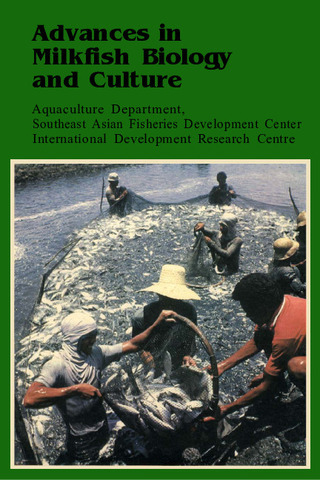
Advances in milkfish biology and culture: proceedings of the Second International Milkfish Aquaculture Conference, 4-8 October 1983, Iloilo City, Philippines
(Aquaculture Department, Southeast Asian Fisheries Development Center; International Development Research Centre; Island Publishing House, Inc., 1984)Abstracts of the 17 papers presented at the conference are cited individually in this issue. -
Advances in shrimp culture in China
(Aquaculture Department, Southeast Asian Fisheries Development Center, 1985)Shrimp experimental ecology studies and the shrimp farming industry in China developed rapidly in the 1970's, and great strides have been made in the mass production of shrimp fry and the growing-out of marketable size shrimp since 1978. The total production of artificially reared shrimp fry and cultivated shrimp increased dramatically in the last few years. The improvement of water quality management and feed supply in larval rearing have resulted in increased production of shrimp fry up to 100,000-200,000 or even 300,000 fry/m3. Advances in the nutritional physiology and biochemistry of the digestive enzymes of juvenile and adolescent shrimp have enabled us to develop different kinds of for mulated feeds with high efficiency and low cost. Techniques for the transplantation and propagation of small benthic crustaceans (e.g. Corophium spp.) or polychaetes (e.g. Nereis spp.) to increase the benthos biomass for natural food of juvenile shrimp in nursery ponds have been developed and successfully practised. Improvement of culture techniques including shrimp pond management, has decreased the mortality of juvenile and young shrimp and increased yields of cultivated shrimp in the country. Highest production of 9,000 kg/ha has been achieved in the semi-intensive culture pond. -
Agroindustrial waste products as sources of cheap substrates for algal single-cell protein production
(Aquaculture Department, Southeast Asian Fisheries Development Center, 1990)Four types of agroindustrial waste products were tested for their suitability as substrates for Chlorella single-cell protein production. Based on cell density on day 7, unsterilized rice straw filtrate, Tris-buffered inorganic medium (control), unsterilized slop (1%) and unsterilized rice hull filtrate were suitable culture media. Dry weight yield after two weeks did not vary among media. Gross protein content of algae was highest in rice straw with or without sterilization. Substrates for algal SCP production are assessed on the basis of their nutrient content, pH, and hygienic acceptability. -
Algal production and utilization relevant to aquaculture in the Philippines
(Aquaculture Department, Southeast Asian Fisheries Development Center, 1990)An outline is given of research conducted at the Aquaculture Department of SEAFDEC at Rizal, Philippines regarding algal culture and utilization. Culture methods for both brackishwater and freshwater algae are described and details given of applications of microalgae in the aquaculture industry, which include feed for fish and shrimp larvae. -
Ammonia, phosphate, total suspended solid and chlorophyll a removal in mangrove habitat receiving shrimp pond effluents
Tendencia, Eleonor; (Aquaculture Department, Southeast Asian Fisheries Development Center, 2021-12)
Diseases continue to devastate the shrimp industry. One culture system that has the potential to abate disease occurrence, improve shrimp survival and environmentfriendly is aquasilviculture. Aquasilviculture is the culture of aquatic organism with mangroves inside the pond (mixed system) or in the receiving environment (separate). A previous study reported that the presence of mangroves in the receiving environment enhances shrimp survival via an improved incoming water quality. The present study determined the time required for a mangrove habitat to remove nutrients from shrimp (Penaeus monodon) farm effluents and the factors affecting mangrove efficiency to remove nutrients. Results showed that ammonia, phosphate, chlorophyll a and total suspended solids (TSS) were fluctuating but statistically lower in water drained into mangrove habitat (Mangrove to Pond Area Ratio, (MPR)=2:1 and MPR=4:1) compared to area without mangroves (MPR=0). At MPR=4:1, ammonia is removed from the water after 3 days; TSS after 2 days; phosphate and chlorophyll a after 7 days. At MPR=2:1, only ammonia can be efficiently removed after 3 days. These results further showed that the type of nutrient and MPR affect the efficiency of mangroves to remove nutrients from shrimp farm effluents. The growth of plants in areas receiving and not receiving shrimp farm effluents were compared by measuring the monthly increase in the seedling height and the increase in the stem length between two nodes in saplings and trees. After 3 months, increase in growth was greater in plants in area receiving shrimp farm effluents compared to those not receiving, except for the seedlings. This indicates that mangroves purify the water by nutrient uptake as supported by the data showing greater increase in stem length in saplings and trees. -
Antibacterial chemotherapy in aquaculture: review of practice, associated risks and need for action
(Aquaculture Department, Southeast Asian Fisheries Development Center, 2000)This paper briefly reviews the use of chemicals to prevent and treat bacterial diseases in aquaculture, and provides a detailed summary of the current state of knowledge on the development of bacterial resistance to antimicrobial agents in fish and shellfish. The topics covered include mechanisms of resistance, resistance of bacterial fish pathogens, resistance to antibacterial agents associated with use in aquaculture, and factors causing selection of resistant variants. Emphasis is placed on avoiding and solving problems related to bacterial resistance in aquaculture, and recommendations on antibiotic usage in aquaculture are made. -
Antioxidant properties of tert-butylhydroquinone and propyl gallate in frozen minced sprats
(Aquaculture Department, Southeast Asian Fisheries Development Center, 1996)Relative effects of the combination of tert-butylhydroquinone (TBHQ) and propyl gallate (PG) with or without a sequestering agent (EDTA or citric acid, C A ) on rancidity development in minced sprats stored at -15 C were determined by following the changes in peroxide values, thiobarbituric acid values, sensory scores, and fatty acid composition of lipid extracts. The combination of 0.02% TBHQ and 0.02% PG was most effective in reducing the rate of oxidative rancidity development in frozen sprats. It allowed an extended induction period of at least 250 days. Lowering the concentration of the additives from 0.02% to 0.01% significantly reduced their antioxidant effectiveness giving rise to larger losses of polyunsaturated fatty acids. Addition of either EDTA or CA to the mixture of 0.02% TBHQ and 0.02% PG did not prevent significant losses of 20:5 and 22:6 fatty acids. -
Antithamnion sparsum , its life history and hybridization with A. defectum in culture
(Aquaculture Department, Southeast Asian Fisheries Development Center, 1990)Antithamnion sparsum isolated from the southern and western coasts of Korea showed a basically Polysiphonia -type life history. However, it sometimes exhibited a monoecious reproduction and the carpospores released from the cystocarp by self-fertilization unexpectedly developed into plants bearing spermatangia alone. These male plants were not functional up to 60 days in culture. The results of intraspecific crosses between populations of A. sparsum were successful and the hybrid carpospores gave rise to normal tetrasporophytes. On the other hand, the interspecific crosses between A. sparsum and A. defectum were only partly successful, as evidenced by gonimoblast development and the release of carpospores in case of A. sparsum (male) x A. defectum (female), but not in A. sparsum (female) x A. defectum (male). These results seem to suggest that both species are still undergoing speciation.