Conference Proceedings: Recent submissions
Now showing items 321-340 of 767
-
Abalone aquaculture for stock enhancement and community livelihood project in northern Palawan, Philippines
(Aquaculture Department, Southeast Asian Fisheries Development Center, 2015)One of the interventions to feed the poorest of the poor fisheries sector in the country is the provision of livelihood in the form of mariculture of high value marine species. In the Philippines, livelihood in rural areas is largely linked to resource depletion, hence it is wise not only to provide livelihood to the community but also to encourage them to conserve and enhance the resources. As part of the revised R&D program, the Western Philippines University partnered with NGO and existing projects to embark on a community-based environment-concerned livelihood project, using hatchery bred abalone, although top shell was also considered for stock enhancement. This is in an on-going project thus, preliminary phases such as abalone production and cage-based grow-out as well as subsequent project plans will be discussed. The objectives of this study were to: (a) share the implementing experiences in this project, (b) identify success and failure drivers of the project, (c) explain the conceptual framework for the MPA-based stock enhancement to be used in this project, and (d) give recommendations to improve the implementation and ensure the success of the project. The following activities have thus far been conducted: (a) development of criteria for cage micro-site selection; (b) writing of proposal and provision of financial assistance for hatchery juvenile production through a partnership MOA; (c) presentation of site survey results to beneficiaries and stake holders; (d) conduct of trainings on abalone grow out culture to POs; (e) development and improvement of training module; (f) signing of conservation agreement; (g) giving of cage materials and juveniles to people s organizations; (h) on site coaching; and (i) partial monitoring. The next activities include improvement in juvenile production, conduct of researches on abalone nutrition, and development of market and value chain flow analysis. The conceptual framework for community-managed stock enhancement will follow that of the Department of Environment and Natural Resources-ICRMP, of which the stock enhancement project is anchored on the management of marine protected areas or MPAs. The steps in all the activities were documented and while the project was in progress, performance of the participants in training were measured, the training module was improved, the training approaches were revised according to needs, and the growth and survival of juvenile abalone were monitored. The problems identified were low production of juveniles, insufficient food for grow-out, political squabbles, social preparation, and delay in implementation schedule. Recommendations to improve or resolve the problems encountered were also presented in this paper. -
Stock assessment of christian crabs (Charybdis feriatus, Linnaeus, 1758) in San Miguel bay
(Aquaculture Department, Southeast Asian Fisheries Development Center, 2015)Assessment of the status of swimming crab fisheries in San Miguel Bay with focus on Christian or Crucifix crab, Charybdis feriatus, was undertaken from November 2011 to January 2013. An analytical length-based fish stock assessment was employed using the FISAT (version 1.2.2). A total of 7,679 length frequencies (3,612 C. feriatus and 4,067 Portunus pelagicus) were used in the analysis. About 15 and 14 percent gravid females were harvested monthly for both species that may contribute to recruitment overfishing. Population parameters showed exploitation rate (E) for P. pelagicus and C. feriatus exceeded the optimum exploitation (E0.5) implying excessive fishing effort and heavily exploited stocks. Size at maturity of C. feriatus and P. pelagicus in San Miguel Bay is 8.3 cm and 8.5 cm, respectively. Doable options for resources conservation and management strategies are proposed and supported by local government units (LGUs) including the Integrated Fisheries and Aquatic Resource Management Council. -
Assessment of humphead wrasse (Cheilinus undulatus), spawning aggregations and declaration of marine protected area as strategy for enhancement of wild stocks
(Aquaculture Department, Southeast Asian Fisheries Development Center, 2015)Humphead wrasse, known as the Napoleon fish (Cheilinus undulatus), is the largest living member of the family Labridae. It is slow growing but can grow to a maximum size exceeding 2 m and 190 kg. This species was the first commercially important coral reef food fish to be listed in the Convention on International Trade in Endangered Species of Wild Fauna and Flora (CITES) Appendix II in 2004 because of its vulnerable status and the ongoing threat to its conservation from international trade. Like many coral reef fishes, the humphead wrasse, Cheilinus undulatus, aggregate in reef areas when they spawn and this spawning behaviour makes them highly vulnerable to overfishing. Assessment of the spawning aggregations of this species was conducted in the municipalities of Sibutu and Sitangkai in the province of Tawi-Tawi, Philippines. Key informant interviews (KII) with fishermen, mariculturists, and other stakeholders and focus group discussions (FGD) with local government leaders, Fisheries and Aquatic Resources Management (FARMC) members, mariculturists, and exporters were conducted. Guided by the results of these KII and FGDs, underwater visual census of mameng (local common name for Napoleon wrasse) populations (juvenile and mature) were conducted to document spawning aggregation sites. Since there was no photo-documentation of actual spawning aggregations of mameng in the reef areas, indirect measures were used. Result of the KII and FGD indicated that the Baligtang Reef in Sipangkot and Tando Owak are major sources of spawners. Anecdotal accounts of Bajau fishermen showed that Dungun Dungon, Baligtang reef, Tando Owak and Tugalan are traditional fishing grounds for mameng spawning aggregations. From the length-frequency analysis of mameng caught by hook and line and fish pot in the Baligtang Reef in Sipangkot, the estimated length at maturity of this species was found to be 25-35 cm. There were 134 individuals caught within this size range so they are considered potential spawners. Another indirect proof used was the underwater documentation of juvenile humphead wrasse which were regularly observed and photographed in association with seagrass beds and branching coral reefs in Baligtang Reef in Sipangkot, Sitangkai. Gonadal study also indicated that the mameng caught in this area had mature and ripe gonads but the number of mature fish depends on the season. These were the basis of declaring Spawning Aggregation Sites in Tando Owak and Dungun Dungun in Sibutu and Baligtang Reef, Sipangkot and Tugalan in Sitangkai. These were declared as marine protected areas by ordinance of the municipal Sangguniang Bayan of the two municipalities. Management and enforcement plans have been developed and Bantay Dagat have been trained to protect the spawning aggregations and this strategy aims to protect the wild stocks of humphead wrasse. Protecting the spawners would ensure that there would be enough recruits, prevent recruitment overfishing and enhance the wild stocks. -
Good aquaculture practices (VietGAP) and sustainable aquaculture development in Viet Nam
(Aquaculture Department, Southeast Asian Fisheries Development Center, 2015)The shrimp (black tiger and white leg shrimp) and catfish industries in Viet Nam continue to experience increasing growth due to rapid aquaculture development. However, disease outbreaks become a major issue. Moreover, seafood consumers at present are likely to be more concerned about how the products are produced and how to control/manage aquatic animal health instead of treatment. Hence, the main objective of this abstract is to focus on one of the solutions to address these problems/issues and ensure sustainable aquaculture development in Viet Nam. -
The Philippine National Aquasilviculture Program
(Aquaculture Department, Southeast Asian Fisheries Development Center, 2015)The Philippine National Aquasilviculture Program (PNAP) is a banner program of the Department of Agriculture (DA) being implemented by the Bureau of Fisheries and Aquatic Resources (BFAR). To implement the PNAP, a Memorandum of Agreement (MOA) was executed between BFAR and the Commission on Higher Education (CHED). The program concept is primarily mangrove resource rehabilitation and livelihood provision to help address climate change, food security and poverty among municipal/artisanal coastal fisherfolks. To achieve its goals and objectives, the BFAR identified three strategic interventions, such as: (1) replanting of destroyed mangrove resources; (2) establishment of community-based multi-species hatcheries (CBMSH), and (3) provision of aquasilviculture livelihood projects to fisherfolkbeneficiaries throughout the country. As envisioned, the BFAR shall provide support funds for the establishment, operation and management of the PNAP while CHED shall provide logistical support during program implementation. The program covers at least 71 state universities and colleges (SUCs) and 61 provinces throughout the country. Potential areas targeted by the PNAP are abandoned, undeveloped and underutilized (AUUs) fishpond lease agreements (FLAs) and the Department of Environment and Natural Resources (DENR) identified areas (Key Biodiversity Areas, reforestation areas and co-management agreement areas) from BFAR coastal Regions 1 to 13 and the Autonomous Region of Muslim Mindanao (ARMM). Participating agencies are DA-BFAR Regional Fisheries Offices (RFOs) and Provincial Fisheries Offices (PFOs), CHED (SUCs), DENR Provincial Environment and Natural Resources Offices (PENRO) and Community Environment and Natural Resources Offices (CENRO), and the local government units (LGUs) in the provinces and municipalities. Target beneficiaries for the aquasilviculture livelihood projects are at least 1,000 coastal fisherfolks and for the community-based multi-species hatcheries are 64 SUCs who were signatories to the MOA. For mangrove rehabilitation, the PNAP will involve the coastal fisherfolks in the planting of 100 million propagules for the next 3-4 years. Funding support from BFAR are PhP 6.00 per surviving propagule, PhP 1.2 million per SUC for the establishment and operation of CBMSH and PhP 65,000 per aquasilviculture project. As part of the over-all management strategy, a National Steering Committee (NSC) was formed to formulate policy guidelines of the PNAP while Regional Steering Committees (RSCs) were created to oversee policy implementation in the regions. Program Management Offices (PMOs) were formed to implement and supervise program implementation in the provinces. Community Organizers (COs) were hired in each province to assist in the implementation of daily activities. The approved PNAP implementing guideline details the procedures to follow, both relating to the technical and administrative operations of the program. -
Inland fisheries resource enhancement and conservation practices in Myanmar
(Aquaculture Department, Southeast Asian Fisheries Development Center, 2015)Myanmar has impressive freshwater capture fisheries. Inland freshwater bodies cover 8.1 million ha of which 1.3 million ha are permanent while the rest are seasonally inundated floodplains. There are repeated references to the crucial importance of fish and fish products in the nutrition of the Myanmar people. Over the past few decades, inland fisheries resources have increased pressure from overfishing, use of destructive fishing gear/methods, pollution and environment changes. In order to make a sustainable inland capture fisheries and conservation of aquatic biodiversity as well as nutritional security and improved rural livelihoods, fisheries resource enhancement and conservation measures have long been adopted in Myanmar since 1967, initiated through a seed replenishment program in natural waters, such rivers, lake, dams, even rice fields, etc. However, the institutional, policy, legislative and financial environments under which enhancement and capture fisheries regimes exist are not conducive to the interests of the fishers. Strong tools for valuation of ecosystem goods and services, enabling governance arrangements and estimation of environmental flows are needed. Fishing communities need to be organized into strong co-management/participatory/community regimes in order to ensure that all stakeholders take part in decision-making process and the benefits accrued are shared equitably by all. -
Status of resource management and aquaculture in Malaysia
(Aquaculture Department, Southeast Asian Fisheries Development Center, 2015)Malaysia is a maritime nation and its fishing industry is a source of income for 134,000 fishermen. In 2012, the fisheries sector produced 1.7 million tons of fish valued at RM10.8 billion and generated trade worth RM6 billion. The landings from capture fisheries are expected to increase from 1.32 million tons in 2010 to 1.76 million tons in 2020 at an annual growth rate of 2.9%. In 2012, 65% of total catch was contributed by the coastal fisheries as compared to 35% from deep sea fishing. Landing from deep sea fishing is expected to rise from 381,000 tons in 2012 to 620,000 tons in 2020. Deep sea fishing has been identified for its potential to contribute to the increase in the country s fish production. With a growing population and an increasing preference for fish as a healthy source of animal protein, the National Agro-food Policy (2011-2020) estimated that the annual demand for fish will increase to 1.93 million tons by the year 2020. The Department of Fisheries (DOF) has developed the Capture Fisheries Strategic Management Plan (2011-2020) based on three main documents i.e.; National Agro-food Policy (NAP, 2011-2020), Department of Fisheries Strategic Management Plan (2011-2020), and Malaysia National Plan of Action on Sustainable Fisheries for Food Security towards 2020. Aquaculture is now being promoted in Malaysia as an important engine of growth and eventually to become the mainstay of the nation s economy. Situated in a region with abundant supply of land and water, two determinant factors for aquaculture activities, Malaysia has always strived to ensure that this sector is not sidelined in their development efforts. With a growing population and an increasing preference for fish as a healthy source of animal protein, it has been estimated that the annual demand for fish will increase to 1.7 million tons in 2011 and further to 1.93 million tons by 2020. From the present annual aquaculture production of about 525,000 tons, this output would need to be raised to 790,000 tons to meet the projected demand by 2020. In a move to develop the aquaculture industry, the DOF, has initiated the Aquaculture Industrial Zone (AIZ) Program involving the development of 49 zones, located across Malaysia, which will be used for culture of various types of high value aquatic species. The DOF has identified several strategic areas that would be developed for downstream activities such as fish seed production, feed mills, fish processing plants, and other supporting industries. Aquaculture is also currently listed amongst the 16 Agro-food s Entry Point Projects (EPP) of the National Key Economic Area (NKEA). The government aims to double the Agro-food sector s contribution to Gross National Income (GNI) from Malaysian Ringgit (RM) 20.2 billion in the year 2010 to RM49.1 billion by 2020, or an increase of RM28.9 billion. -
Status of resource enhancement and sustainable aquaculture practices in Japan
(Aquaculture Department, Southeast Asian Fisheries Development Center, 2015)Contrary to the rapid increase in the world aquaculture production, fish production in Japan has been decreasing slightly due to the decreasing trend in seafood consumption of Japanese. Aquaculture production is approximately 20% in terms of yield, and 30% in terms of market value, of the country s total fisheries production. In Japan, about 80 species are targeted for release for sea ranching and resource enhancement purposes. The local governments (prefectures) are the main driving force in resource enhancement programs. Chum salmon, Oncorhynchus keta, and scallop Mizuhopecten yessoensisis are examples of successful resource enhancement in Japan. Japanese flounder, Paralichthys olivaceus, and red seabream, Pagrus major, represent intensely released fish species in Japan, and around 10% of the total catch of those species are estimated as released fish. The low price of products and increasing costs of production, such as costs of fuel and fish meal, are the major pressing issues in coastal fisheries and aquaculture in Japan. For aquaculture, the guarantee of food safety, minimization of environmental impact, and management of natural stock populations are highly necessary in order to achieve the sustainability of the industry. For resource enhancement, budget constraint is the major issue, and possible impact on natural stocks caused by released fish should also be considered. The Government of Japan (GOJ) is implementing some measures to rectify unstable business practices of aquaculture and to improve production techniques in aquaculture. For resource enhancement, the GOJ encourages cooperation among local governments (prefectures) for seed production and release of certain targeted species in order to reduce the cost and improve the efficiency of stock enhancement. In Japan, traditionally, the purpose for release was mainly sea ranching, namely harvesting all released animals. Nowadays, actual resource enhancement, i.e. the integrated release program including resource management and development of suitable nursery for released fish, is encouraged by the government. The evaluation and counter measures for the negative impact of stocked fish on genetic diversity of the wild population are also implemented. Recently, marked progress was achieved in seed production technologies of two important tropical fish species, namely coral trout, Plectropomus leopardus, and humphead wrasse, Cheilinus undulatus. These technologies are expected to contribute to the advancement of the aquaculture industry in the South East Asian region. -
Current status of sustainable aquaculture in Cambodia
(Aquaculture Department, Southeast Asian Fisheries Development Center, 2015)In Cambodia, the extension of technologies in fish aquaculture is a vital activity that contributes to improving the daily livelihood of the rural poor farmer communities. Technology extension was introduced since 1994 through a project of the Asian Institute of Technology (AIT) and other local non-government organizations (NGOs) or international organizations (IOs) in some fish production deficient provinces. Prior to the introduction of such activities, wild fish were still abundant. From then to date, aquaculture extension is being done under the Freshwater Aquaculture Improvement and Extension Project Phase II of Japan International Cooperation Agency (FAIEXII-JICA), and Department for International Development/Danish International Development Agency (DFID/DANIDA) Projects. Recently, aquaculture extension is one of the national policies under the National Rectangular Strategy Policies of the Government. There are several different freshwater aquaculture systems including floating cage/pen culture, earthen pond culture and rice-fish culture, and other fish culture in smallwater bodies or aquaculture-based fisheries in Cambodia as practiced in over 20 provinces and cities, with less development focused on coastal aquaculture. Freshwater aquaculture production continued to grow over the past two decades and increased from 1,610 tons in 1984 to 20,760 tons in 2004, representing 11.9 times increase or growth of 16.3% per year This further increased to 74,000 tons in 2012, representing 11.9 times increase or a growth rate of 15% per year. However, aquaculture development in Cambodia is in its infancy stage compared to other countries in the region. It has encountered some problems and constraints during its development, which include inadequate and unreliable supply of good quality seed; lack of capital, fund or credit for aquaculture investment; inadequate knowledge of aquaculture technology; inadequate manpower for aquaculture extension service; and climate change, which have adversely impacted aquaculture development in Cambodia. In order to achieve the goal of supplying the nation s future fishery requirements through aquaculture, the Cambodia Fisheries Administration (FiA) published the Strategic Planning Framework (SPF) for Fisheries (2010-2019). Within this framework, the scenarios for future fish demand-supply for 2019 suggest that aquaculture production will increase by 15% per year to 185,000 tons by the end of 2019. -
Rapid adaptation to a new environment: is it reversible?
(Aquaculture Department, Southeast Asian Fisheries Development Center, 2015)Accumulating evidence suggests rapid adaptation of fish populations when they are exposed to artificial hatchery environments. However, little is known if rapidly-adapted populations can readapt to their original, natural environment at the same rate. Here, I review recent studies on salmonid fish that address this issue. They indeed suggest rapid adaptation of hatchery populations, in which reproductive fitness under a natural environment became much lower than that in the wild population after only 1-2 generations of captive breeding. However, the reproductive fitness did not recover after one generation of natural rearing, implying that rapid adaptation to a new environment was not reversible at the same rate. I discuss potential consequences of the irreversible fitness reduction in extensively stocked fish species. Understanding the mechanism behind the irreversible rapid adaptation in fish populations will help us figure out a better, nature-friendly, and hence sustainable means of hatchery operations for human welfare. -
Is small-hold tropical aquaculture in a genetic plunge towards extinction?
(Aquaculture Department, Southeast Asian Fisheries Development Center, 2015)Tropical shrimp aquaculture is in a disease-induced crisis of lost production. The response to this crisis currently focuses on microbiology and pathology, quarantine, and transboundary transfer of shrimp. The crisis also involves an interaction between shrimp genetics and various human interests including protection of intellectual property. Breeders of high-quality strains generally employ (and are encouraged to employ) some form of breeder lock that generates inbreeding when broodstocks are copied . Smaller hatcheries sell these copied, inbred shrimp to farmers, who thereby increase the likelihood of losing their crops to disease. The joint behavior of breeders, hatcheries and farmers causes inbreeding to accumulate in tropical regions. The depressive effect of inbreeding on disease resistance is exceptionally strong in shrimp, as shown in a re-analysis of published field and experimental data. Inbreeding increases the severity and frequency of disease through a variety of mechanisms. We have relatively few, marker-based estimates of accumulated inbreeding in any non-pedigreed shrimp aquaculture system. Simulation shows, however, that locked post larvae (PLs) can be distinguished from copies in broodstocks and farm ponds, given appropriate analysis of genetic markers. Culture of stocks certified to be free of specified pathogens (specific pathogen free or SPF stocks) is strongly recommended and only SPF stocks can now be legally imported into most jurisdictions. These recommendations are appropriate, beneficial and necessary. But insofar as they increase the commercial value of proprietary genetic strains, such regulations may also increase the likelihood of copying, and thus inbreeding at farm level and ever-increasing susceptibility to disease and climate stress (Doyle, 2014a). The intellectual property value of disease-resistant strains will be extremely high and intellectual property rights are fundamental to science-based economic innovation. Breeders will, and must, continue to protect their genetic improvement programs with genetic locks, especially in regions where judicial sanctions are ineffective. The regulatory objective should be to encourage biosecurity and genetic progress while discouraging copying and consequent inbreeding. The current consensus that inbreeding is unimportant may therefore be out of date. Inbreeding may be amplifying the severity of diseases (including the major current threats: white spot syndrome virus or WSSV, infectious hypodermal and hematopoietic necrosis virus or IHHNV and early mortality syndrome or EMS (acute hepatopancreatic necrosis disease or AHPND). Continuing to ignore the interaction between inbreeding and disease may become a fatal error for tropical shrimp aquaculture. -
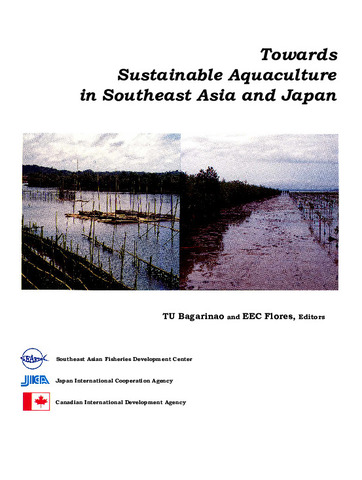
Towards sustainable aquaculture in Southeast Asia and Japan : proceedings of the Seminar-Workshop on Aquaculture Development in Southeast Asia, Iloilo City, Philippines, 26-28 July 1994
(Aquaculture Department, Southeast Asian Fisheries Development Center, 1995)Documents the presentations at ADSEA '94, the 3rd Seminar-Workshop on Aquaculture Development in Southeast Asia. ADSEA '94 includes reviews of the status of aquaculture development in Southeast Asia and Japan and of the researches conducted by Southeast Asian Fisheries Development Center, Aquaculture Department (SEAFDEC/AQD) to contribute to this development. Topics on responsible aquaculture, mollusc and seaweed culture, integrated farming, shrimp culture, diseases, and health management, and transgenic fish were also discussed. It also lists the research areas of 20 or so commodities prioritized for research at AQD for 1995-1997. -
Proceedings of the Seminar-Workshop on Aquaculture Development in Southeast Asia and Prospects for Seafarming and Searanching, 19-23 August 1991, Iloilo City, Philippines
(Aquaculture Department, Southeast Asian Fisheries Development Center, 1994)Documents the presentations at ADSEA '91, the 2nd Seminar-Workshop on Aquaculture Development in Southeast Asia. ADSEA '91 includes reviews of the status of the researches conducted by Southeast Asian Fisheries Development Center, Aquaculture Department (SEAFDEC/AQD) on the following cultured species sea bass, groupers, snappers, milkfish, rabbitfish, mullet, tilapia, carp, catfish, bivalves and the seaweed Gracilaria. Topics on aquaculture development in Southeast Asia and Japan were also discussed. The status and development of seafarming and searanching in different SEAFDEC member countries and their ecological, social and economic implications were also presented. The contributions of the selected participants during the meeting which are contained in this volume are cited individually. -
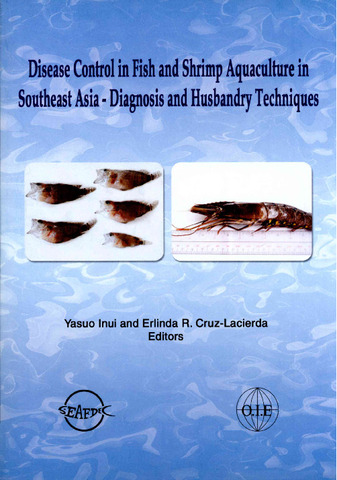
Disease Control in Fish and Shrimp Aquaculture in Southeast Asia – Diagnosis and Husbandry Techniques: Proceedings of the SEAFDEC-OIE Seminar-Workshop on Disease Control in Fish and Shrimp Aquaculture in Southeast Asia – Diagnosis and Husbandry Techniques, 4-6 December 2001, Iloilo City, Philippines
(Aquaculture Department, Southeast Asian Fisheries Development Center, 2002)The meeting aimed to: review the current research studies and diagnostic techniques on viral diseases of shrimp and marine fish in Southeast Asia; to identify an appropriate training program for fish disease project; and to review the current research on techniques in controlling shrimp and crab vibriosis. Every chapter in this volume is cited individually. -
Recent Asian initiatives under the NACA regional programme on aquatic animal health management
(Aquaculture Department, Southeast Asian Fisheries Development Center, 2002)The activities of NACA in support of improving aquatic animal health management within Asia dates back since 1986 when it was first involved in the UNDP/FAO/ODA (and subsequently DFID) sponsored program on Epizootic Ulcerative Syndrome (EUS). Consequently, in cooperation with relevant governments and institutions, NACA implemented a Regional Research Program on Ulcerative Syndrome in Fish and the Environment, from 1986 to 1989, which produced most of the scientific data on environmental parameters associated with EUS outbreaks in the Asia-Pacific region. Between 1989-1990, NACA and ADB implemented the Regional Study and Workshop on Fish Disease and Fish Health Management which revealed a scenario of environment-linked disease problems, product contamination, and environmental impacts on aquaculture, and for the first time losses suffered by Asian aquaculture from fish diseases were quantified. The study provided the first broad guidelines to regional and national strategies for developing capacities in fish health management. In 1991, OIE Tokyo approached NACA to initiate cooperation with respect to aquatic animal disease reporting which eventually led to an Expert Consultation on Aquatic Animal Disease Reporting in 1996. Between 1992 to 1996, NACA was involved in the following regional activities: (a) collaborating with IDRC and UPM in a Tropical Fish Health Management course, that ran for two intakes of students at UPM; (b) participating in the FAO 1994 Expert Consultation on Health Management held at UPM in Malaysia; and (c) the 1996 Consultation on Quarantine and Health Certification of FAO and AAHRI through the ODA-funded SEAADCP project. In l998, a joint publication - 'EUS Technical Handbook' with ACIAR, DFID, NSW Fisheries, AAHRI through SEAADCP and NACA - was completed. The major recommendations of the various regional meetings/consultations became the basis for the development of a strong multi-disciplinary Asia-Pacific regional programme on aquatic animal health management. At the request of Asian governments, NACA and FAO developed a Regional Technical Cooperation Programme on "Assistance for the Responsible Movement of Live Aquatic Animals" (FAO RTCP/RAS 6714 and 9605). The project was implemented from 1998 to 2001 in cooperation with 21 governments/territories in Asia-Pacific region, OIE FDC, OIE Tokyo, AFFA, AusAID/APEC and AAHRI. The programme and its outputs were developed through three years (1998 to 2001) of awareness raising and consensus building through various national and regional level activities (e.g. workshops, training courses, expert consultation, health assessments, etc.). This multidisciplinary Regional Aquatic Animal Health Management Programme has now been adopted by Asian governments (including NACA members and participating governments within ASEAN) as an important element of NACA's Third Five Year Work Programme (2001-2005). The current thrust of the programme is to assist countries in implementing the 'Technical Guidelines', giving special emphasis to the concept of "phased implementation based on national needs", including monitoring and evaluation of its implementation. One of the mechanisms to support Asian governments in the implementation of the 'Technical Guidelines' is through regional cooperation where effective partnership with relevant organizations will be continuously established and strengthened. Designated National Coordinators will continue to be the focal points for its implementation. A Regional Advisory Group on Aquatic Animal Health has been established which will function as an official regional expert group that will ensure the provision of expert advice to Asian governments in the implementation of the 'Technical Guidelines', with NACA providing institutional support and FAO and OIE providing technical guidance. The main elements for regional cooperation include: (a) Promoting effective cooperation through regional resource centers on aquatic animal health; (b) Harmonization of procedures for health certification, quarantine and diagnostics; (c) Support to capacity building; (d) Awareness raising, communication and information exchange on aquatic animal health; (e) Regional disease reporting; (f) Emergency response; and (g) Joint activities for risk reduction in shared watersheds.The paper also briefly include other health related projects jointly being developed and/ or currently carried out by NACA with other organizations (e.g. ACIAR, APEC, ASEAN, CSIRO, DANIDA, IDRC, MPEDA, MRC and SEAFDEC-AQD). -
Global aquatic disease control activities of OIE and the Fish Diseases Commission
(Aquaculture Department, Southeast Asian Fisheries Development Center, 2002) -
Integration of finfish in shrimp (Penaeus monodon) culture: an effective disease prevention strategy
(Aquaculture Department, Southeast Asian Fisheries Development Center, 2002)A farm trial on integration of finfish (i.e., tilapia) in shrimp (Penaeus monodon) culture was conducted in Negros Occidental, Philippines to prevent luminous vibriosis in shrimp. The farm engaged in shrimp monoculture from 1987 to 1995. However, the prevailing luminous vibriosis outbreaks that started in 1994 prompted the farm operator to shift to tilapia culture in 1995-1996. The farm resumed shrimp operations in 1996 but by this time tilapia had already been integrated in the culture system. This paper reports on the results of the trial for 1999 using three ponds (ponds 7, 9, 29). These ponds had previously been used for tilapia culture for two years. During shrimp culture, they drew water from reservoirs stocked with tilapia and within the shrimp ponds tilapia are also stocked inside cages. This technology integrates crop rotation, biological pretreatment and polyculture into one system. During the culture period the chemical and bacteriological quality of soil, water and shrimp were monitored. Water quality parameters were within normal ranges for shrimp culture. Luminous bacterial counts in water and shrimp were consistently below 10 colony forming units (cfu)/ml and 103 cfu/hepatopancreas (hp), respectively. These levels are below threshold levels associated with luminous vibriosis outbreaks. With a stocking density of 19.43 shrimp postlarvae (PL)/m2, pond 7 yielded 2,605 kg shrimp/ha with an estimated survival of 35.65% after 109 days of culture (DOC). With a stocking density of 18.69 PL/ m2, pond 9 yielded 5,472 kg shrimp/ha with survival of 100% after 148 DOC. With a stocking density of 19.33 PL/m2, Pond 29 yielded 5,702 kg shrimp/ha with survival of 82.66% after 151 DOC. The relatively low production in pond 7 can be attributed to the inferior quality of the batch of stocked shrimp PL that already had a low survival of 50% at DOC 30. Comparing the production performance from this present trial with that of this and other farms before the 1994 outbreaks, these good results cannot simply be attributed to chance despite of the lack of control in this farm trial. These results are consistent with the results of a previous trial of the same farm, the ongoing verification trials in Negros Occidental, and the observations of many farmers in other parts of the country on the potential of shrimp-finfish integration in preventing luminous vibriosis in shrimp. -
Probiotics in aquaculture
(Aquaculture Department, Southeast Asian Fisheries Development Center, 2002)The skin, lateral line, gills and gastrointestinal tract or a combination of these organs are suggested to be infection routes in fish. This presentation will present some information on pathogenesis, protection against bacterial adhesion, autochthonous microbiota in the gastrointestinal tract and prebiotics. This information is important when discussing the use of probiotics in aquaculture. Intensive fish production has increased the risk of infectious diseases and there is a growing need to find alternatives to antibiotic treatment for disease control as indiscriminate use of antibiotics in many parts of the aquaculture industry has led to the development of antibiotic resistance in bacteria. Today, a range of microorganisms have been suggested as or evaluated as fish probiotics. These include lactic acid bacteria, Bacillus species, Pseudomonas species, Vibrio species and other Gram-negatives. However, research in probiotics for aquaculture is at an early stage and much work is still needed. Another aspect on fish health is the use of prebiotics to increase the population level of already beneficial bacteria colonizing the gastrointestinal tract and the effect of diet in disease resistance. -
Diagnostic practices for marine fish viral diseases in Thailand
(Aquaculture Department, Southeast Asian Fisheries Development Center, 2002)The Department of Fisheries, Thailand has three institutions that are capable of virus isolation using fish cell culture system: the Aquatic Animal Health Research Institute (AAHRI), the National Institute of Coastal Aquaculture (NICA) and the Marine Shrimp Research and Development Center (MSRDC). The AAHRI is located in Bangkok while the others are in Songkhla province, south of Bangkok. Fish cell culture system was initiated in AAHRI and NICA in 1992-1993. Both institutions spent 6-12 months to develop and practice cell culture. Since then, fish cell lines have been utilized for virus isolation. Various rhabdoviruses, iridoviruses and reoviruses were isolated from diseased freshwater fishes as well as iridoviruses from cultured frog. In addition, iridoviruses and nodavirus were also isolated from diseased marine finfish. The AAHRI maintains 8 fish cell lines and 2 reptile cell lines while NICA maintains 3 fish cell lines. The MSRDC has 5 marine finfish cell lines. In the three institutions, Leibovitz -15 is the general culture medium used in both tissue culture flask and tissue culture plate systems. This medium is capable of maintaining the pH in close and open culture systems without CO2 incubation. Diagnostic practices for marine viral diseases in Thailand include virus isolation, histology and polymerase chain reaction (PCR) amplification technique. As diagnosis in virology is costly, only suspected virus-infected specimens submitted to the Aquatic Animal Disease Clinics are examined for viruses. An active surveillance program of marine viral diseases, with support from the Government of Japan-Trust Fund, has begun this year. The diagnostic procedures for marine viral diseases in the three institutions are similar to the techniques described in the Office International des Epizooties (OIE) Diagnostic Manual and Blue Book. -
Diagnostic and preventive practices for viral nervous necrosis (VNN)
(Aquaculture Department, Southeast Asian Fisheries Development Center, 2002)Viral nervous necrosis (VNN) or viral encephalopathy and retinopathy (VER) caused by piscine nodaviruses (=betanodaviruses) has spread worldwide in the past decade among cultured marine fish. The present paper briefly describes procedures currently practiced in the diagnosis and prevention of the disease.